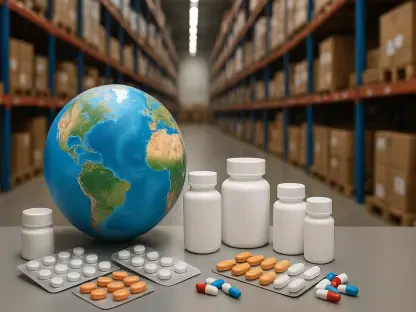

Mykhailo Radutsky, Chairman of the Committee on National Health, emphasized that the recent strikes on medical warehouses were deliberate attempts to sever the links in the national supply chain. This statement follows a coordinated military operation where three vital pharmaceutical and

The integration of artificial intelligence serves as a necessary response to the increasing complexity of modern medicine and global shipping volatility. In the current landscape of 2026, pharmaceutical companies are rapidly abandoning the manual, paper-based procurement methods of previous years

Minnesota's status as a premier medical technology hub faces a test as its largest manufacturing players transition to private equity management. The recent move by KKR to acquire Integer Holdings for $5.7 billion represents more than just a financial transaction; it signifies a tectonic shift in

The Food and Drug Administration recently reaffirmed the safety of fluoropolymers after reviewing more than one thousand seven hundred and fifty peer-reviewed scientific studies. This rigorous scientific validation comes at a pivotal moment as Minnesota grapples with the implementation of Amara’s

Relying on proprietary cable connectors often creates significant supply chain vulnerabilities for medical device manufacturers who require long-term production stability. In the current landscape of 2026, the shift toward standardized high-performance components has become a necessity rather than

Strategic dependencies on raw materials like solvents and reagents are often buried deep within supply chains, making them difficult to diversify during an active crisis. The traditional definition of national security is undergoing a radical transformation as the world becomes increasingly