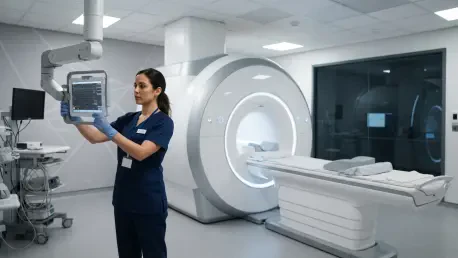

Estimated to grow at a compound annual rate of 9.6% through 2036, the market for pre-owned medical systems is fueled by a massive $26.2 billion absolute growth opportunity. The global healthcare landscape is currently navigating a period of profound transformation, characterized by a delicate balance between the rapid advancement of medical technology and the increasing pressure for fiscal responsibility. At the intersection of these two forces lies the pre-owned medical devices market, a sector that encompasses the resale, refurbishment, and reconditioning of medical equipment that has previously been in clinical use. Far from being a niche secondary market, it has evolved into a sophisticated, regulated, and strategically vital component of the global healthcare ecosystem. The scope of this market includes high-capital diagnostic systems, such as MRI and CT scanners, as well as surgical instruments, patient monitors, and endoscopy equipment. These devices undergo various levels of intervention—ranging from simple inspections and software updates to complete mechanical overhauls—to ensure they meet the safety and performance standards required for continued clinical application. The overarching goal is to extend the useful life of medical assets, thereby democratizing access to high-end diagnostic tools while supporting the sustainability goals of healthcare providers worldwide. This paradigm shift emphasizes the value of a circular economy in medicine, where equipment is not simply discarded but is instead revitalized to serve new populations and clinics.
Financial Trajectory: Sustained Growth and Economic Opportunity
The financial trajectory of the pre-owned medical devices market indicates a period of robust and sustained growth over the next decade. According to foundational data, the market was valued at a substantial $16.0 billion in 2025. As the industry moves into 2026, the estimated value is set to rise to $17.5 billion, signaling a clear upward trend that reflects the increasing acceptance of refurbished technology in high-stakes medical environments. This growth is not merely a byproduct of inflation but represents a fundamental shift in how healthcare facilities approach capital expenditure. The move toward refurbished assets allows for a more flexible allocation of resources, enabling facilities to acquire high-end diagnostic capabilities that might otherwise be financially out of reach. By 2036, the total market value is expected to reach $43.7 billion, driven by a consistent Compound Annual Growth Rate of 9.6%. This projection underscores the long-term viability of the pre-owned sector as a mainstream alternative to the acquisition of brand-new medical hardware.
One of the most telling indicators of this market’s vitality is the absolute opportunity, which is calculated at $26.2 billion. This significant financial headroom suggests that the market is actively expanding its footprint within the broader medical device industry. Analysts view this expansion as a direct response to the global pressure on healthcare budgets, which are being squeezed by aging populations and the rising costs of chronic disease management. The absolute opportunity represents the potential for new entrants and established players alike to capture market share by offering high-quality, certified pre-owned solutions. As hospitals in developed nations look to upgrade their existing fleets, they create a steady supply of high-quality used machines that can be professionally refurbished for secondary use. This creates a self-sustaining cycle where the secondary market supports the primary market by providing liquidity for trade-ins, while simultaneously opening up new tiers of access for smaller providers and facilities in emerging regions that require modern diagnostic tools at a lower price point.
Imaging Equipment: The Cornerstone of the Secondary Market
Imaging equipment stands as the most significant product segment, projected to account for 38.2% of the market share by 2026. This dominance is logically driven by the high capital expenditure required for new diagnostic imaging systems. Modern MRI scanners, CT scanners, and PET systems represent some of the most expensive assets a hospital can acquire, often costing several million dollars for the latest models. Consequently, the availability of refurbished versions of these machines—often at a 30% to 50% discount compared to new models—is a compelling proposition for budget-conscious administrators. These systems are essential for modern diagnostic workflows, yet their high price tags often prevent smaller clinics from offering advanced imaging services. The pre-owned market bridges this gap, providing a pathway for a wider range of facilities to offer sophisticated diagnostics without the crippling debt associated with new equipment. This segment’s growth is further supported by the increasing prevalence of diagnostic-dependent procedures in oncology, neurology, and cardiology.
Beyond cost, the refurbishment of imaging equipment is highly structured and rigorous. Original Equipment Manufacturers have developed specialized programs to ensure that these complex systems, which rely heavily on sophisticated software and precise calibration, are restored to a state that is functionally equivalent to new. This professionalization of the refurbishment process has mitigated much of the second-hand stigma previously associated with used medical devices, making them a viable option for top-tier clinical settings. A refurbished CT scanner, for instance, undergoes a thorough process that includes replacing worn components, updating the software to the latest compatible version, and performing extensive phantom testing to ensure image quality meets regulatory standards. This level of certification provides hospitals with the confidence that the equipment will perform reliably in a high-volume clinical environment. The shift toward manufacturer-certified pre-owned systems has fundamentally changed the risk profile of the secondary market, turning what was once a gamble into a calculated and safe strategic investment for healthcare providers.
Hospitals and Healthcare Providers: Primary Application Segments
Hospitals represent the leading application segment, holding 46.3% of the market in 2026. As primary sites for comprehensive diagnostic and surgical care, hospitals necessitate a vast inventory of reliable equipment. Facing reimbursement cuts and rising operational costs, hospital administrators are increasingly viewing pre-owned equipment as a strategic tool for capacity expansion. By integrating refurbished systems, they can add diagnostic lines or upgrade existing facilities without the prohibitive costs of a purely new inventory. This is particularly relevant for large hospital networks that need to standardize care across multiple locations, including satellite clinics and urgent care centers. The ability to deploy high-quality, certified pre-owned equipment allows these networks to maintain a high standard of care while managing their balance sheets more effectively. Furthermore, the quick turnaround time for acquiring pre-owned devices compared to the long lead times often associated with new manufacturing can help hospitals respond more rapidly to sudden shifts in patient volume or clinical needs.
The end-user segment is dominated by healthcare providers, who are forecast to account for 78.4% of the market in 2026. This category includes large hospital networks, private clinics, diagnostic centers, and specialized care facilities. The high share reflects the direct clinical application of these devices across a wide spectrum of care. For smaller clinics or diagnostic centers in emerging markets, pre-owned equipment is often the only viable pathway to offering advanced services like ultrasound or digital radiography to their patient populations. These providers are often working with limited budgets but face the same clinical expectations as larger institutions. By opting for pre-owned systems, they can provide high-quality diagnostic services that improve patient outcomes and increase the efficiency of local healthcare delivery. This democratization of technology is one of the most profound impacts of the pre-owned market, as it allows advanced medical tools to penetrate deeper into various socioeconomic layers of the global healthcare system, ultimately reducing disparities in access to care.
Market Catalysts: Cost Efficiency and Manufacturer Involvement
The transition toward a more robust pre-owned market is fueled by several converging factors that address both economic and operational needs. The most immediate driver is the pursuit of lower-cost access to advanced technology, allowing facilities to stretch their budgets further. This financial flexibility enables healthcare providers to allocate funds to other critical areas such as staffing, specialized training, or necessary facility improvements. In an environment where the cost of medical labor is rising and the complexity of care is increasing, the ability to save millions on a single MRI acquisition can have a significant impact on a facility’s overall health. Moreover, the faster depreciation of medical electronics means that even machines that are only a few years old can be found on the secondary market at substantial discounts, providing access to technology that is still very much at the cutting edge. This economic reality makes the pre-owned market an essential component of modern healthcare financial planning, rather than just an occasional alternative for cash-strapped clinics.
A major shift in the market has been the active participation of major manufacturers. Companies like GE HealthCare, Philips, and Siemens have launched dedicated circularity or gold standard programs. These programs lend a level of credibility and reliability to the pre-owned market that was previously lacking. By offering warranties, service contracts, and certified technical support that mirror those of new products, manufacturers have institutionalized the practice of equipment reuse. This involvement is not merely a sales tactic; it is a strategic business model that captures value throughout the entire lifecycle of a device. Manufacturers benefit from trade-in programs that encourage customers to upgrade to the latest technology, while simultaneously creating a new revenue stream from the resale of refurbished assets. This manufacturer-led approach ensures that the equipment is serviced by factory-trained technicians using genuine parts, which addresses the primary concerns regarding the safety and longevity of second-hand medical hardware. As these programs expand, they set a high bar for quality that forces independent third-party refurbishers to also improve their standards.
Strategic Obstacles: Quality Control and Regulatory Navigation
Despite optimistic growth projections, the market faces several hurdles that could temper its expansion if not properly addressed. The primary concern for any buyer is the actual physical and operational state of the device. If a machine’s service history is incomplete or if it was maintained by unqualified third parties, its reliability becomes a risk. This uncertainty regarding condition and service history can have a measurable negative impact on the projected growth rate, as clinical failures or frequent downtime can quickly negate any initial cost savings. To combat this, the industry is moving toward more transparent documentation practices. Buyers are increasingly demanding full service logs and certification of the refurbishment process. Without this transparency, the market risks being fragmented by low-quality offerings that can damage the reputation of the pre-owned sector as a whole. Ensuring that every device, whether sold by an OEM or a third party, meets a standardized set of safety and performance criteria remains a significant challenge for global stakeholders.
Furthermore, moving used medical equipment across international borders is fraught with regulatory challenges. Different nations have varying standards for what constitutes refurbished, and some countries have strict bans or high tariffs on the import of pre-owned medical devices to protect local manufacturers or ensure patient safety. Navigating these legal landscapes requires specialized knowledge and can add significant time and cost to the transaction process. In some regions, the lack of a clear regulatory framework for the resale of medical devices creates a gray market that can be dangerous for patients and legally risky for providers. Additionally, as equipment ages, software compatibility and cybersecurity become significant concerns, as older operating systems may no longer receive vital security patches or integrate with modern hospital information systems. This technical obsolescence can be a deal-breaker for modern healthcare facilities that must comply with strict data protection laws. The ability of the refurbishment industry to address these digital risks will be a major factor in the market’s long-term success.
Regional Dynamics: North America and Europe in Focus
The growth of the pre-owned medical devices market is shaped by local economic conditions and regulatory frameworks. The United States is projected to witness the fastest growth among major economies, with a 12.3% CAGR. This is driven by a mature healthcare market where hospitals are under constant pressure to maintain technological parity while managing thin margins. The presence of major OEM refurbishment hubs and a well-established network of independent service organizations provides a fertile environment for expansion. In the U.S., the FDA provides clear guidance on the distinction between servicing and remanufacturing, which helps to standardize the quality of pre-owned devices. This regulatory clarity, combined with a high volume of trade-ins as large academic centers upgrade to the latest technology, ensures a steady supply of high-quality equipment for the secondary market. The American market’s size and the sophistication of its third-party service providers make it a global leader in the adoption of refurbished medical technology.
The United Kingdom follows closely with a 12.0% CAGR, largely influenced by the National Health Service and its increasing focus on sustainability. The NHS has integrated circular economy principles into its procurement strategies, recognizing that reusing and refurbishing equipment is essential for meeting both budgetary constraints and environmental goals. Government guidance on the decontamination and inspection of used medical devices has provided a framework for NHS trusts to maximize the value of their assets. This approach not only saves money but also reduces the carbon footprint associated with manufacturing new equipment. In continental Europe, Germany represents a steady, mature market where cost-conscious hospitals view refurbished systems as a standard alternative. The strict regulatory environment of the European Union, including the Medical Device Regulation (MDR), ensures that pre-owned devices meet high safety standards, though it also increases the complexity of the refurbishment process. These regions demonstrate that even in the most advanced healthcare systems, the pre-owned market is becoming an integral part of sustainable infrastructure management.
Global Variations: Brazil, Japan, and Emerging Opportunities
In Brazil, the market benefits from the need for affordable medical infrastructure to expand diagnostic capacity into underserved regions. The Brazilian market is characterized by a high demand for basic and mid-range imaging systems, such as ultrasound and X-ray machines. Local healthcare providers often look to refurbished equipment as a way to modernize their facilities without relying on expensive imports of brand-new hardware. However, the market is closely monitored by Anvisa, the national health surveillance agency, which has strict rules regarding the importation and use of pre-owned medical equipment. This oversight is necessary to prevent the country from becoming a dumping ground for obsolete or unsafe technology, but it also means that suppliers must be able to prove the quality and safety of their products through rigorous documentation. Despite these challenges, the economic pressure to expand healthcare access ensures that Brazil will remain a key growth area for the pre-owned sector as it seeks to bridge the gap between urban centers and rural communities.
Japan’s market, growing at 9.9%, is characterized by a demand for high-quality equipment with documented service histories. In a culture that places a premium on reliability and technical precision, the pre-owned market in Japan is dominated by OEM-led refurbishment programs. Japanese healthcare facilities are often early adopters of new technology, leading to a high turnover of sophisticated equipment that is still in excellent condition. This creates a robust secondary market for high-end MRI and CT scanners that are refurbished to exacting standards. Manufacturers in Japan have successfully integrated the resale of pre-owned equipment into their long-term customer relationship strategies, ensuring that even secondary users receive a high level of technical support. This focus on quality and lifecycle management has made the Japanese pre-owned market one of the most stable and trusted in the world. As the Japanese population continues to age rapidly, the demand for cost-effective diagnostic tools is expected to drive further innovation in the refurbishment and maintenance of medical assets.
Competitive Landscape: OEM Strategies and Brand Integrity
The competitive environment has shifted from a fragmented landscape of independent brokers to one dominated by major OEMs and sophisticated specialists. GE HealthCare has set an industry benchmark through its GoldSeal program, where equipment undergoes a rigorous refurbishment process by the same technicians who build new machines. This includes replacing parts with original components and updating software to provide buyers with a like-new experience. By maintaining control over the refurbishment process, GE HealthCare protects its brand reputation and ensures that its products continue to perform at high levels throughout their secondary life. This strategy also allows the company to maintain a relationship with a broader range of customers, including smaller clinics that might not yet be ready to purchase new equipment. The GoldSeal program exemplifies how a major manufacturer can turn the secondary market into a strategic advantage by providing a certified, low-risk alternative to new hardware.
Other leaders like Philips Healthcare and Siemens Healthineers have integrated refurbishment into their core business models as part of a broader commitment to the circular economy. Philips manages its Circular Equipment portfolio as a key pillar of its sustainability strategy, focusing on reducing waste and maximizing the value of every machine produced. Siemens operates the ecoline portfolio to provide high clinical performance at lower price points, ensuring that their advanced imaging technology is accessible to a wider audience. These companies have recognized that equipment is professionally decommissioned and reinstalled, protecting their brand reputation while maintaining long-term service revenue from secondary users. This shift toward OEM dominance in the pre-owned space has forced independent service organizations to specialize and improve their own quality standards to remain competitive. The result is a more professionalized and reliable market where the focus is on the long-term clinical performance of the device rather than just the initial sale price.
Strategic Implications: Redefining Value in Healthcare Procurement
The evolution of this market required a shift in strategy for various participants in the healthcare value chain. Manufacturers recognized a clear mandate to strengthen trade-in and refurbishment programs to control the secondary market. By doing so, they prevented lower-quality third-party refurbishments from entering the market and ensured that their brand standards were maintained throughout the entire lifecycle of the device. This approach was not just about sales; it was about managing the total volume of their technology in the field and ensuring that even used machines contributed to positive patient outcomes. Stakeholders realized that a well-managed secondary market could actually drive the sales of new equipment by providing a reliable outlet for older models. This systemic view of the equipment lifecycle allowed manufacturers to build deeper, more resilient partnerships with healthcare providers who needed flexible technology solutions that could evolve with their changing clinical and financial needs.
For healthcare providers, procurement departments transitioned from evaluating simple purchase prices to analyzing the Total Cost of Ownership. This analysis had to include the cost of installation, the price of long-term service contracts, and the availability of software update paths. Professionals in the industry learned that a cheaper machine with no service history often ended up being more expensive in the long run due to downtime and repair costs. Meanwhile, refurbishment specialists and distributors focused on transparency and navigating complex local regulations to build trust with increasingly informed and skeptical buyers. They prioritized the creation of digital service logs and cybersecurity certifications as part of their standard offering. These actionable steps moved the industry toward a more mature and transparent model where data-driven decisions replaced guesswork. As the market matured, the focus shifted toward the integration of these devices into a unified digital ecosystem, ensuring that pre-owned hardware was no longer a standalone asset but a fully connected part of the modern clinical environment.