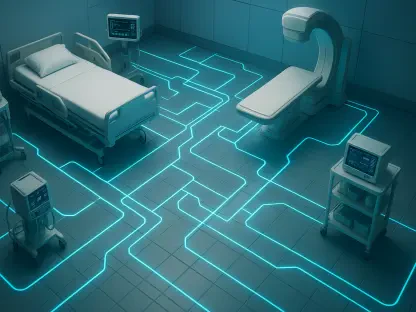

The transition to sustainable energy for medical facilities ensures 24/7 operational capacity by decoupling critical health systems from unreliable fossil fuel grids. This fundamental shift underscores the broader findings of the 2026 Mid-Year Report from eHealth Africa, which details a transformative period for public health infrastructure across the continent. Under the leadership of Executive Director Atef Fawaz, the organization has navigated the complexities of delivering care in remote regions by prioritizing a data-first philosophy. Instead of relying on static models, the implementation of digital technology and logistical innovation has allowed for a dynamic response to health crises. The report reveals how synthesized strategies—ranging from mass vaccination campaigns to the digitization of mapping—are actively dismantling the barriers that once hindered medical accessibility. By grounding these advancements in a framework of resilience, the sector is moving toward a more predictable and efficient future where technology serves as the backbone of medical intervention.
Optimizing Mass Vaccination Campaigns Through Geospatial Intelligence
A critical component of this technological evolution is the deployment of Geospatial Tracking Systems (GTS) to manage large-scale immunization efforts with unprecedented accuracy. During the first half of 2026, these innovations proved pivotal in the successful vaccination of over 23 million children across 15 northern Nigerian states. The campaign targeted life-threatening conditions like polio and other vaccine-preventable diseases, navigating some of the most difficult terrains on the continent. By utilizing eHealth Africa’s proprietary digital tool, PlanFeld, health administrators were able to coordinate the movement of more than 33,000 vaccination teams across 205,000 individual settlements. This level of granular visibility ensures that even the most isolated communities are no longer invisible to the healthcare system. The success of these campaigns demonstrates how geospatial intelligence can transform administrative mapping into a powerful tool for saving lives.
Building on this foundation, the use of digitized microplans and catchment-area maps has redefined how resources are allocated during high-stakes medical interventions. Traditionally, rural health outreach suffered from a lack of precise data, leading to gaps in coverage where specific settlements were unintentionally overlooked. However, the integration of real-time tracking and digital mapping allows for a comprehensive audit of field activities, ensuring that every designated area is visited by medical personnel. This data-driven approach not only improves the immediate outcomes of vaccination drives but also creates a reusable digital infrastructure for future public health initiatives. By digitizing the physical landscape of health delivery, organizations can now predict potential bottlenecks and adjust their strategies before they impact service delivery. This proactive stance is essential for maintaining the high levels of immunization coverage required to achieve herd immunity.
Strengthening Continental Surveillance and Sustainable Infrastructure
The transition to sustainable energy has emerged as a cornerstone for building resilient health systems that can function independently of unreliable national power grids. Through the Renewable Energy for Primary Health Care (RE4PHC) initiative, 238 primary healthcare centers across 12 states were successfully solarized, providing a reliable power source for essential medical equipment and cold-chain storage. In the first half of 2026, these facilities generated 277,800 kWh of solar electricity, allowing the healthcare system to avoid N166 million in fuel costs while preventing 240 metric tonnes of carbon emissions. This shift is paired with innovative logistical frameworks like the Vaccine Direct Delivery intervention in Sokoto State, which expanded its reach to 407 facilities to distribute millions of antigens. By combining renewable power with optimized last-mile delivery, the health system can now ensure that temperature-sensitive vaccines remain viable even in the most remote clinics.
Beyond localized delivery, data-driven technology bolstered diagnostic and surveillance capabilities across 13 African countries by upgrading 17 laboratories with modern inventory systems. The management of 11 Emergency Operations Centers in Nigeria further streamlined crisis coordination, producing critical health scorecards that guided government interventions throughout the year. The Com-WATCH program also effectively monitored the pharmaceutical supply chain, utilizing over 2,500 surveillance actors to identify substandard medicines. These initiatives established a new standard for healthcare delivery by synthesizing technical innovation with local expertise. Local ownership became the primary focus for stakeholders, who prioritized the training of personnel to manage these digital and solar assets independently. Expanding community-level surveillance and integrating real-time data into national policy were the final logical steps that ensured these resilient health systems remained effective.