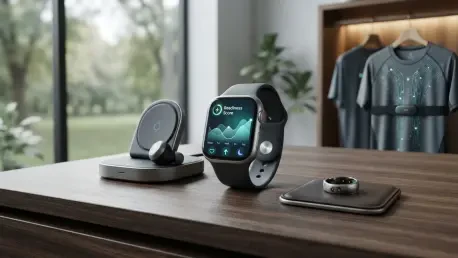

Multi-day health plans are now adapting dynamically based on daily check-ins and the objective data summaries collected by wearable sensors. This represents a significant departure from the era of descriptive devices that merely recorded heart rates or step counts. For years, the quantified-self movement focused on gathering raw physiological metrics, leaving the difficult task of interpretation entirely to the user. Today, the industry has shifted toward prescriptive technology. This new wave of innovation utilizes Agentic AI to act as a proactive health companion, translating complex biological signals into clear, actionable guidance that helps users improve their well-being in real time. Instead of just showing a number, these devices now suggest a way forward, effectively bridging the gap between passive data collection and active lifestyle management. By prioritizing guidance over raw numbers, the latest technology has turned biometric sensors into interactive coaches that understand the user’s specific needs and environmental context.
The Historical Gap: Bridging Metrics and Behavior
For more than a decade, a significant disconnect has existed between the act of data acquisition and actual behavioral change. While early fitness trackers were excellent at logging sleep cycles and activity levels, researchers found they often failed to drive sustained lifestyle improvements because they lacked a mechanism for intervention. Most health variables lived on static digital dashboards, requiring users to invest time and energy to decode what a specific sleep score or stress level actually meant. Without a plan to improve these numbers, the information remained inert, proving that simply knowing one’s stats is not enough to change habits. This historical gap became a major hurdle for the industry, as users often abandoned their devices after the initial novelty of tracking vanished. Medical professionals noted that the burden of behavior change still rested solely on the individual, who was often overwhelmed by the sheer volume of data. The challenge was to move beyond the dashboard and into the realm of active health coaching.
The primary reason for the failure of traditional trackers was the cognitive load they placed on the average consumer. Most people are not trained to interpret fluctuations in galvanic skin response or heart rate variability, yet dashboards required them to do exactly that to make sense of their health progress. This reliance on the user’s ability to analyze data created a barrier to entry for those seeking genuine wellness improvements. Furthermore, the lack of immediate feedback meant that by the time a user checked their stats, the moment for effective change had usually passed. A low activity score at the end of a long day serves as a reminder of failure rather than an opportunity for success. By contrast, the evolution into prescriptive intelligence focuses on removing this interpretive burden. Instead of presenting a chart, modern systems analyze the underlying patterns and offer a direct suggestion, such as taking a short walk or practicing deep breathing, making the path to health feel much more accessible and less like a data science project.
Agentic Systems: The Rise of Proactive Intelligence
The current paradigm shift is defined by the integration of Agentic AI, which differs significantly from traditional software by its ability to perform pattern detection and execute tasks autonomously. While a standard application might wait for a user to initiate an action or perform a search, an AI agent is designed to be proactive. In the context of health, this means moving beyond the mirror model—where a device merely reflects a user’s current state—to a coach model. These intelligent systems analyze vast datasets to draw meaningful inferences, suggesting specific actions rather than just displaying a chart. This proactive nature allows the technology to function as a digital partner that anticipates the user’s needs. For instance, if an AI agent notices a decline in recovery metrics over several days, it can automatically adjust the user’s upcoming workout intensity without being asked. This autonomous decision-making represents a leap forward in personal technology, as the software begins to handle the management of health variables.
This evolution prioritizes the window of choice, a concept emphasizing that health interventions are most effective when they happen in the moment. If a user only reviews their data at the end of the day, the opportunity to influence their physiology, such as choosing a better meal or resting when stress spikes, has already passed. By providing active nudges throughout the day, modern wearables aim to catch users during these critical temporal windows. This transition reflects a broader societal trend where consumers value immediate, personalized insights over raw, unorganized data. The biological reality of health is that choices made in the present have cumulative effects on long-term outcomes. By offering guidance exactly when a choice is being made, AI agents maximize the impact of their recommendations. This real-time interaction ensures that the technology is not just recording a life, but actively helping to improve it. This proactive intervention strategy is the cornerstone of the new intelligence age, where every body signal is viewed as an opportunity.
Conversational Ecosystems: Integrating Context and Action
Leading startups are now replacing the obsolete dashboard model with ecosystems that notice, suggest, and act. By aggregating data from various health platforms and combining it with manual inputs regarding mood and diet, these AI agents gain the contextual awareness necessary to understand the why behind the numbers. For example, a heart rate spike might be interpreted differently if the AI knows the user just finished a stressful meeting rather than an exercise session. New hardware designs are also moving away from complex visual screens in favor of unobtrusive, voice-enabled interfaces. This allows for a more natural tap and talk interaction, making the technology feel less like a tool and more like a conversational partner. The reduction in hardware complexity shifts the focus to the intelligence of the software agent, which can now reside in a simple ring or a clip-on device. This seamless integration into daily life ensures that the user remains connected to their health guidance without the constant distraction of a screen.
Established leaders in the smart-ring market are further refining this experience through AI features built on memory and proactivity. Unlike a human coach who might lose track of past progress or previous conversations, these AI systems are designed to remember every piece of information shared by a member to refine future recommendations. A key design choice in this new era is having the AI speak first, initiating interactions based on observed changes in stress, sleep, or recovery. This removes the cognitive burden from the user, who no longer needs to know the right questions to ask to get value from their device. By proactively starting a dialogue, the AI guides the user through their health journey without requiring them to navigate complex menus or analyze charts. This approach fosters a deeper level of engagement, as the technology feels more like a dedicated personal assistant that is constantly working in the background to optimize the user’s daily performance and long-term vitality.
The Future Path: Navigating the Intelligence Age of Wellness
The relationship between humans and their devices became increasingly symbiotic as the sector moved into the intelligence age. This shift was characterized by the development of software agents that acted as digital twins, monitoring subconscious biological signals and translating them into conscious actions. By 2026, the focus of health technology had moved entirely away from the device itself and toward the quality of the insights provided. Hardware became more minimalist and hidden, allowing the prescriptive intelligence to take center stage. Users no longer viewed their wearables as step counters but as essential components of their personal health infrastructure. This period saw a dramatic improvement in the accuracy of health predictions, as AI agents learned to recognize the subtle precursors to illness and fatigue. The ability of these systems to provide early warnings transformed preventative care, making it a daily habit rather than an occasional check-up. This deep integration fostered a sense of security.
Looking forward, the successful adoption of AI health coaches required users to embrace a more conversational and trust-based relationship with their technology. To maximize the benefits of these systems, individuals were encouraged to provide consistent contextual data, such as nutrition and emotional state, to fill the gaps that sensors could not reach. This collaborative approach ensured that the AI remained accurate and relevant to the user’s specific life circumstances. The era of manual data entry and static charts was replaced by an ongoing, informed dialogue that empowered people to take control of their health with minimal effort. Organizations should continue to prioritize data privacy and algorithm transparency to maintain this trust. As these systems become even more predictive, the key takeaway for users is the importance of acting on the insights provided rather than just observing them. The transition from trackers to coaches proved that technology is most powerful when it acts as a partner in human potential.