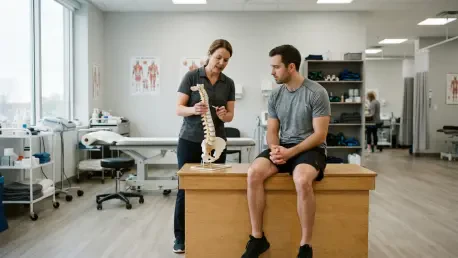

A multicenter, cluster-randomized controlled trial involving 739 participants has evaluated whether placing physical therapists at the front line of care improves outcomes. Low back pain remains a staggeringly pervasive issue in modern medicine, acting as the primary driver of physical disability on a global scale and inflicting a massive financial burden on healthcare systems. This burden manifests not only through direct treatment costs but also via profound indirect economic losses, such as reduced workplace productivity and chronic absenteeism. Despite long-standing clinical guidelines advocating for non-pharmacological interventions like physical therapy as the first-line defense for musculoskeletal issues, a persistent translational gap exists in most traditional primary care environments. Usually, patients encounter a primary care physician first, which can lead to a cycle of analgesic prescriptions or diagnostic imaging that can delay specialized care and inadvertently medicalize the condition. This research seeks to dismantle these systemic bottlenecks by restructuring the point of entry for patients, testing a model where physical therapists serve as the primary assessors to streamline the recovery process and prioritize functional health from the very first visit.
The Research Framework: Methodological Integrity and Scale
To determine the effectiveness of this structural shift, the study utilized a robust parallel-arm, cluster-randomized design, which allowed researchers to compare the performance of entire medical practices rather than just individual cases. This approach provides a clearer picture of how organizational changes influence patient health outcomes across diverse demographics. The trial involved 20 primary care practices located in Ontario and British Columbia, divided equally into two groups. Ten practices implemented the integrated physical therapist-led pathway, while the remaining 10 continued with conventional, clinician-directed management. By analyzing the outcomes of 460 participants in the integrated group and 279 in the control group, the researchers were able to capture high-quality data on the real-world application of this multidisciplinary approach, ensuring that the results were not merely an anomaly of a single clinic but a representative trend of a larger healthcare delivery shift.
The primary metric used to quantify success was the Roland–Morris Disability Questionnaire, a validated tool specifically designed to measure the impact of back pain on daily physical functions. Because musculoskeletal conditions can fluctuate over time, the researchers established a 12-month follow-up period to ensure that the data reflected the durability of the intervention’s effects rather than just temporary relief. This long-term tracking was essential for assessing whether early access to specialized care could prevent the transition from acute pain into chronic, long-term disability. By focusing on functional recovery rather than just symptomatic suppression, the methodological framework prioritized the quality of life and physical autonomy of the participants, providing a comprehensive view of how structural integration impacts the trajectory of a condition that affects millions of people annually across North America.
Prognostic Stratification: The Role of Risk-Based Triage
Central to the success of the integrated model was the implementation of a sophisticated risk-stratified triage protocol, utilizing the Keele STarT Back scoring tool. This prognostic instrument allowed physical therapists to categorize patients into low, medium, or high-risk groups based on their likelihood of developing persistent disability. Rather than applying a standard, one-size-fits-all treatment plan, this method ensured that healthcare resources were directed with precision toward those who needed them most. For the low-risk cohort, which comprised approximately 30 percent of the participants, the focus remained on high-quality self-management resources and education. These patients were encouraged to maintain movement and were provided with reassurance to prevent the development of fear-avoidance behaviors, which often contribute to long-term pain cycles. This approach effectively prevented the over-medicalization of minor cases, allowing the clinic to focus its intensive efforts elsewhere.
For the high-risk patients, the model provided direct, in-house physical therapy treatment within the primary care facility itself. This “embedded” care allowed for immediate rehabilitation and seamless coordination between the physical therapist and the patient’s primary doctor, creating a unified clinical front. Meanwhile, the medium-risk group was efficiently referred to community-based physical therapy practices, ensuring they received professional guidance without overwhelming the internal resources of the primary care clinic. By creating this tiered system, the integrated model addressed the common problem of clinical bottlenecks, where specialized experts are often buried under a volume of low-priority cases. This proactive stratification changed the nature of the primary care visit from a simple diagnostic check into a targeted intervention strategy, maximizing the specific strengths of each provider in the clinical team.
Clinical Performance: Validating Functional Improvements
The results collected at the one-year mark provided clear evidence that integrating specialized musculoskeletal assessment into the primary care frontline leads to superior functional outcomes. Patients who were treated within the integrated care model reported significantly lower disability scores compared to those who received traditional clinician-directed care. Specifically, the mean disability score for the integrated group was 5.48, whereas the control group remained higher at 6.35. While a difference of 1.64 points on a 24-point scale might seem modest to an outside observer, it represents a statistically significant advantage when measured across a large population. This margin indicates that patients in the integrated model were better able to return to their daily activities, maintain employment, and manage their symptoms with greater independence than those who followed the conventional referral path.
Beyond the mean scores, the study also examined the proportion of patients who achieved a “clinically meaningful” improvement, defined as a minimum 30 percent reduction in their reported disability. The integrated model consistently outperformed the control group in this critical metric, proving that early intervention is a decisive factor in preventing long-term physical limitations. By facilitating specialized assessment at the point of entry, the model allowed patients to begin their recovery during the critical acute phase of their condition. This timing is vital because it prevents the development of maladaptive movement patterns and psychological barriers that often lead to chronic, recalcitrant disability. The data demonstrated that structural integration does not just improve the efficiency of the clinic; it fundamentally changes the health trajectory of the individual, leading to a more resilient and functional patient population.
Holistic Care: Psychological Integration and Patient Empowerment
One of the most significant advantages of the physical therapist-led model was its ability to address the “whole person” through a biopsychosocial lens. Low back pain is rarely a purely mechanical issue; it is frequently intertwined with psychological distress, such as anxiety, depression, and kinesiophobia, which is the debilitating fear that movement will cause further injury. Traditional care models, which often prioritize rest or pharmacological management, can inadvertently reinforce these fears by failing to address the psychological components of pain. In contrast, the physical therapists in this trial integrated psychological screening and behavioral strategies directly into the physical rehabilitation process. By addressing these mental barriers early, the intervention participants showed much greater improvements in psychological function and reported significantly lower levels of pain intensity compared to those in the control group.
The subjective experience of the patients also revealed a high degree of satisfaction with the integrated model. Participants reported feeling more “heard” and expressed greater confidence in their treatment plans, likely due to the specialized expertise and dedicated assessment time that a physical therapist provides. In a traditional 10-minute consultation with a primary care physician, it is often difficult to cover the complex physical and lifestyle factors that contribute to back pain. The physical therapist-led assessment allowed for a more nuanced conversation about movement, ergonomics, and long-term health goals. This increased patient engagement is a critical component of musculoskeletal health, as individuals who feel empowered and educated are far more likely to adhere to their exercise regimens and maintain the functional gains they achieve during clinical treatment.
Systemic Integration: Economic and Logistical Realities
The economic evaluation accompanying the trial confirmed that the integrated model represents a cost-effective solution for modern healthcare systems. By reducing long-term disability, the model potentially lowers future healthcare utilization, including emergency room visits, advanced diagnostic imaging like MRIs, and elective spinal surgeries. These downstream savings help offset the initial costs of staffing and integrating specialized providers into the primary care environment. Furthermore, the model showed promise in reducing the societal costs associated with back pain, such as lost wages and disability payments. However, the researchers noted that the results must be adapted carefully when applied to different global healthcare structures. In jurisdictions with private or hybrid insurance models, billing for integrated services may face different regulatory hurdles than in publicly funded systems, requiring policy changes to support such multidisciplinary workflows.
Ultimately, the trial proved that a “physical therapy-first” approach is a viable and superior alternative to traditional clinician-led care for managing low back pain. The study concluded that health systems should consider structural changes that move away from the traditional gatekeeper model toward integrated, team-based environments. Actionable next steps for healthcare administrators include reconfiguring clinic spaces to allow for physical therapy equipment and fostering a culture of interprofessional trust between doctors and therapists. The findings suggested that while the initial shift requires organizational effort, the long-term benefits for patient health and system sustainability were undeniable. By prioritizing movement and specialized triage at the front line, the medical community successfully demonstrated a clear path toward reducing the global burden of disability and improving the quality of community health management.