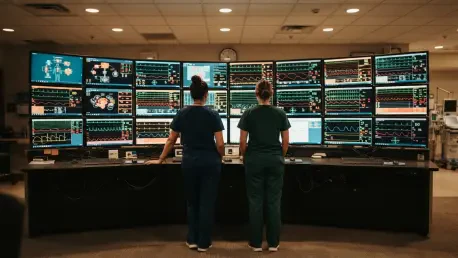

The historical disparity between urban medical centers and rural community hospitals has long been defined by a significant gap in real-time patient surveillance and specialized clinical oversight. The transition toward a multi-state remote patient monitoring model marks a pivotal evolution in how health systems address these geographic inequities. By deploying the BioButton, an FDA-cleared wearable device, clinicians can now move beyond the limitations of traditional manual vital sign checks, which typically occur only four to six times in a 24-hour period. This advanced sensor captures approximately 1,440 readings daily, including continuous data on heart rate, respiratory rate, and skin temperature. Such high-frequency data collection provides a far more granular view of a patient’s physiological state than episodic measurements ever could. When this technology is integrated into a centralized dashboard, it creates a digital safety net that spans hundreds of miles, connecting small facilities in Kansas to a hub of specialized expertise in Houston.
Transforming Data: The Role of Clinical Expertise
A primary driver behind the success of this remote patient monitoring initiative is the depth of clinical expertise managing the data on the receiving end. The program does not rely on automated alerts alone; instead, it utilizes a dedicated team of nurses who bring an average of seventeen years of critical care experience to the surveillance center. These seasoned professionals do not view physiological data in a vacuum. They interpret every fluctuation through the lens of the patient’s comprehensive medical profile, including current medications, recent laboratory results, and historical health records. This high level of clinical synthesis allows the remote team to distinguish between minor physiological noise and the early warning signs of genuine clinical deterioration. By maintaining a 24-hour presence, these nurses provide a layer of support that is often unavailable in smaller rural hospitals, where staffing ratios and access to specialists may be constrained, ensuring that every data point is reviewed by a professional.
The operational bridge between remote monitoring and bedside response is maintained through a structured communication protocol known as the Clinical Emergency Response Team framework. This model ensures that when a remote nurse identifies a potential issue, there is a clear, immediate pathway to alert the local clinical staff at the rural facility. This interaction is not merely a data handoff but a collaborative consultation that enhances the capabilities of the on-site team. By providing real-time guidance and surveillance, the remote hub empowers local clinicians to act before a patient reaches a state of crisis. This surveillance-plus-action approach is essential for scaling healthcare across state lines, as it ensures that the physical distance between the monitor and the patient does not result in a delay in care. The presence of a dedicated oversight team also prevents the dilution of care quality, as remote staff is specifically assigned to the initiative, allowing for a focused and highly responsive partnership.
Validating Outcomes: Evidence and Performance
Recent clinical data supports the assertion that continuous monitoring, when paired with proactive intervention protocols, yields significant improvements in patient safety and hospital efficiency. A study published in the Journal of Clinical Medicine highlighted that the implementation of these specific workflows led to a measurable decrease in the severity of illness among patients at the time of their transfer to intensive care units. This suggests that the technology enables clinicians to identify and address complications much earlier in their progression. Furthermore, the data indicated a notable drop in overall hospital mortality rates, reinforcing the idea that early detection is a critical component of survival in acute care settings. Beyond survival metrics, the application of this remote monitoring strategy has been linked to a reduction in the average length of stay for hospitalized patients. By preventing complications, the system streamlines recovery, allowing patients to return home sooner while freeing up beds.
Successful remote patient monitoring was achieved when health systems moved away from viewing technology as a standalone solution and instead treated it as one component of a comprehensive clinical bundle. This strategy involved the seamless fusion of wearable sensors, virtual oversight by expert clinicians, and structured communication channels with bedside teams to create a unified care environment. The investment in seasoned nursing staff proved to be a critical factor, as their ability to provide proactive rather than reactive management mitigated the risks associated with remote care. Facilities that adopted this integrated approach saw a transformation in their standard of care, where high-frequency data translated into life-saving interventions. These steps allowed rural hospitals to bridge the expertise gap and provided a blueprint for other regions to follow when modernizing their healthcare infrastructure. Providers prioritized these multi-layered systems to ensure every technological deployment was matched with sufficient human expertise.