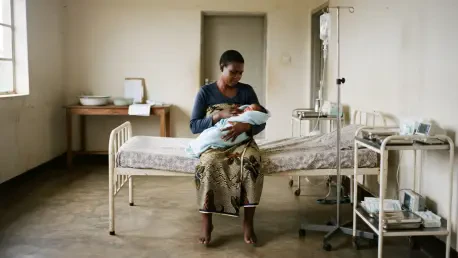

In Somalia, an estimated 692 maternal deaths occur for every 100,000 live births, representing one of the most severe public health crises for women globally today. This distressing reality serves as the focal point of a detailed study titled “Prevalence, sociodemographic determinants and regional disparities in health facility delivery in Somalia,” authored by Salad Halane and a team of dedicated researchers. Published in Research in Health Services and Regions, the research analyzes data from nearly 9,000 women to pinpoint the systemic barriers preventing professional medical assistance during childbirth. Despite international efforts to reach Sustainable Development Goal 3.1, which aims to reduce global maternal mortality to fewer than 70 per 100,000 live births by 2030, Somalia continues to struggle with the fallout of long-term conflict and institutional decay. By examining the demographic and socioeconomic factors of women across various regions, the authors have provided a rigorous empirical foundation for targeted public health interventions. This work is essential for understanding why, in an era of technological and medical advancement, the vast majority of Somali women are still forced to navigate the perils of childbirth in domestic settings without the safety net of a modern medical facility equipped with skilled attendants.
Socioeconomic Foundations: The Role of Education and Wealth
The study identifies educational attainment as one of the most powerful predictors of whether a Somali woman will deliver her child in a health facility. There is a clear, linear relationship between the level of schooling a woman has completed and her likelihood of seeking professional maternal services. According to the multivariable analysis, women with higher education were more than four times as likely to deliver in a facility compared to those with no formal schooling. This is a critical finding in a nation where over 83 percent of women lack any formal education. Education acts as a vital gateway to health literacy, empowering women to understand the physiological risks of home births and granting them the autonomy to make informed decisions regarding their reproductive health. When women are educated, they are more likely to recognize the early warning signs of complications like hemorrhage or sepsis, which remain leading causes of mortality in the region. Consequently, the researchers argued that improving female literacy is not just a social goal but a direct medical intervention that can save thousands of lives.
Economic status follows a similar trend, acting as a decisive factor in determining maternal outcomes across the country. The research highlighted that women in the highest wealth quintile were six times more likely to utilize health facilities than those in the poorest demographic. In Somalia, where roughly 70 percent of the population lives below the poverty line, the costs associated with facility delivery represent a prohibitive barrier for the average family. These costs are not limited to hospital fees; they include the price of transportation, the purchase of medical supplies, and the opportunity cost of leaving the home. For the most vulnerable, professional medical care remains an unattainable luxury rather than a basic human right. This economic divide ensures that the risk of death during childbirth is disproportionately borne by the poor, who are often forced to accept the dangers of unassisted home births due to a lack of financial resources. Addressing this wealth gap is essential for creating a more equitable healthcare system where survival is not dictated by a family’s income level.
Regional Disparities: Geographic Inequity in Maternal Care
A central and sobering finding of the research is that the national facility delivery rate stands at only 22.3 percent, but this average masks deep regional inequities. The study uncovered what researchers described as a “geographic lottery,” where a woman’s location serves as a primary determinant of her safety during labor. In the region of Woqooyi Galbeed, the facility delivery rate reached a national high of 58 percent, likely due to better infrastructure and relative stability. In stark contrast, the region of Bakool recorded a rate of only 2 percent, meaning that almost every birth in that area occurred at home without clinical support. Other regions like Hiraan, Sanaag, and Sool also showed alarmingly low utilization rates. These figures reflect the uneven distribution of healthcare resources and the fragmented nature of a system that has been disrupted by decades of internal strife. Without a concerted effort to decentralize medical services, these regional gaps will continue to widen, leaving women in isolated areas at an extreme disadvantage.
The divide between urban, rural, and nomadic lifestyles further complicates the landscape of maternal health in Somalia. Urban women have significantly higher odds of delivering in a professional facility compared to their rural or nomadic counterparts. For the nomadic population, which makes up over 35 percent of the surveyed group, the facility delivery rate plummeted to a staggering 5 percent. The nomadic lifestyle, characterized by constant movement and seasonal migration, makes it nearly impossible to maintain consistent access to fixed healthcare centers. Multivariable logistic regression confirmed that geography is a dominant factor, showing that women in regions like Bakool and Hiraan face systemic exclusion from the health system. This geographic divide underscores the urgent need for the Somali government to prioritize investment in underserved regions. Ensuring that life-saving obstetric care is available outside of a few stable urban centers is the only way to achieve a meaningful reduction in the national maternal mortality ratio.
Structural Barriers: Infrastructure and Distance Challenges
Beyond the social and economic factors, physical distance remains one of the most formidable structural challenges facing Somali women today. The study found that nearly 64 percent of all respondents identified the distance to a health facility as a “big problem.” In many parts of the country, the lack of paved roads and the absence of reliable, affordable transportation mean that even if a woman intends to give birth in a clinic, she may not be able to reach it in time. This is particularly dangerous during labor complications, such as obstructed labor or eclampsia, where every minute counts. The physical isolation of many rural and nomadic communities creates a barrier that even the strongest desire for medical care cannot overcome. In the absence of a dense network of local clinics or an effective emergency transport system, the home becomes the only viable option for delivery, regardless of the risks involved. The research indicated that until infrastructure improves, facility delivery will remain out of reach for a significant portion of the population.
The nomadic population faces a unique set of challenges that traditional healthcare models are currently failing to address. Because these communities are frequently on the move, stationary health centers are often located days away from their current camps. The study noted that the disconnect between the mobile nature of the population and the static nature of the healthcare infrastructure is a primary driver of the low 5 percent facility delivery rate among nomads. Even when nomadic women are aware of the benefits of institutional delivery, the logistics of reaching a clinic while managing livestock and family during migration are overwhelming. This necessitates a radical rethinking of how healthcare is delivered in Somalia. The researchers emphasized that the current system’s inability to adapt to the mobility of the population is a major hurdle in the quest to improve maternal outcomes. By identifying these specific structural obstacles, the study provided a roadmap for creating more flexible, mobile-friendly health services that can follow these communities as they move across the landscape.
Social Influences: Cultural Traditions and Maternal Age
In addition to physical and economic hurdles, intangible factors like cultural tradition and religious beliefs play a significant role in shaping maternal health choices. In many Somali communities, home birth is not simply a default choice caused by a lack of access; it is a deeply ingrained cultural preference. Giving birth at home is often viewed as a sign of a woman’s inner strength, resilience, and virtue. In contrast, institutional delivery may be perceived as unnecessary medicalization or even a departure from traditional values. There is also a widespread preference for traditional spiritual practices over clinical interventions, and in some conservative or remote areas, modern medical care may be viewed with skepticism. These cultural norms are powerful and often override the clinical advice provided by health workers. Understanding these preferences is essential for public health officials, as it suggests that simply increasing the number of clinics will not be sufficient if the community does not perceive those clinics as culturally appropriate or safe spaces for delivery.
Maternal age was also identified as a significant factor in the decision-making process, with older women being more likely to use health facilities than their younger counterparts. The research suggested that this trend is linked to the levels of autonomy within the family structure. Younger mothers, particularly those in the 15-19 age bracket, often have the least decision-making power and are more likely to be influenced by elders who favor traditional home births. Older women, having perhaps experienced the dangers of childbirth or having gained more status within the household, are better positioned to advocate for their own health and seek professional care. This generational divide highlights the need for targeted outreach programs that engage not just the mothers, but also the influential family members who often make the final decision on where a birth will take place. By addressing the social hierarchy within the family, health programs can better support young women in accessing the life-saving care they need during their first pregnancies.
Research Limitations: Security and Data Collection Realities
The authors of the study were transparent about the significant challenges they faced while conducting research in a country characterized by ongoing instability. One of the primary limitations identified was the security situation, which restricted the ability of surveyors to access certain regions. Areas under the control of non-state actors or those experiencing active conflict were often unreachable, meaning the data may not fully capture the experiences of the most isolated and vulnerable populations. Because these unreachable areas likely have the lowest access to healthcare, the study may actually overestimate the national facility delivery rate. The reported 22.3 percent figure might be an optimistic view of a reality that is even more dire in the country’s most volatile zones. This limitation underscores the immense difficulty of conducting comprehensive public health surveillance in a conflict-affected environment and highlights the need for continued, safe access for humanitarian and research teams.
Another methodological consideration involved the potential for recall bias among the participants. Since the study relied on the 2020 Somali Demographic and Health Survey, women were asked to remember specific details about their most recent live births, which in some cases had occurred several years prior. While the survey remains the most reliable and nationally representative dataset available, the reliance on self-reported memory can introduce inaccuracies. Furthermore, the cross-sectional nature of the study allowed the researchers to identify strong correlations between variables like education and wealth, but it did not allow for the definitive establishment of cause-and-effect relationships. Despite these constraints, the study remains a landmark piece of research, providing the most detailed snapshot of Somali maternal health to date. The authors noted that these challenges are an inherent part of working in such a complex environment and that their findings should serve as a call for more robust and frequent data collection efforts in the future.
Strategic Solutions: Building a Resilient Healthcare Future
The researchers concluded that addressing the maternal mortality crisis in Somalia required a multifaceted approach that prioritized long-term social investment over short-term fixes. They recommended that the government and international partners focus heavily on the empowerment of women through education, as this remained the single most effective way to increase health facility utilization. The study also suggested that the deployment of mobile health units was essential for reaching the nomadic and rural populations that are currently excluded from the traditional healthcare system. These mobile units, staffed by skilled birth attendants who can travel with nomadic groups, could provide a vital link between mobile communities and the broader medical network. Furthermore, the researchers urged for the implementation of financial subsidies to remove the cost barriers associated with emergency obstetric care, ensuring that poverty no longer served as a death sentence for expectant mothers.
The study further emphasized the importance of engaging with community and religious leaders to shift cultural perceptions of institutional delivery. By reframing facility-based births as a safe and religiously permissible choice that honors the health of both mother and child, the government could work to overcome the skepticism found in more conservative areas. Finally, the authors advocated for a strategic prioritization of resources toward “healthcare deserts” like Bakool and Sanaag, where the need is most acute. The research confirmed that a one-size-fits-all approach would not work in a country with such diverse regional needs. By focusing on geographic equity, financial accessibility, and cultural sensitivity, the study proposed a comprehensive roadmap for reducing maternal deaths. The investigators expressed that if these recommendations were adopted, the nation could move closer to the Sustainable Development Goals and ensure that childbirth was a safe experience for all Somali women, regardless of their location or wealth.