
Research indicates that the transition from hospital to home-based rehabilitation does not significantly reduce the physiological risks associated with prolonged sedentary behavior. This realization challenges the core assumptions behind many modern recovery protocols designed for the elderly. While the clinical focus is typically centered on the successful completion of specific physical therapy sessions, the vast intervals of time between these sessions are often overlooked. The emergence of wearable sensor technology has allowed researchers to track these movements with unprecedented precision, revealing a stark reality: patients are spending nearly their entire day in a state of physical dormancy. This sedentary pattern is not just a missed opportunity for improvement; it is a dangerous physiological state that can lead to further muscle atrophy and a decline in cardiovascular health. As the healthcare industry moves through 2026, understanding these behavioral gaps is crucial for the development of more effective interventions.
The Staggering Reality of Sedentary Behavior
Quantifying Daily Physical Inactivity
Data collected from advanced wearable sensors provided a sobering look at the daily lives of rehabilitation patients across multiple Dutch care centers. During the inpatient phase of their recovery, participants remained sedentary for a median of 93% of their waking hours, which translates to roughly 11 hours of sitting or lying down each day. This extreme level of inactivity is particularly concerning given that these individuals are enrolled in programs specifically designed to restore their mobility and strength. The presence of medical staff and scheduled therapy sessions apparently did little to counteract the prevailing culture of rest that dominates hospital environments. Instead of being an active space for physical rebuilding, the clinical setting often inadvertently encourages a lifestyle of stillness. This data suggests that the traditional model of geriatric care may need to be restructured to prioritize continuous, low-intensity movement throughout the day rather than just during formal sessions.
The transition from the hospital to a home environment was initially expected to spark an increase in activity, but the sensors told a different story. While the percentage of sedentary time slightly decreased to approximately 90.5%, the absolute number of minutes spent inactive actually rose to 704 minutes per day. This paradox occurred because patients tended to stay awake longer when they returned to their own homes, yet they filled that extra time with stationary activities like watching television or reading. The lack of a structured hospital routine seemed to leave a void that was not filled with rehabilitative exercise, but rather with more of the same sedentary habits developed during the inpatient stay. This finding highlights a critical vulnerability in home-based care: without the direct supervision of healthcare providers, older adults often default to the most comfortable and least demanding physical state, which significantly slows their overall trajectory toward functional independence.
The Absence of Meaningful Movement
One of the most alarming revelations from the sensor data was the total absence of moderate-to-vigorous physical activity (MVPA) among the study participants. In both the hospital and home settings, the time spent in high-intensity movement rounded to a statistical 0.0%, indicating that patients almost never reached the level of exertion required to improve cardiovascular fitness. Light physical activity, which includes slow walking or standing to perform basic tasks, accounted for a mere 7% of the day in the hospital and only 10% at home. This means that the vast majority of “recovery” time is spent in a state that offers zero metabolic benefits. For an elderly population already facing age-related muscle loss, this lack of intensity is a major clinical hurdle. It places them at a significantly higher risk for developing non-communicable diseases and suffering from further physical deconditioning, which can eventually lead to a permanent loss of the ability to live without constant assistance.
While the total volume of activity remained low, the research did identify a subtle change in how inactivity was structured once patients returned home. In the domestic setting, patients began to take more frequent but shorter breaks from sitting, with the duration of long, uninterrupted sedentary bouts decreasing by nearly 48 minutes compared to their time in the hospital. This shift suggests that the demands of daily living at home—such as preparing simple meals or moving between rooms—force a higher frequency of movement, even if that movement is not particularly intense. However, these brief interruptions were not enough to significantly change the overall physiological profile of the patients. The study emphasized that while breaking up sitting time is a positive step, it cannot replace the need for sustained periods of active movement. The gap between current clinical recommendations and the actual behavior of patients remains vast, suggesting that a more aggressive approach to activity coaching is required.
Evaluating Technology Feasibility and Usability
High Adherence Amidst Technical Friction
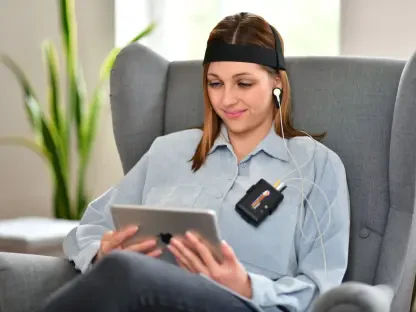
The study revealed a fascinating contrast between the high levels of adherence to wearing the technology and the actual effectiveness of the devices in changing behavior. Patients wore the sensors on 100% of the available days during their inpatient care and maintained a 96.6% adherence rate once they moved home. This demonstrates that even frail older adults, including those with minor cognitive impairments, are fully capable of incorporating wearable technology into their daily routines. The small, hip-worn sensors did not seem to interfere with their comfort or clothing, proving that the hardware itself is well-suited for this demographic. However, researchers noted that this high level of compliance might have been driven more by a desire to be “good patients” and follow their doctors’ instructions rather than a genuine belief that the device was aiding their recovery. This psychological factor is important for developers to consider when designing future health interventions for the elderly.
The technological infrastructure behind the study relied on 3D accelerometers that recorded movement data at a high frequency, which was then transmitted via a Raspberry Pi-based system to cloud-based dashboards. While the hardware was robust enough to collect vast amounts of data, the back-end processing revealed several logistical challenges in a real-world clinical setting. For instance, the system required a stable internet connection and consistent data syncing, which occasionally failed in home environments. These technical hiccups, though minor in a research context, can be major barriers to adoption in a standard medical workflow. For wearable tech to become a staple of geriatric rehabilitation, the data transmission process must be entirely seamless and require zero technical intervention from either the patient or the physical therapist. The goal is to move toward a “set and forget” model where the focus remains entirely on the clinical insights provided by the data rather than the mechanics of the sensor itself.
Barriers to Effective User Experience
Usability proved to be the most significant hurdle for both patients and healthcare providers, as the feedback on the digital interface was largely critical. Physical therapists found the system useful as a way to start conversations about activity, but they were often frustrated by the abstract nature of the metrics provided. Specifically, the “Physical Activity Measure” (PAM) score was criticized for being opaque and difficult to explain to patients who wanted to know simple things like how many steps they had taken. Furthermore, technical inaccuracies undermined the trust that is essential for any medical tool. For example, the sensors sometimes failed to record the intense physical effort required for a patient to climb a flight of stairs, leading to a discrepancy between the patient’s perceived exertion and the data shown on the screen. When a patient works hard to achieve a goal and the technology fails to acknowledge it, the motivational benefit of the system is completely lost.
Patients echoed these sentiments, with a majority reporting that the wearable system provided no perceived added value to their recovery process. A significant issue was the lack of real-time, direct feedback on the device itself; since the sensor had no screen, patients had to wait for a therapy session or navigate a complex digital dashboard on a computer to see their progress. This delay in feedback prevented the system from acting as a “nudge” to encourage immediate movement. Less than half of the participants felt they received adequate support from their clinical team in interpreting the data, leading many to believe the device was being used for the benefit of the researchers rather than for their own health. This disconnect highlights a critical flaw in current eHealth design: if the user does not see a clear, immediate benefit from the technology, they are unlikely to engage with it on a level that leads to meaningful behavior change, regardless of how accurate the sensors might be.
Improving the Future of Geriatric eHealth
Designing for Immediate Impact
To move the needle on patient activity, the next generation of wearable devices must shift toward a more user-centric design that prioritizes immediate impact. Healthcare professionals suggested that devices should incorporate haptic or visual signals, such as a gentle vibration or a simple light notification, to alert patients when they have been stationary for too long. These real-time nudges could serve as a vital link between sedentary habits and active recovery, providing a constant reminder that movement is a key component of the healing process. By moving the feedback loop from a distant dashboard to the patient’s own body, developers can create a more interactive and encouraging experience. Such features would transform the sensor from a passive recording tool into an active participant in the rehabilitation journey. This evolution is necessary to overcome the “resting to recover” mindset that currently hinders the progress of many older adults in post-acute care settings.
In addition to real-time alerts, the metrics used to track progress must become more intuitive and recognizable to the average user. Replacing abstract algorithmic scores with concrete data points like “minutes of movement” or “step counts” would make the rehabilitative goals feel much more attainable. When a patient can see that they have completed ten more minutes of light activity than the day before, it provides a tangible sense of accomplishment that a complex PAM score cannot replicate. The inclusion of simple, high-contrast displays on the hardware itself would also reduce the “digital friction” associated with logging into external websites or apps. For the geriatric population, simplicity is not just a preference; it is a requirement for long-term engagement. By grounding the data in familiar concepts, technology can foster a sense of agency and empowerment, allowing patients to take a more proactive role in their own recovery rather than being passive subjects of clinical observation.
Bridging the Gap Through Better Engineering
The hardware for monitoring geriatric health reached a high level of maturity by 2026, with sensors becoming small, durable, and capable of high-frequency data collection. However, the study highlighted that the remaining challenge is largely psychological and systemic rather than purely mechanical. To be truly effective, technology must be integrated into a broader “rehabilitation climate” where every member of the care team—from nurses to family members—is aligned in the goal of reducing sedentary time. Education is a critical piece of this puzzle, as many patients and their families still hold the mistaken belief that total rest is the best path to healing. Clearer communication regarding the dangers of prolonged sitting must be paired with the data provided by wearables to create a compelling case for activity. When the entire multidisciplinary team uses the sensor data as a shared roadmap, the technology becomes a powerful catalyst for a culture shift within the ward and the home.
The findings from the Dutch study demonstrated that while wearable sensors were a feasible tool for the geriatric population, their implementation fell short of their transformative potential. The research clearly showed that simply monitoring a patient did not lead to a significant reduction in sedentary behavior, emphasizing the need for more active and intuitive feedback mechanisms. The study highlighted the importance of accuracy in maintaining user trust, as failures to record strenuous effort led to frustration among both patients and therapists. Moving forward, the clinical community recognized that technology must be paired with a shift in the rehabilitation climate to be effective. By focusing on user-centric design and the simplification of data, future systems aimed to bridge the gap between the stationary reality of the hospital ward and the active independence that patients desired. These insights provided a clear path for developers to create tools that not only tracked recovery but also actively drove the behavioral changes necessary for a successful return to daily life.