
The Eastern Highlands Provincial Health Authority has pledged to provide medical equipment and staff only after witnessing the Ibusa community’s significant upfront investment in their own facility. This decisive shift in strategy underscores a growing realization that top-down government interventions often fail in remote areas without substantial local buy-in and maintenance. For the ten thousand residents of the Ibusa region in Okapa District, the absence of accessible medical care was once a life-threatening reality that required long, dangerous journeys to distant stations. Rather than waiting for external aid that might never arrive, the community took charge of its own destiny, illustrating how localized initiative can effectively catalyze formal state support. This model is currently challenging the traditional paradigm where citizens are passive recipients of aid, proving instead that active participation is the most effective precursor to institutional cooperation. The success of this facility marks the beginning of a new era for rural development where self-reliance is the primary engine of growth.
A Local Movement for Healthcare Sovereignty
Part 1: Resource Mobilization and Private Contributions
The financial foundation of the health post was established through a grassroots mobilization effort that raised approximately K50,000, a significant sum for a remote agricultural community. This capital was not sourced from international grants or central government budgets but rather from the personal contributions of the residents themselves. A pivotal moment in the funding phase occurred when Sebastian Kela, the owner of Black Ant Transport and City Tours, contributed K10,000 to bridge the remaining gap in the project’s budget. This private donation demonstrated how local entrepreneurship can align with social needs to create immediate community benefits. Such contributions transformed the project from a hopeful concept into a funded reality, providing the necessary liquidity to purchase specialized building materials that could not be sourced locally. This financial independence allowed the Ibusa community to maintain total control over the construction timeline and design specifications of the medical facility without outside interference.
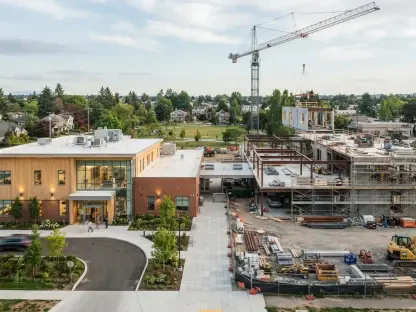
Beyond the financial contributions, the physical manifestation of the health post relied heavily on the donation of local resources and high-quality skilled labor. Local landowners recognized the long-term value of the project and officially donated the land, ensuring that the facility would have a permanent and secure location for decades to come. Meanwhile, the community provided massive quantities of timber, harvested and processed by residents who viewed the work as an investment in their children’s future. Skilled volunteer carpenters from within the Ibusa region led the construction efforts, applying professional standards to the building’s framing and finishing without demanding wages. This collective sweat equity significantly reduced the overall cost of the project while fostering a profound sense of psychological ownership among the people. By utilizing regional materials and local expertise, the community ensured that the building was structurally sound and culturally appropriate for its surroundings.
Part 2: Strategic Planning and Long-Term Vision
The success of the Ibusa Health Post was not an accidental occurrence but rather the result of organized leadership under the Ibusa Community Development Initiative. Spearheaded by SDA Minister Nathan Entano, the initiative provided a clear vision and a structured framework for the project’s execution. Minister Entano’s role was crucial in mediating discussions between various clans and ensuring that the community remained focused on the collective goal of health infrastructure. Under this leadership, the initiative moved away from the fragmented, short-term planning that often characterizes rural development. By establishing a central committee to manage funds and coordinate labor, the project avoided the common pitfalls of mismanagement and internal disputes. This professionalized approach to community organizing served as the backbone of the entire operation, proving that religious and social leaders can play a transformative role in driving modern infrastructure projects forward.
The health post serves as the primary milestone within a much larger strategic social development plan designed to guide the region from 2026 through 2030. This comprehensive roadmap emphasizes reconciliation and the systematic improvement of local infrastructure as the twin pillars of regional stability. By looking ahead to the next four years, the Ibusa community has signaled its commitment to a permanent transformation of its social landscape. The plan outlines specific targets for educational improvements, law and order initiatives, and further healthcare expansions to meet the needs of the growing population. This forward-looking perspective ensured that the health post was built with future scalability in mind, rather than being a temporary fix for an immediate crisis. The alignment of local residents around a five-year vision has created a sense of purpose that transcends individual projects, establishing a blueprint for how other districts might transition toward sustainable modernization.
Redefining the Partnership Between State and Citizen
Part 3: Clinical Infrastructure and Accessibility
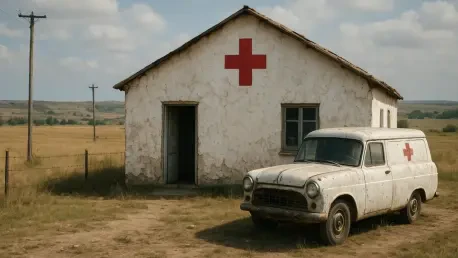
Prior to the construction of this facility, the logistical challenges of obtaining medical care in the Okapa District were often insurmountable for the most vulnerable citizens. Residents were frequently forced to trek long distances across rugged terrain to reach the health station at Okapa Station, a journey that could take hours or even days depending on the weather and road conditions. For expectant mothers or those suffering from acute infections, these delays often resulted in tragic outcomes that were entirely preventable with basic clinical intervention. The opening of the Ibusa Health Post directly addresses this accessibility gap by bringing essential services to the doorstep of over ten thousand people. By drastically reducing travel times, the community has effectively lowered the barriers to healthcare entry, ensuring that patients can seek treatment at the onset of symptoms rather than waiting until a condition becomes critical for survival.
The physical layout of the health post was meticulously designed to provide a comprehensive suite of medical services that mirror the capabilities of larger urban centers. The facility includes a dedicated outpatient department to handle routine illnesses and injuries, alongside a specialized maternal and child health section. Perhaps most importantly, the inclusion of a fully equipped labor ward ensures that women in the Ibusa region now have a safe, sterile environment for childbirth, supported by professional staff housing located on the premises. This on-site housing is a critical feature, as it allows medical professionals to remain within the community full-time, providing around-the-clock emergency care that was previously non-existent. By integrating these diverse clinical areas into a single cohesive structure, the project provides a holistic healthcare solution. This sophisticated design demonstrates that community-led projects do not have to sacrifice quality for cost-effectiveness.
Part 4: Integration with Provincial Health Systems
The proactive stance taken by the Ibusa people caught the attention of the Eastern Highlands Provincial Health Authority, which had been struggling to maintain rural aid posts. Michael Muri, representing the authority, noted that while the province technically has nearly 150 aid posts, a significant number of them remain closed due to a lack of local maintenance and community support. The Ibusa project presented a starkly different scenario, where the community had already demonstrated its commitment to the facility’s longevity through significant capital investment. In response to this initiative, the provincial government pledged to integrate the health post into the formal state system, promising to provide essential medical equipment such as a vaccine refrigerator and modern hospital beds. Furthermore, the authority committed to deploying a qualified nursing officer to manage the clinical operations. This partnership ensures that local investment is augmented by professional medical expertise.
The inauguration of the Ibusa Health Post established a new standard for rural development that moved beyond the traditional reliance on external charity. This project demonstrated that when local residents took the lead in infrastructure development, government agencies were more likely to fulfill their secondary roles with efficiency and speed. The initiative successfully reduced regional healthcare disparities by placing essential services within reach of thousands who were once marginalized by geography. Looking forward, the most effective path for similar districts involved the creation of local development committees that prioritized self-funded pilot projects to attract state attention. Strategic investments in staff housing and permanent building materials proved to be the most reliable methods for securing long-term government staffing commitments. This transition from passive waiting to active building provided a repeatable framework for addressing gaps in education and public safety.