
The challenge of managing hypertension in rapidly developing economies has historically been hampered by a reliance on expensive imported medical devices that often lack localized support or accessible price points. As healthcare systems globally pivot toward resilience and self-sufficiency, the integration of high-precision German engineering with regional manufacturing hubs is proving to be a game-changer for public health initiatives. The Hospital Expo 2026, held at the ICE BSD City in Tangerang, recently became the focal point for this shift as the Indonesian Hospital Association showcased how artificial intelligence and local production can revolutionize patient care. In this environment, the introduction of a locally produced digital blood pressure monitor signifies more than just a new product launch; it represents a strategic alignment between international quality and industrial growth.
Production
Part 1: Kendal
Establishing a robust manufacturing presence within Indonesia represents a significant departure from traditional import-heavy models favored by international medical technology firms. The production of the BM 21 blood pressure monitor at the PT Beurer Indonesia Technology facility in Kendal, Central Java, serves as a primary example of how global brands are now prioritizing domestic industrial footprints. This facility is not merely an assembly point but a sophisticated manufacturing hub designed to meet the rigorous benchmarks set by German engineering while navigating the unique logistics of the Southeast Asian market. By focusing on local production, the initiative ensures a more stable supply chain that is less susceptible to global shipping disruptions or fluctuating import tariffs. Consequently, the localized approach allows for a production capacity exceeding one million units every year.
Part 2: Standards
The transition to localized manufacturing involves a deep commitment to technology transfer and the professional development of the domestic workforce. Managing directors and technology leads have emphasized that while the machinery and designs originate from century-old German expertise, the daily operations are managed by a skilled Indonesian workforce ranging from floor operators to senior management. This synergy between international quality protocols and local talent ensures that every unit produced adheres to the same standards as those manufactured in Europe. Such a collaborative model fosters a culture of technical excellence and provides high-value employment opportunities within the Central Java industrial corridor. Furthermore, the integration of local management allows for a more nuanced understanding of regional health needs, ensuring the pipeline remains quite responsive.
Features
Part 3: Design
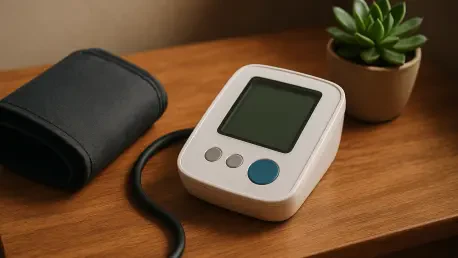
Modern medical devices must bridge the gap between clinical-grade accuracy and the simplicity required for home use by non-professionals. The BM 21 monitor addresses this by incorporating several user-centric features, such as a one-button operation system and a versatile USB Type-C power option that enhances portability for users who travel frequently. To further assist the average consumer, the device includes a color-coded indicator system based on international guidelines, which allows for immediate and easy interpretation of blood pressure results. Beyond simple measurement, the hardware incorporates advanced arrhythmia detection and a positioning assistant to ensure that the user maintains the correct posture during the process. These features are critical because incorrect positioning is one of the most common causes of inaccurate readings. By automating the validation, the tech provides reliability.
Part 4: Health
The deployment of the BM 21 was closely linked to a broader digital strategy involving the Beurer HealthManager Pro application, which facilitated seamless data tracking for medical consultations. This integration reflected a consensus in the modern medical community that digital history was essential for managing chronic conditions like hypertension effectively. Beyond the technical specifications, the launch was accompanied by extensive public health advocacy programs and free screenings designed to foster a preventative health culture. Marketing teams worked to simplify the monitoring process, encouraging families to adopt blood pressure checks as a routine household habit rather than a reactive measure. Ultimately, the successful introduction of this locally made device at the Hospital Expo 2026 underscored a shift toward industrial growth. The project demonstrated that localized manufacturing could maintain standards.