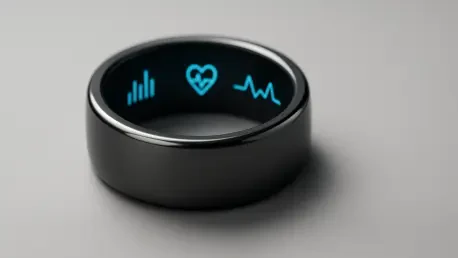

The research underscores a critical link between mental health status and the duration of light sleep stages, providing a tangible metric for psychological assessment. Utilizing data from a significant group of 1,290 participants within the Northern Finland Birth Cohort, researchers investigated how metrics from the second-generation Oura Ring correlate with mental health symptoms. This research is particularly notable because it relies on passive data collection during participants’ daily lives rather than controlled clinical settings, and it intentionally withheld app feedback to ensure behavior remained natural and uninfluenced by the device’s readiness scores. By focusing on raw data, the study successfully avoided the psychological bias that often occurs when users attempt to adjust their habits in response to digital nudges or daily performance metrics. As the integration of biometric monitoring into daily life reaches a state of near-ubiquity in 2026, the transition from tracking simple fitness goals to identifying complex internal states marks a profound shift in consumer healthcare.
Decoding the Physical Evidence of Mental Distress
Sleep Architecture: Patterns as Diagnostic Indicators
Individuals who reported moderate-to-severe symptoms of anxiety and depression exhibited a distinct physiological profile that manifested most clearly during their nocturnal rest periods. A key finding from the extensive dataset indicated that these individuals typically experience diminished sleep quality, characterized by significantly less time in restorative REM and deep sleep stages. In contrast, there was a measurable increase in the duration of light sleep, suggesting that the brain is unable to achieve the necessary depth of recovery required for emotional regulation. This shift in sleep architecture serves as a measurable byproduct of mental health struggles, providing a bridge between subjective feelings and objective biological data. Because the Oura Ring captures these transitions throughout the entire night, the consistency of these patterns across the study population suggests that sleep monitoring could become a primary tool for early intervention and continuous psychological monitoring in the coming years.
The disruption of restorative sleep cycles often precedes the conscious awareness of a depressive or anxious episode, making this data invaluable for preventative care. By analyzing the time spent in each phase of sleep, the researchers were able to identify a consistent trend where participants with high psychological distress scores spent hours in a state of light sleep, which lacks the cognitive and physical repair benefits of deeper stages. This lack of restorative rest likely creates a feedback loop, exacerbating mental health symptoms during waking hours and further deteriorating sleep quality the following night. The use of consumer-grade hardware for this purpose represents a democratization of clinical-grade sleep analysis, allowing for long-term tracking that would be impossible in a traditional laboratory setting. Furthermore, the absence of intervention during the study period ensured that the results reflected the participants’ authentic biological responses to their mental state rather than any external coaching or habit modification.
Heart and Activity: Cardiovascular Responses and Daily Movement
Beyond the structural components of sleep, the data revealed a striking correlation between mental health status and specific cardiovascular markers recorded during the night. Participants struggling with significant anxiety and depression symptoms consistently showed higher resting heart rates while asleep compared to their healthier counterparts. Perhaps more significantly, these individuals also displayed lower heart rate variability, which is a key indicator of the autonomic nervous system’s ability to manage stress and maintain balance. A lower HRV typically suggests that the body is in a state of chronic sympathetic activation, often referred to as the fight-or-flight response, which prevents the heart from responding flexibly to changing conditions. These cardiovascular patterns highlight the systemic nature of mental illness, demonstrating that psychological distress is not confined to the mind but is instead deeply embedded in the body’s primary regulatory systems and vital organs.
Daytime behavioral patterns also offered significant insights, with the study noting a marked decrease in physical activity among those experiencing mental health challenges. This reduction in movement during the day, combined with the physiological stressors observed at night, paints a comprehensive picture of how depression and anxiety alter a person’s entire lifestyle and metabolic output. The passive nature of the Oura Ring’s tracking allowed for the observation of these changes without the need for active reporting, which can often be unreliable for individuals suffering from low motivation or cognitive fatigue. By documenting a decrease in daily steps and general activity levels, the researchers confirmed that mental health symptoms permeate every aspect of physical existence. This objective tracking of lethargy or restlessness provides clinicians with a more accurate baseline of a patient’s daily functioning than self-reported surveys, which are often subject to memory bias or the social desire to appear more active than they truly are.
Integrating Complex Biometrics for Clinical Insight
Data Synthesis: The Shift Toward Multi-Metric Analysis
A critical nuance highlighted in the analysis is the inherent limitation of relying on any single biometric metric to diagnose or monitor complex mental health conditions. While lower heart rate variability is a well-known indicator of systemic stress, it remains fundamentally non-specific and can be influenced by a multitude of external factors such as alcohol consumption, minor illness, or recent physical overtraining. Therefore, looking at HRV in isolation could lead to inaccurate conclusions regarding a person’s psychological state. The researchers argue that the synthesis of multiple data points is the only way to achieve high diagnostic accuracy. By combining HRV, sleep architecture, resting heart rate, and movement patterns, they created a robust physiological signature that is far more indicative of mental health status than any individual measurement. This holistic pattern-matching represents a sophisticated shift toward the use of wearable data in a way that respects the complexity of the human body and mind.
This multi-metric approach allows for a more personalized understanding of how mental health symptoms manifest in different individuals over time. For example, one person might show symptoms primarily through disrupted sleep stages, while another might display a significant drop in heart rate variability alongside reduced physical activity. By aggregating these various signals, wearable technology can detect the emergence of a unique distress fingerprint that signals a decline in well-being before a crisis occurs. This level of detail enables a move away from generic health advice toward precision psychiatry, where interventions can be tailored to the specific physiological changes an individual is experiencing. As data processing algorithms continue to improve from 2026 to 2028, the ability to interpret these complex signatures will likely become even more refined, transforming smart rings into proactive mental health guardians. This evolution will require a focus on data privacy and ethical considerations as these devices collect increasingly intimate information.
Future Implementation: Research Constraints and Actionable Steps
Despite the promising results, the study acknowledged several limitations that must be addressed in future research phases to ensure the findings are broadly applicable. As a cross-sectional analysis, the project established a correlation at a single point in time rather than proving a definitive causative or predictive link between biometric changes and mental health decline. The demographic scope was also intentionally narrow, focusing solely on a specific Finnish age cohort of people between 33 and 35 years old. This specificity means that while the data is highly accurate for this group, it may not immediately generalize to younger adolescents, elderly populations, or different cultural backgrounds where lifestyle factors vary significantly. Addressing these gaps will be essential for the widespread adoption of smart rings as diagnostic tools. Researchers suggested that longitudinal studies tracking the same individuals over several years would provide deeper insights into how biometric trends evolve as mental health conditions progress.
The investigation successfully highlighted the potential for standard smart rings to detect complex mental health trends through raw data patterns without requiring user interaction. Clinicians and researchers considered the findings a vital step toward integrating wearable technology into standard psychological care frameworks. To move forward, the development of specialized software that can interpret these physiological signatures in real-time was prioritized to provide users with actionable alerts. It became clear that the hardware already resting on consumers’ fingers possessed the capability to act as a sentinel for psychological well-being. Stakeholders in the healthcare industry focused on creating ethical guidelines for data sharing between personal devices and medical professionals to ensure patient trust. The study ultimately proved that the body’s quiet signals, captured during sleep and daily movement, offered a profound window into the state of the human mind, paving the way for a more integrated approach to modern healthcare.