
Cybersecurity experts compare forgotten network connections in medical facilities to a contractor’s lockbox left on a building wall with a default factory code. This alarming analogy highlights a growing reality where digital negligence leads to immediate physical dangers in the healthcare sector. In early November 2026, a sophisticated cyberattack targeted the industrial control systems of the Établissement Français du Sang (EFS), France’s national blood agency. Unlike traditional data breaches where credit card numbers or patient records are the primary prizes, this operation specifically manipulated the temperature settings in three critical cold-storage facilities. Hackers managed to raise defrosting thresholds to levels that could have rendered thousands of bags of life-saving plasma useless. While robust monitoring systems and quick-thinking personnel ultimately saved the inventory, the event served as a global wake-up call. Federal agencies in the United States quickly noted that these were not isolated incidents but part of a broader, active campaign scanning for vulnerabilities in industrial refrigeration networks worldwide. As medicine becomes increasingly reliant on precise climate control, the digital security of the cold chain is no longer just a technical concern but a fundamental pillar of patient survival and public health stability.
1. Recent Malicious Cyberattacks Targeting Critical Infrastructure Within French Blood Banks and Medical Facilities
The French Blood Establishment serves as a critical backbone for the nation’s healthcare system, collecting and distributing essential blood products to hospitals across the country. During the breach that occurred between November 1 and 2, attackers gained unauthorized access to the industrial control systems that regulate the environment of the agency’s storage units. By raising the temperature and defrost thresholds to dangerous levels, the intruders created a scenario where vital plasma supplies were on the brink of spoilage. It is particularly significant that the blood agency itself was not the primary entry point for the hackers. Instead, the attackers successfully breached the security of a third-party supplier responsible for the remote management and maintenance of the refrigeration equipment. This indirect route allowed the hackers to bypass the blood agency’s internal cybersecurity protocols, demonstrating that even the most secure organizations are only as strong as the vendors they hire to manage their physical infrastructure and utility services.
The incident at the French blood bank follows a concerning pattern observed throughout late 2025 and into 2026, where cybercriminals have increasingly focused on operational technology rather than just traditional data. Only weeks prior to this event, several major European supermarket chains reported that hackers had gained remote control over their commercial refrigeration systems, threatening food safety on a massive scale. These operations indicate that malicious actors are testing the limits of physical disruption, moving beyond the digital extortion of ransomware to focus on the destruction of perishable goods. Fortunately, in the French case, automated internal monitoring systems alerted staff to the temperature drift before any biological products were compromised. Personnel acted swiftly to relocate the plasma bags and secure the units, but the event exposed a structural weakness in how industrial cooling is managed. The focus has shifted from protecting files to protecting freezers, as the consequences of failure in this sector can result in a direct loss of life.
2. Vulnerable Medical Supplies and Medications
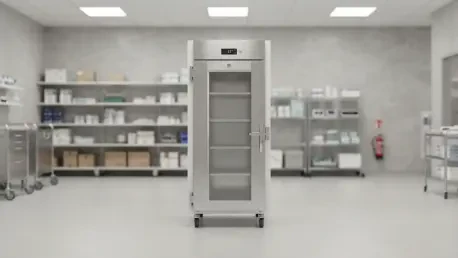
The integrity of modern medicine depends heavily on the “cold chain,” an unbroken and highly regulated climate-controlled pipeline that begins at the manufacturer and ends at the patient’s side. Many biological therapies and medications are extremely sensitive to temperature changes and can lose their molecular stability if they deviate from narrow environmental windows even for a short time. Federal regulations in the United States are incredibly strict regarding these requirements; for example, fresh frozen plasma must be stored at minus 18 degrees Celsius or colder, while red blood cells are required to stay in a precise range between 1 and 6 degrees Celsius. When hackers target these systems, they are not just attacking a computer; they are attacking the biological viability of the product itself. The range of items vulnerable to such disruptions includes donated blood, specialized platelets, and various life-saving vaccines that are often stored in regional distribution hubs before being moved to local clinics.
Beyond emergency blood supplies, the list of vulnerable medications includes daily necessities for millions of people, such as insulin and modern injectable GLP-1 medications used for diabetes and weight management. Biologic drugs used to treat complex conditions like cancer and autoimmune diseases are also at significant risk, as these medications often consist of complex proteins that break down quickly when exposed to heat. Laboratory research and the storage of human tissue or organ specimens also rely on these same industrial refrigeration networks. A break in the cold chain can weaken these products to the point where they are either ineffective or, in some cases, dangerous to administer. The Centers for Disease Control and Prevention emphasizes that proper handling is non-negotiable from production to administration, yet the digital vulnerabilities in the storage phase represent a growing gap in this safety net. As more specialized medicines enter the market, the dependence on a secure, hack-proof cooling infrastructure will only increase.
3. How Hackers Bypass Main Systems
The primary technical vulnerability in medical supply chains involves operational technology (OT), which consists of the hardware and software that control physical processes. While a hospital’s information technology (IT) department might spend millions of dollars securing patient records and billing portals, the OT systems that run the building’s freezers and climate control systems are often overlooked. These devices frequently sit at the edge of the network and are managed by third-party maintenance contractors who require remote access for convenience. Hackers take advantage of this by targeting unpatched controllers that are directly accessible via the public internet. By exploiting flaws that allow them to bypass standard login procedures or execute remote commands, attackers can gain full control over environmental settings without ever needing to touch the hospital’s main secure server or steal a single employee’s password.
Furthermore, attackers can implement what cybersecurity experts call a “denial of view” attack, which is perhaps more dangerous than simply changing the temperature. In this scenario, hackers freeze the monitoring dashboard so that it continues to display a safe temperature to human operators, even while the actual temperature in the storage unit is rising rapidly. This creates a state of false confidence among the staff, who may believe the system is functioning perfectly while the inventory is being destroyed in real time. Because these operational technology (OT) connections are often managed by external vendors and are not fully integrated into a facility’s primary cybersecurity defense plan, many organizations are unaware that these backdoors even exist. This lack of visibility means that critical medical equipment remains exposed through legacy connections that were established years ago and never properly audited or closed, providing a persistent and silent invitation to malicious actors.
4. Risks to U.S. Supply Chains
In early November 2026, the Cybersecurity and Infrastructure Security Agency (CISA) joined forces with the FBI and other federal departments to issue an urgent warning regarding malicious activity targeting industrial refrigeration globally. This advisory explicitly identified the healthcare and public health sectors as high-risk targets, including hospitals, community pharmacies, and blood banks. The federal warning emphasizes that cybercriminals are actively scanning for specific industrial controllers used in the cold chain, looking for easy points of entry. While there have been no confirmed reports of American medical supplies being compromised as of late 2026, the sheer volume of scanning activity suggests that a large-scale attempt is imminent. The risk is compounded by the fact that the U.S. healthcare system is highly interconnected, meaning a breach at a single regional transport company or a large drug wholesaler could have a ripple effect that impacts clinics and patients across multiple states.
The nature of the threat to U.S. supply chains has evolved significantly since the high-profile ransomware attacks of the mid-2020s. While the 2024 attack on Change Healthcare disrupted the financial and administrative aspects of healthcare, the current focus on refrigeration adds a daunting physical dimension to cyber warfare. A ransomware attack might lock a file, but a cold-chain attack can physically destroy medicine that took months to manufacture. This creates immense pressure on healthcare providers, as they cannot simply “restore from a backup” when a batch of blood or a shipment of cancer medication has been ruined by heat exposure. The threat is no longer theoretical; it is a clear and present danger to the logistics of American healthcare. Every organization that depends on climate monitoring must now assume it is being watched by adversaries who understand exactly how to exploit the fragile relationship between digital controls and physical outcomes.
5. Consequences of Storage Disruptions
When the storage temperature of medical supplies drifts out of the required range, the consequences are immediate and often irreversible. For many medications, such as vaccines or insulin, heat damage is not something that can be seen with the naked eye. A vial of insulin that has been exposed to high temperatures may look identical to a safe one, but its potency could be significantly reduced, leading to dangerous spikes in a patient’s blood sugar levels. In the case of vaccines, the CDC mandates that any product exposed to improper temperatures must be labeled “do not use” until the manufacturer can verify its safety. In practice, this often results in the entire batch being discarded to avoid any risk of administering an ineffective dose. This creates a massive financial burden for healthcare providers and insurance companies, but more importantly, it creates a shortage of critical supplies that can delay urgent medical interventions.
The downstream effects of a single cold chain failure extend far beyond the lost product itself; because blood and plasma products rely entirely on the generosity of volunteer donors, they cannot be manufactured in a factory to meet a sudden spike in demand. If a regional blood bank loses its inventory due to a cyberattack, it may take weeks of emergency blood drives to replenish those life-saving units. During that time, hospitals may be forced to postpone elective surgeries or prioritize trauma cases, directly impacting the quality of care for the entire community. Furthermore, canceled vaccine clinics can lead to gaps in public immunity, potentially sparking outbreaks of preventable diseases. The destruction of medical supplies through digital means represents a silent crisis where the damage is done before the patient even arrives at the clinic, making the security of the refrigerator as important as the skill of the surgeon.
6. Strengthening Security for Medical Supplies
To combat the rising threat of cold-chain disruptions, federal authorities and security experts have developed a comprehensive set of strategies designed to harden industrial refrigeration systems. The first and most critical step is the immediate removal of all refrigeration controllers from the public internet. Organizations must ensure that these devices are only accessible through secure, private networks that require specialized authentication. Furthermore, it is essential for facilities to change all default factory passwords and replace them with strong, unique credentials that are managed through a centralized system. The implementation of phishing-resistant multi-factor authentication is also recommended for any vendor or staff member who needs to access the control interface. By adding these layers of digital defense, organizations can significantly reduce the likelihood of a successful breach through common entry points like stolen credentials or remote access flaws.
Beyond technical software fixes, physical safeguards and network segmentation play a vital role in a comprehensive security posture. Healthcare facilities should isolate their refrigeration hardware from general business networks used for email and administrative tasks, preventing a virus on a laptop from spreading to freezer controls. It is also important to configure hard safety thresholds and physical alerts that function independently of the digital controller. For instance, installing secondary temperature sensors that trigger a physical alarm if the room gets too warm provides a redundant layer of protection that a hacker cannot easily disable from a remote location. These proactive measures were exactly what saved the French blood supply during the recent attack. By focusing on the physical outcome and maintaining manual oversight, medical suppliers can ensure that even if their digital systems are compromised, the life-saving products they house remain protected and viable for use.
7. Impacts of Cyberattacks on Patients
The intersection of cybersecurity and medicine has reached a point where digital defense is now a primary patient safety issue. When a cyberattack results in a spoiled batch of plasma or the destruction of temperature-sensitive medications, it is categorized as a clinical incident rather than a simple IT failure. Research conducted over the last few years has shown that when one healthcare system is hit by a cyberattack, the strain is felt by every surrounding facility. Nearby emergency departments often see a surge in patient volume, leading to longer wait times and delayed treatment for time-sensitive conditions like strokes or heart attacks. For patients who rely on the cold chain for their survival, such as those with chronic conditions or those awaiting complex surgeries, these digital disruptions create an environment of uncertainty and physical risk that can have long-lasting psychological and health consequences.
Certain populations are disproportionately affected by these infrastructure vulnerabilities; for example, individuals living with sickle cell disease often require regular blood transfusions to manage their condition and prevent complications. Given that this disease affects approximately 100,000 Americans and is most prevalent among Black communities, any disruption to the national blood supply through a cyberattack can exacerbate existing health disparities. Similarly, the millions of people who manage diabetes with insulin are directly threatened when the reliability of the pharmacy supply chain is called into question. These patients depend on a system that is largely invisible to them, trusting that the medicine they pick up has been stored correctly at every step. Protecting the cold chain is therefore not just about securing machines; it is about ensuring health equity and protecting the most vulnerable members of society from the fallout of modern cyber warfare.
8. Frequently Asked Questions
A primary concern during the French blood bank incident was whether the personal information of donors or patients had been compromised. Based on official reports from the national agency, no patient or donor data was stolen during the breach. This is because the hackers focused their efforts entirely on the industrial control systems managed by a third-party refrigeration supplier, rather than attempting to infiltrate the agency’s primary databases where medical records are kept. While this is a relief from a privacy standpoint, it reinforces the idea that modern attackers are increasingly interested in causing physical disruption rather than just stealing identity data. Patients should remain vigilant about their data but also recognize that the physical safety of their medical supplies is now a separate and equally important concern that requires specialized security measures.
Many people wonder if these types of attacks are considered a threat to national security, especially since the United States government officially classifies the healthcare and public health sector as one of the 16 critical infrastructure sectors vital to the nation’s stability. Because a widespread disruption to medical supplies, vaccines, or blood products could lead to mass casualties and social unrest, these cyberattacks are treated with the same level of seriousness as attacks on the power grid or water treatment facilities. Federal agencies like CISA and the FBI are working more closely than ever with private hospitals and medical suppliers to provide the intelligence and tools needed to defend against these threats. As the technology used in our medical infrastructure becomes more connected, the line between digital security and national defense continues to blur, making the safety of our cold chain a top priority for the foreseeable future.
9. Comprehensive Strategic Planning and Critical Next Steps Required for Enhancing Essential Medical Infrastructure
To ensure the long-term safety of the medical supply chain, healthcare administrators and facility managers took several decisive actions following the recent global advisories. The transition toward hardware-based security modules for industrial controllers became standard practice, ensuring that even if a network was breached, the physical settings of a cooling unit remained under manual or hard-coded control. Organizations also conducted extensive audits of their vendor relationships, demanding higher cybersecurity standards from the companies that manage their HVAC and refrigeration systems. These steps helped close the “hidden backdoors” that previously allowed hackers to move undetected through facility networks. By treating every connected freezer as a critical endpoint, the industry began to shift away from a reactive posture toward one of proactive resilience, prioritizing the physical integrity of biological products above all else.
Moving forward, the integration of independent, non-networked monitoring systems provided a final line of defense that proved invaluable for patient safety. Hospitals and clinics implemented secondary temperature sensors that communicated via separate cellular links or local alarms, ensuring that staff members were notified of temperature fluctuations regardless of the state of the primary digital network. Educational programs for pharmacists and clinicians also improved, focusing on how to identify potential cold-chain failures and how to communicate these risks transparently to patients. These comprehensive solutions effectively bridged the gap between IT departments and clinical staff, creating a unified front against digital threats. The lessons learned from the French blood bank incident were applied globally, transforming the way medical supplies are protected and ensuring that the most sensitive medications remained safe from the evolving tactics of cyber adversaries.