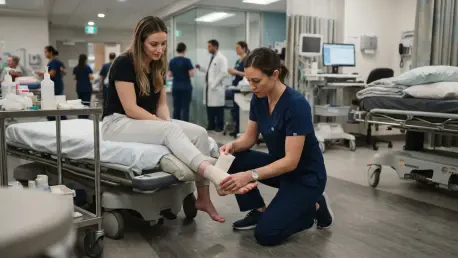

The escalating pressure on global emergency services is being driven by an aging population and a corresponding rise in complex healthcare needs. Hospitals across North America and Europe are grappling with unprecedented wait times, often resulting in patient dissatisfaction and provider burnout. Traditional triage systems frequently funnel minor musculoskeletal injuries into the same high-intensity streams as critical medical emergencies, creating a bottleneck that delays care for everyone. To address this, healthcare systems are increasingly looking toward specialized roles to streamline patient flow. One of the most promising developments is the integration of Advanced Practice Physiotherapists directly into the emergency department workforce. By leveraging their expertise in musculoskeletal health, these professionals can manage a significant portion of the incoming caseload independently, allowing emergency physicians to focus on life-threatening conditions. This shift represents a broader movement toward multidisciplinary care where every clinician operates at the top of their professional license to maximize outcomes.
Clinical Efficacy and Diagnostic Precision
Validating Practitioner Performance: Accuracy in Triage
Recent data from 2026 suggests that the clinical competence of Advanced Practice Physiotherapists matches that of seasoned emergency physicians when diagnosing acute orthopedic issues. A comprehensive review published in BMC Emergency Medicine analyzed thirty-two distinct studies, confirming that these specialists maintain a high level of diagnostic agreement with medical doctors. This precision is vital because it ensures that patients receive accurate assessments without the need for multiple redundant consultations. When an APP evaluates a sprain, fracture, or back injury, their targeted examination techniques often lead to the same conclusions as a senior trauma surgeon. This reliability is the foundation of the trust required to decentralize emergency care safely. Moreover, the implementation of such roles has shown that physiotherapists can handle complex presentations with a degree of nuance that reduces the likelihood of diagnostic errors in high-pressure environments, which is essential for maintaining safety standards.
Analyzing Resource Management: Reducing Diagnostic Load
Beyond simple diagnosis, the impact on healthcare resource utilization is substantial and immediate. Patients seen by APPs are significantly less likely to be referred for expensive and time-consuming diagnostic imaging, such as magnetic resonance imaging or computed tomography scans, compared to those treated by traditional medical staff. This reduction is not due to a lack of diligence but rather a more specialized physical assessment that identifies clinical indicators more effectively. Furthermore, there is a measurable decline in the prescription of opioid-based medications and other high-risk pharmaceuticals, as physiotherapists prioritize non-pharmacological interventions and specialized education. By decreasing the reliance on these resources, emergency departments can better manage their budgets and reduce the physical footprint of outpatient care within the hospital walls. The streamlined approach facilitates a faster discharge process, which is essential for maintaining bed availability for patients who require intensive monitoring.
Organizational Impact and Stakeholder Perception
Navigating the Limitations: Research Gaps and Policy
Despite the clear benefits observed from 2026 onwards, significant gaps in the current research infrastructure remained a hurdle for universal adoption. While clinical efficacy is well-documented, there is a pressing need for more rigorous, large-scale randomized controlled trials to satisfy the stringent requirements of healthcare policymakers. The existing literature, while supportive, lacks the depth of longitudinal economic data required to prove long-term cost-effectiveness. Administrators are often hesitant to invest in new roles without a clear picture of the return on investment over several fiscal years. To bridge this gap, upcoming studies must focus on tracking the total cost of care, including secondary visits and long-term disability claims. Addressing these evidentiary needs will be crucial for transforming APP roles from experimental pilot programs into permanent pillars of the modern emergency care system, ensuring that hospital infrastructure can withstand future surges in patient demand without compromising quality.
Synthesizing the Solution: Scalable Implementation
Future success in emergency care management depended on the commitment to data-driven expansion and the integration of digital health tools to support APP workflows. Hospital boards and health ministries focused on developing comprehensive interoperability between emergency departments and community rehabilitation centers to ensure seamless patient transitions. They invested in specialized triage software that automatically identified candidates for physiotherapy consultation upon arrival, reducing initial wait times by nearly thirty percent in some pilot regions. Educational institutions adjusted their curricula to include more intensive acute care training, preparing the next generation of therapists for the rigors of the ER. By addressing the economic and legislative barriers identified in early research, policymakers established a framework where multidisciplinary care became the default rather than the exception. This proactive approach turned the tide on overcrowding by fundamentally rethinking who provides care and how it is delivered in the most critical moments.