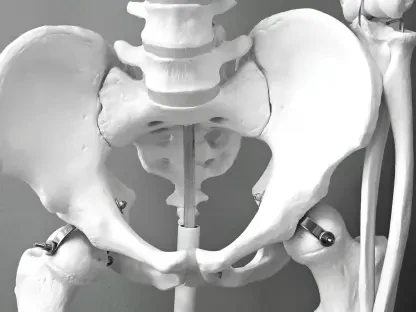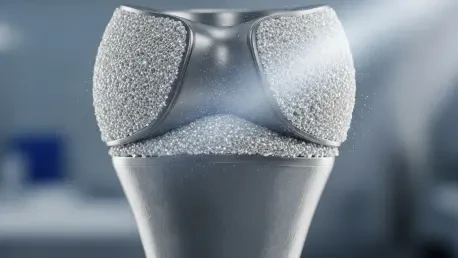

In the high-stakes field of orthopedic surgery, the long-term success of hip and knee replacements has historically been hampered by the body’s own defense mechanisms and the threat of bacterial infection. However, a significant breakthrough from the National Institute of Technology Karnataka (NITK) Surathkal is poised to change that narrative. Led by Associate Professor Dr. Sudhakar C. Jambagi and Dr. Deep Shankar, the research team has developed a patented antimicrobial coating that bridges the gap between mechanical engineering and biological integration. By utilizing advanced thermal spray techniques, this indigenous innovation offers a durable solution to implant loosening and post-surgical complications. James Maitland, an expert in the intersection of robotics and medicine, joins us to discuss how this bioactive coating represents a milestone in biomedical engineering and what it means for the millions of patients seeking to regain their mobility.
The high-velocity oxy-fuel (HVOF) thermal spray process is a sophisticated engineering choice; how does this specific method ensure that the antimicrobial coating remains both durable and effective over years of physical use?
The HVOF process is essentially the backbone of this innovation because it allows for a level of mechanical durability that traditional coating methods simply cannot match. By using this optimized high-velocity thermal spray, the researchers are able to apply a durable bioactive and antimicrobial composite coating directly onto the implant surface with incredible precision. This isn’t just a superficial layer; it is engineered to enhance wear resistance and coating adhesion, which are critical when you consider the thousands of movements a hip or knee joint must perform every single day. In the lab, we see this translate to a surface that won’t flake or degrade, providing a rugged foundation for the bone to latch onto. It’s the difference between a temporary fix and a permanent structural integration that can withstand the heavy mechanical stresses of a human body in motion.
Traditional implants often face significant hurdles regarding infection and loosening; how does your bioactive coating address these biological challenges to improve patient outcomes?
This technology addresses the primary reasons for implant failure by focusing on localized antimicrobial protection and enhanced osseointegration simultaneously. When an implant is placed in the body, the risk of bacterial growth at the site is a constant threat that can lead to devastating post-surgical infections. This coating combats that growth directly at the source, while its bioactive properties encourage a much stronger bond between the bone and the metal. By fostering this “locking” mechanism between the bone and the implant, we drastically reduce the risk of loosening, which is one of the most common reasons patients require painful revision surgeries. Seeing these results in preclinical studies is incredibly heartening because it means we are moving toward a future where millions of orthopedic implant recipients can trust their hardware to last a lifetime.
With multiple international research publications backing this work, what specific evidence from your preclinical studies suggests that this technology is ready for the transition to real-world clinical use?
The evidence from our preclinical studies has been remarkably consistent, showing that this coating significantly outperforms the conventional implants currently dominating the market. We have meticulously documented the coating’s ability to facilitate bone integration while maintaining an antimicrobial barrier that remains effective long after the surgery is complete. These studies have shown a clear potential to reduce the incidence of revision surgeries, which is a major victory for both patients and healthcare systems. The data was robust enough to secure a patent and fuel the creation of a deep-tech startup specifically designed to bring this solution to the global market. It is not just about a successful lab experiment; it is about a validated, reproducible technology that is now being prepared for full clinical translation.
The journey from an academic doctoral project at NITK to a patented deep-tech startup is quite an achievement; what does the road ahead look like for the commercialization of this indigenous biomedical technology?
The transition from a PhD project under Dr. Sudhakar C. Jambagi to a commercial startup led by Deep Shankar marks a pivotal moment for indigenous biomedical engineering in India. Now that the patent has been granted and the technology has been translated into a startup framework, the focus shifts toward large-scale manufacturing and navigating the regulatory pathways for clinical use. This involves scaling the HVOF thermal spray process so it can be applied to mass-produced implants without losing the precision we achieved in the laboratory. We are also looking at how this technology can be integrated into the wider medical device industry to ensure it reaches the millions of people who need it most. It is a complex journey, but the foundation of international research and proven mechanical durability gives us a very clear roadmap to success.
What is your forecast for the future of orthopedic implant technology over the next decade?
I believe that over the next ten years, we will see a complete shift away from “passive” implants toward “active” bioactive systems like the one developed at NITK. The standard for care will no longer be just a piece of sterile metal; instead, every hip or knee replacement will likely feature localized antimicrobial protection and surfaces engineered for immediate bone integration. This will lead to a dramatic decrease in the global rate of revision surgeries, saving patients from unnecessary physical and emotional trauma while significantly lowering healthcare costs. As we continue to refine these high-velocity thermal spray processes and bioactive composites, the dream of a “lifetime implant” will finally become a routine reality for patients everywhere.