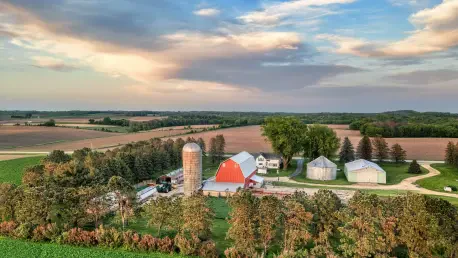

The rhythmic hum of a diesel engine across the vast plains of the Midwest once signaled the arrival of a season of growth, but today it often serves as a reminder of the tightening financial vice squeezing independent agricultural producers across the nation. Families who have spent generations cultivating the soil are currently navigating a convergence of economic pressures that threaten to dismantle the traditional model of the American family farm. This year, the intersection of record-high input costs and a dramatic escalation in personal healthcare expenses has created a “double-whammy” effect, leaving little room for error in a profession already defined by its volatility. While fluctuations in commodity prices are a familiar challenge, the sudden spike in the cost of basic medical security is proving to be a hurdle that even the most resilient operators are struggling to clear. The stability of the rural economy now rests on the ability of these producers to balance the rising cost of staying in business with the increasingly prohibitive cost of staying healthy, a precarious situation that has significant implications for the nation’s food security and the preservation of rural communities.
The Economic Squeeze: Understanding the Input Burden
The current financial landscape for American agriculture is defined by an unprecedented rise in the essential costs of production, commonly referred to as “input costs.” Farmers are facing historic peaks in the prices of anhydrous ammonia fertilizer and specialized diesel fuel, both of which are critical for the planting and harvesting cycles. These expenses are not merely fluctuating; they have reached a plateau that consumes nearly all of the revenue generated from record-high yields, leaving producers with razor-thin margins that offer no safety net for personal emergencies. For many operations, the cost of maintaining high-tech machinery has also surged, as parts shortages and labor costs for specialized mechanics continue to climb. This environment forces farmers to make impossible choices between reinvesting in the technology needed to remain competitive and covering the rising costs of their own survival, creating a cycle of debt that is becoming increasingly difficult to escape as the current growing season progresses.
Beyond the immediate costs of seeds and fuel, the broader economic volatility of the mid-2020s has made the financial success of any given crop year highly uncertain. Global supply chain disruptions and shifting international trade agreements have left independent producers vulnerable to price swings that they cannot control or accurately predict. When these macro-economic factors are combined with the local reality of soaring insurance premiums, the result is a massive transfer of wealth away from rural areas and into the hands of corporate suppliers and healthcare conglomerates. The independent producer, who historically relied on land equity to weather a bad year, now finds that even significant assets are insufficient to cover the combined weight of commercial interest rates and personal medical liabilities. This systemic pressure is fundamentally altering the business model of the family farm, shifting it from a legacy-building enterprise to a desperate struggle for month-to-month liquidity that threatens the long-term viability of the sector.
The Healthcare Cliff: Impact of Expiring Subsidies
The primary catalyst for the current health insurance crisis in rural America is the expiration of federal tax credits that previously provided a vital cushion for middle-income earners. These subsidies, which were essential for self-employed individuals who do not have access to the employer-sponsored insurance common in urban corporate sectors, have vanished, leaving a large portion of the rural workforce exposed. Marketplace premiums have effectively doubled in a single year for many families, transforming a manageable monthly line item into a crippling financial obligation that rivals a mortgage payment. Because farmers operate as small business owners, they occupy a unique space where their high gross revenue often makes them ineligible for state assistance programs, even while their net income after farm expenses is barely enough to cover basic necessities. This leaves them stranded in a policy gap where the cost of medical security is increasingly detached from the actual cash flow of their businesses.
The reliance on the Affordable Care Act marketplace has made the agricultural sector disproportionately sensitive to shifts in federal policy compared to the general population. For the majority of independent ranchers and crop producers, the marketplace represents the only option for securing comprehensive coverage for their families, as private insurance markets in remote areas are often non-existent or prohibitively expensive. When federal support is withdrawn, the impact is felt immediately and severely across the rural landscape, leading to a sudden decrease in disposable income that ripples through local hardware stores, equipment dealerships, and community businesses. The loss of these healthcare subsidies is not just a personal financial blow; it is an economic shock that destabilizes the entire rural infrastructure. Without a legislative solution to replace these missing tax credits, many producers are finding that the “marketplace” is no longer a viable source of protection, leaving them to search for alternative solutions in a landscape with very few safe options.
Strategic Survival: Navigating Insurance Alternatives
In a desperate bid to maintain their way of life, many farming families have resorted to sending one spouse away from the farm to take a traditional “off-farm” job. The primary motivation for this shift is rarely the additional salary, which is often modest, but rather the access to an employer-sponsored health insurance plan that provides a stable premium and lower deductibles. However, this strategy comes with significant trade-offs, as it removes a vital pair of hands from the daily operations of the ranch and adds the burden of a long commute to an already demanding lifestyle. In many remote parts of the country, where the nearest town with significant employment opportunities is hours away, this dual-employment model is geographically impossible. This creates a divide between farms located near metropolitan corridors and those in the deep interior of the country, where the lack of local industry makes it impossible to trade labor for the security of a corporate benefits package.
For those who cannot find off-farm employment, the most common fallback is to downgrade insurance coverage to “catastrophic” plans that offer lower monthly costs but come with staggering deductibles. These plans provide a safety net for major events like surgery or cancer treatment, but they offer virtually no assistance for routine medical maintenance, prescription drugs, or the treatment of chronic conditions. Producers who choose this path are essentially gambling on their own health, paying out-of-pocket for every doctor visit and laboratory test while hoping to avoid a major accident that would trigger the high deductible. This shift toward underinsurance is particularly dangerous in the agricultural industry, where the physical demands of the job frequently lead to wear-and-tear injuries that require early intervention to prevent permanent disability. By delaying routine care to save on monthly premiums, farmers are inadvertently increasing the risk that a minor health issue will eventually become a career-ending crisis.
Occupational Hazards: The High Stakes of Uninsured Labor
The physical nature of agriculture makes the absence of comprehensive insurance a high-stakes gamble that few other professions face. Farming consistently ranks as one of the most dangerous occupations in the country, with daily exposure to heavy machinery, livestock, and unpredictable weather conditions that can lead to severe injury in a matter of seconds. A single farm-related accident without proper medical coverage can result in tens of thousands of dollars in medical debt, a burden that can quickly force a family into bankruptcy or lead to the forced sale of land that has been in the family for generations. Furthermore, the loss of productivity that follows a serious injury is doubled when the injured party is also the primary operator of the business. Without the financial buffer provided by robust insurance, the path from a broken limb to the total loss of a multi-generational business is dangerously short, making the current healthcare crisis a direct threat to the continuity of the American agricultural legacy.
The psychological toll of this constant financial and physical pressure is equally devastating, manifesting as a state of “chronic worry” that permeates rural communities. The stress of managing a high-risk business is now compounded by the anxiety of potentially losing everything due to a single medical bill, leading to a significant increase in mental health challenges among producers. Farmers often feel a deep sense of responsibility to preserve the land for future generations, and the prospect of failing that mission because of healthcare costs creates a unique form of distress. This mental burden affects decision-making on the farm, as producers may become more risk-averse or, conversely, may push themselves to work longer hours while sick or injured to compensate for financial losses. The erosion of peace of mind in the agricultural heartland is a silent consequence of the healthcare crisis, one that impacts the overall well-being and sense of identity of those who provide the nation’s food supply.
Navigating the Path: Strategies for Long-term Stability
The agricultural community responded to the immediate pressures of the healthcare crisis by initiating collective bargaining efforts through local cooperatives and state-level farm bureaus. Producers worked to leverage their collective numbers to negotiate group insurance rates that were previously only available to large-scale corporations. This shift toward a more unified approach allowed some regions to establish self-funded health pools, which mitigated the impact of the marketplace price hikes. These efforts demonstrated that the survival of the independent farm required a departure from traditional individualism in favor of community-based financial structures. By pooling resources and sharing risk, small-scale operators began to reclaim some control over their medical expenses, although these local solutions remained vulnerable to broader national trends and required constant management to remain solvent in a changing regulatory environment.
Legislative advocacy became a cornerstone of the strategy for rural resilience, as farmers and their representatives pushed for the permanent reinstatement of targeted tax credits for the self-employed. These groups argued that a stable agricultural workforce was a matter of national security, necessitating a healthcare policy that reflected the unique economic realities of food production. The movement successfully raised awareness about the gap between farm revenue and net income, leading to more nuanced policy discussions that moved beyond simple income brackets. While the immediate crisis was managed through a combination of off-farm labor and high-deductible plans, the long-term solution emerged through a renewed focus on rural health infrastructure and the expansion of telehealth services. These advancements reduced the geographic barriers to care and lowered the indirect costs associated with seeking medical treatment, providing a potential roadmap for a more sustainable and secure future for America’s producers.