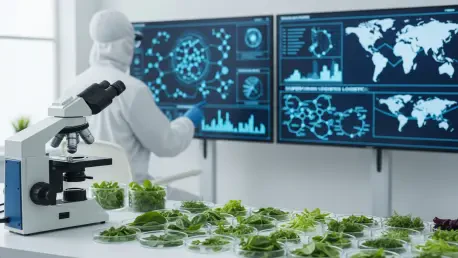

The intricate web of the global food supply chain represents a pinnacle of modern logistics, yet it remains fundamentally vulnerable to microscopic threats that can cross international borders in a matter of days. As consumer demand for year-round fresh produce grows, the complexity of monitoring every leaf of spinach or individual berry becomes an monumental task for public health agencies. A recent briefing by the American Association for the Advancement of Science emphasized these systemic risks, specifically highlighting the protozoan parasite Cyclospora cayetanensis as a primary example of modern food safety challenges. This specific case study illuminates the high-stakes relationship between advanced laboratory science, field epidemiology, and the sprawling distribution systems that define how the world eats today. To protect the public, investigators must navigate a landscape where invisible pathogens exploit the very efficiency that makes the global food market possible.
Biological and Environmental Challenges in Food Safety
The Unique Life Cycle: Understanding the Cyclospora Parasite
The Cyclospora parasite employs a biological strategy that makes it particularly difficult to detect and manage within a standard food safety framework. Unlike common bacterial pathogens such as Salmonella or E. coli, which can cause illness shortly after ingestion, Cyclospora involves a mechanism of delayed infectivity. When the parasite’s eggs, known as oocysts, are first shed in the environment, they are not immediately infectious to humans. They require a period of days or even weeks under specific environmental conditions to sporulate and become a threat to public health. This biological delay creates a massive blind spot for investigators, as the actual contamination event at a farm or packing facility likely occurred weeks before a patient even began to experience symptoms, rendering many traditional rapid-response protocols ineffective.
Furthermore, the scientific community faces significant hurdles because Cyclospora cannot be easily grown or cultured in a laboratory setting. This lack of a reliable culture method prevents researchers from quickly generating the volume of material needed for traditional genetic fingerprinting. Without the ability to cultivate the parasite, scientists are forced to rely on complex molecular tools to extract DNA directly from clinical or environmental samples, which are often degraded or present in very low concentrations. This limitation severely hampers the ability to perform the kind of real-time genomic surveillance that has become the gold standard for tracking bacterial outbreaks. Consequently, the struggle to create a comprehensive database of genetic matches means that many localized clusters of illness go unrecognized as part of a larger, systemic outbreak.
Fresh Produce Risks: The Vulnerability of Raw Commodities
Fresh produce occupies a unique and high-risk category in the food safety landscape primarily because these items frequently lack a definitive kill step. While meat products are generally cooked and dairy products are pasteurized to neutralize harmful pathogens, fruits and vegetables are often consumed raw to preserve their nutritional value and texture. Any pathogen that hitches a ride on a piece of cilantro or a head of romaine lettuce is likely to reach the consumer’s plate in an active, infectious state. The porous surfaces of many leafy greens and the rugged exteriors of certain fruits provide ideal hiding spots for microscopic parasites, making it nearly impossible for a simple home wash to guarantee safety once contamination has occurred at the source.
The structural complexity of the global distribution network further exacerbates the risks associated with fresh produce. Products from dozens of different farms, sometimes located in multiple different countries, are often aggregated at single processing or distribution centers before being shipped to retail locations across the nation. This mixing of lots means that a single contaminated harvest can potentially taint a massive volume of otherwise safe produce. When an outbreak occurs, the task of isolating the original source becomes a needle-in-a-haystack operation because the physical product has long since been consumed or discarded. The rapid turnover of fresh inventory means that by the time an illness is reported, the contaminated batch is no longer on store shelves, leaving only a complex trail of digital records and shipping manifests to follow.
Methodologies for Identifying and Tracing Contamination
Epidemiological Interviews: The Human Element of Investigation
The initial phase of any foodborne illness investigation relies heavily on shoe-leather epidemiology, a process that involves conducting exhaustive interviews with affected individuals. Epidemiologists must work backward to reconstruct every meal and snack a patient consumed during the two weeks prior to the onset of their illness. This method is notoriously difficult because human memory is inherently fallible and prone to suggestion. Most people struggle to remember the specific ingredients of a salad or the exact brand of frozen berries they consumed fourteen days ago. This uncertainty introduces significant noise into the data, as investigators must distinguish between a common food item that many people eat by coincidence and the actual vehicle of the pathogen.
To overcome the limitations of human memory, investigators employ sophisticated statistical models to analyze the data gathered from patient interviews. By comparing the dietary habits of those who became ill with a control group of healthy individuals, scientists can calculate the probability that a specific food item is the source of the outbreak. If a statistically significant number of patients report eating a specific type of imported herb, for instance, that item becomes a primary lead. However, these models require a high volume of accurate data to be effective. When an outbreak is small or the interviews are delayed, the statistical signal can become buried, making it nearly impossible to pinpoint the culprit without additional evidence from laboratory testing or supply chain records.
Supply Chain Traceback: Reconstructing the Path to Origin
Once a specific food item is identified as a likely source of infection, the Food and Drug Administration initiates a retrospective journey through the supply chain known as a traceback investigation. This process is essentially a forensic accounting of food movement, where investigators examine thousands of invoices, shipping manifests, and bills of lading to find where different paths of distribution converge. The challenge is magnified for multi-ingredient products, such as pre-packaged salad kits, which may contain various types of greens, dressings, and toppings sourced from a global array of suppliers. Finding a common denominator among disparate cases requires meticulous attention to detail and the ability to reconcile varied record-keeping systems used by different companies.
As the investigation progresses and more data points emerge, the geographical focus begins to narrow toward a specific grower, harvester, or processing facility. This stage of the process is often a race against time, as identifying the source quickly can prevent further illnesses and minimize the economic impact on the broader agricultural industry. Modern digital tracking systems have improved the speed of these investigations, but many segments of the supply chain still rely on fragmented or paper-based documentation. Success in a traceback operation ultimately depends on the transparency of the industry and the ability of federal investigators to piece together a coherent narrative from a mountain of disparate logistics data. This investigative certainty is the only way to issue targeted recalls and clear the names of uninvolved producers.
Technology and Global Infrastructure
Laboratory Testing Gaps: The Need for Molecular Surveillance
While diagnostic technology has advanced to the point where doctors can identify a Cyclospora infection faster than ever before, a significant gap remains in the area of molecular surveillance. For many bacterial pathogens, whole genome sequencing allows scientists to prove with near-certainty that two different patients were infected by the exact same strain, effectively linking their cases together. In the case of Cyclospora, such robust genetic surveillance is still in its developmental stages. Without these high-tech genetic matches, public health officials often struggle to confirm whether sporadic cases across multiple states are part of a single, unified outbreak or isolated incidents. This lack of molecular clarity forces a continued reliance on traditional, labor-intensive paperwork and patient interviews.
The absence of a standardized genetic database for parasites means that the scientific community is often working in a reactive mode rather than a proactive one. Efforts are currently underway to develop more refined methods for capturing and sequencing the entire genome of the parasite directly from clinical samples. Achieving this would revolutionize foodborne investigations by allowing for real-time tracking of pathogens as they move through the supply chain. Until these tools are fully integrated into the public health infrastructure, the investigation of parasitic outbreaks will remain more of an observational science than a purely genomic one. Bridging this technological gap is essential for creating a more resilient safety net that can identify and neutralize threats before they reach a critical mass of the population.
Global Safety Infrastructure: Investing in International Prevention
Long-term solutions for food safety must acknowledge the reality of global interdependence, as a significant portion of the fresh produce consumed in the United States is grown and processed abroad. Strengthening the food safety infrastructure in exporting nations is not just an act of international cooperation but a direct investment in domestic public health. Many foodborne pathogens are linked to contaminated water used for irrigation or processing, making clean water and sanitation projects in agricultural regions a vital line of defense. By helping trading partners implement more rigorous testing and hygiene standards, the global community can reduce the overall prevalence of pathogens in the supply chain. Shifting the focus from reactive investigation to proactive prevention at the source is the most effective way to ensure the long-term safety of the global food system.
The scientific community recognized that the success of these global initiatives depended on sustained funding and a robust workforce of trained professionals. Experts emphasized that technological tools were only as effective as the epidemiologists and laboratory technicians who operated them. Throughout the recent period of intense investigation, it became clear that maintaining the integrity of the food supply required a multidisciplinary approach that combined advanced genomics with traditional field work. By addressing the biological quirks of parasites and the logistical hurdles of international trade, the public health sector developed more agile strategies for mitigating risk. These efforts ultimately shifted the paradigm toward a more holistic understanding of how environmental health and consumer safety were inextricably linked across all borders.