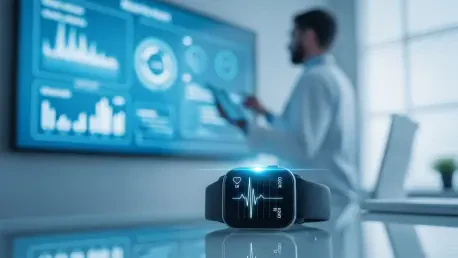

The rapid transition of modern healthcare from a traditional reactive model to a highly sophisticated system of proactive prevention is best exemplified by the rise of AI-enabled wearable stroke detection technology. These innovative devices represent a fundamental shift in medical philosophy, moving away from treating emergencies after they occur toward a model where constant, autonomous monitoring acts as a digital guardian for high-risk patients. Unlike the basic fitness trackers of previous years, the current generation of health wearables integrates advanced biosensors and complex machine learning architectures to observe the human body for the subtle precursors of neurological and cardiovascular crises. This technological evolution provides a safety net that was previously impossible, essentially placing a clinical-grade monitoring team on a patient’s wrist or chest. By identifying the earliest indicators of physiological distress, these tools allow for medical intervention during the critical window before irreversible brain damage takes hold. The result is a transformation of the patient experience, where health management is no longer defined by periodic clinic visits but by a continuous, seamless stream of real-time clinical oversight that preserves quality of life and reduces the systemic burden of emergency hospitalizations.
The Technology: Sensing and Analyzing Neural Signals
The technical foundation of these life-saving wearables rests upon their ability to capture and interpret raw biological data with incredible precision using miniaturized neural sensors. These components are designed to monitor brain activity and neuromuscular shifts that occur during the preliminary stages of a stroke, providing a direct window into the patient’s neurological state throughout their daily routine. By utilizing electroencephalogram (EEG) technology that has been scaled down to fit within a consumer-grade device, manufacturers have enabled the detection of electrical imbalances in the brain that often precede physical symptoms. This level of monitoring is critical because the onset of an ischemic event is frequently preceded by transient neurological deficits that a patient might otherwise ignore. The integration of these sensors into daily life ensures that even the most subtle deviations from a person’s neurological baseline are captured, analyzed, and stored for clinical review. This continuous stream of data bridges the gap between traditional hospital-based testing and home-based recovery, ensuring that the most vulnerable populations remain under a protective umbrella of sophisticated medical surveillance.
Building upon the raw data collected by sensors, the true intelligence of these devices lies in the machine learning algorithms that serve as the analytical engine for every alert. These algorithms are meticulously trained on massive, diverse datasets that include thousands of recorded cardiac and neurological events, allowing them to recognize the specific signatures associated with an impending stroke. The primary challenge for these systems is the differentiation between dangerous physiological rhythms and normal fluctuations caused by physical exertion, emotional stress, or environmental factors. Advanced filtering techniques allow the software to ignore benign spikes, such as an elevated heart rate during a brisk walk, while remaining hyper-sensitive to the irregular patterns of atrial fibrillation or sudden neural signal attenuation. This high level of sophistication is what enables real-time alerts that are both reliable and actionable, giving emergency responders the precise information they need before they even arrive at the patient’s side. The iterative nature of machine learning means that these devices become more accurate over time as they learn the unique physiological profile of the individual wearer, further reducing the likelihood of missed events.
The most comprehensive approach to stroke detection involves multimodal biosignal fusion, a process that synthesizes data from multiple sensor types to create a holistic view of a patient’s health. By combining heart rate variability, blood oxygen saturation, and continuous blood pressure monitoring, these devices can identify complex correlations that a single-sensor system would likely overlook. For instance, a stroke is often the result of underlying cardiovascular issues that manifest as subtle changes across different biological systems simultaneously. When the device detects a combination of irregular heart rhythms and a slight drop in peripheral blood oxygen, the risk profile is immediately escalated, triggering a high-priority alert. This integrated methodology ensures that clinical decisions are based on a broad spectrum of evidence rather than a single isolated metric, which significantly enhances the diagnostic accuracy of the wearable. This fusion of data streams provides a level of depth that mimics a professional clinical evaluation, allowing the technology to function as a reliable primary warning system in the home environment where most health emergencies tend to occur without immediate medical supervision.
Societal Drivers: The Economic and Demographic Shift
Several powerful societal trends are currently accelerating the adoption of AI-enabled wearables, with the aging global population being the most prominent catalyst for this change. As a larger percentage of the population enters high-risk age groups for hypertension, diabetes, and cardiovascular disease, the traditional healthcare infrastructure faces an unprecedented strain that cannot be managed by hospital beds alone. In this context, continuous monitoring becomes a logical necessity rather than a luxury, providing an essential safety net for elderly individuals who may live alone or in remote areas. These wearables empower the aging population to maintain their independence for longer periods, knowing that their health is being monitored by a system capable of summoning help automatically if a crisis is detected. This shift is not merely about convenience; it is a fundamental restructuring of how society cares for its most vulnerable members, utilizing technology to replace the constant physical presence of a caregiver with an equally effective digital alternative that operates around the clock without fatigue.
Remote Patient Monitoring (RPM) has evolved into a cornerstone of modern healthcare systems specifically designed to alleviate the chronic issue of hospital overcrowding and rising medical costs. By allowing physicians to track the vital signs and neurological health of their patients from a distance, wearables significantly reduce the necessity for long-term hospital stays and frequent, costly readmissions. This decentralized approach to medicine empowers patients to take an active role in their own health management from the comfort of their homes, while still remaining connected to their clinical teams. From an economic perspective, the implementation of RPM via AI wearables is highly efficient, as it prevents the massive expenditures associated with treating the long-term disabilities that often follow a major stroke. By intervening early, the healthcare system saves billions of dollars in rehabilitation and long-term care costs, making the technology an attractive investment for both private insurers and public health agencies. This economic incentive, combined with improved patient outcomes, has created a fertile environment for the rapid expansion of the wearable medical device market globally.
The technical realization of real-time health monitoring has been made possible by the widespread deployment of 5G connectivity and advanced cloud computing frameworks. Data can now be transmitted from a wrist-worn device to a clinical dashboard in mere milliseconds, ensuring that there is virtually no delay between the detection of a stroke signal and the notification of medical personnel. This seamless integration with the broader telecommunications network allows for the processing of vast amounts of biological data on remote servers, which possess the computational power necessary to run complex AI models that would be too taxing for the wearable device alone. This architecture ensures that the user’s device remains small and energy-efficient while still benefiting from the most advanced analytical tools available in the digital age. Furthermore, the ability to sync this data with emergency services ensures that paramedics receive a comprehensive health brief before they reach the patient’s door, potentially saving life-altering minutes during the “golden hour” of stroke treatment. This high-speed connectivity is the invisible thread that ties the individual patient into a global web of medical expertise and emergency response.
Industry Hurdles: Regulation, Privacy, and Global Expansion
Despite the undeniable benefits of AI-enabled stroke detection, manufacturers must navigate a complex landscape of regulatory and clinical obstacles to ensure widespread adoption and safety. Because these devices are classified as life-saving medical tools, they are subject to rigorous testing and clearance processes by agencies like the Food and Drug Administration (FDA) to prove their efficacy and reliability. One of the most significant clinical challenges is the management of “alarm fatigue,” a phenomenon where a high rate of false positives leads both patients and clinicians to ignore the device’s alerts. If a wearable triggers too many unnecessary warnings, the user may stop wearing the device or become desensitized to the notifications, which could lead to a catastrophic failure during a genuine emergency. Manufacturers are therefore focused on refining their detection thresholds and improving the specificity of their algorithms to ensure that alerts are only issued when there is a high statistical probability of a medical event. Achieving this balance is essential for maintaining the clinical credibility of the technology within the medical community and among the general public.
Data privacy and the security of sensitive biological information remain top priorities for both developers and users in the digital health sector. These wearables collect highly personal health data around the clock, creating a detailed digital footprint of an individual’s physical and neurological state that must be protected from unauthorized access. Companies are required to invest heavily in robust encryption protocols and maintain strict compliance with international regulations such as the Health Insurance Portability and Accountability Act (HIPAA) to ensure patient confidentiality. The fear of data breaches or the potential misuse of health information by third parties can be a significant barrier to consumer trust, which is why transparency in data handling has become a competitive advantage in the market. Building a secure infrastructure is not just a legal requirement but a fundamental part of the value proposition, as patients must feel confident that their most intimate health metrics are handled with the highest level of integrity. As the volume of collected health data continues to grow, the industry remains under intense scrutiny to prove that it can protect the very people it aims to save.
Looking at the current global landscape, North America maintains a leading position in the AI wearable market due to its advanced healthcare infrastructure and high consumer interest in integrated technology. However, the Asia-Pacific region is experiencing the fastest growth rate as governments in countries like China and Japan prioritize digital health solutions to address their rapidly aging populations. These nations are looking toward wearables as a cost-effective way to extend medical services to remote or rural areas where traditional hospital access may be limited. This regional expansion is driving innovation in hardware design and affordability, as manufacturers seek to create devices that are accessible to a wider demographic beyond the wealthy urban centers. The global nature of the stroke epidemic means that the demand for these tools is universal, leading to a highly competitive international market where companies must adapt their products to different regulatory environments and cultural expectations. This worldwide push for digital health integration is fundamentally changing the medical landscape, making advanced stroke prevention a global standard of care rather than a localized privilege.
Future Development: The Shift Toward Predictive Excellence
As the industry moves toward the next decade of innovation, the physical design of these wearables is expected to transition from conspicuous wristbands to “invisible” technology that blends seamlessly into the user’s life. Future sensors are being integrated into smart patches, rings, and even everyday clothing, allowing for long-term physiological monitoring without the discomfort or social stigma sometimes associated with medical hardware. This miniaturization is a critical factor in improving patient compliance, as the most effective monitoring is the kind that the user forgets they are even wearing. By making the technology more discreet, developers can ensure that high-risk individuals maintain consistent usage, which is necessary for the collection of a continuous longitudinal health record. This evolution in form factor does not come at the expense of performance; rather, the proximity of these new sensors to different parts of the body, such as the finger or the chest, often allows for even more accurate readings of arterial health and neural activity. The goal is to create a frictionless experience where the technology disappears while the protection it provides remains omnipresent.
The ultimate strategic objective for the next generation of AI in healthcare is the transition from reactive detection to truly predictive analytics. Rather than simply alerting a patient when a stroke is already in progress, future software will be designed to identify the cumulative, microscopic changes in a patient’s physiological baseline weeks or even months in advance. This approach involves monitoring the slow degradation of vascular health or subtle shifts in heart rhythm that signal a rising risk profile long before a clinical crisis occurs. By identifying these trends early, the system can prompt doctors to intervene with preventative measures such as medication adjustments, lifestyle changes, or targeted surgical procedures, potentially preventing the stroke from ever happening. This move toward “pre-symptomatic” medicine represents the pinnacle of proactive care, shifting the focus from emergency response to the long-term maintenance of biological stability. As the data pools become larger and the AI becomes more perceptive, the ability to forecast a major medical event with high certainty will become a standard feature of the modern health experience.
The integration of artificial intelligence into daily health monitoring redefined the boundaries of emergency medicine during this pivotal period of development. Healthcare providers moved away from the limitations of periodic check-ups, preferring instead the continuous oversight offered by autonomous digital guardians. This shift ensured that the burden of cardiovascular disease was managed through early intervention rather than crisis management. As the hardware became more discreet and the algorithms more precise, the focus transitioned from simply detecting events to anticipating them weeks before clinical symptoms appeared. Ultimately, these technological advancements provided a blueprint for a future where chronic health risks were mitigated through constant, invisible vigilance, fundamentally altering the patient experience and improving long-term outcomes across the global population. The industry successfully balanced the needs for clinical accuracy and data privacy, creating a foundation of trust that allowed these devices to become essential components of the modern medical infrastructure. Governments and private entities alike recognized the value of this preventive model, leading to a world where a stroke was no longer an unpredictable catastrophe but a preventable health event managed through the synergy of human expertise and machine intelligence.