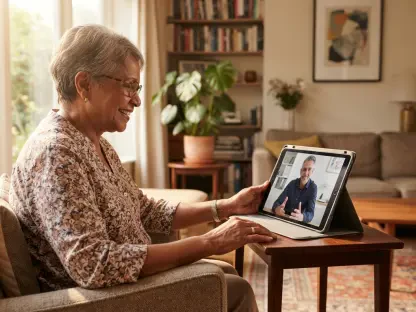

Unstable internet connectivity and frequent power outages in Indonesia present significant infrastructure obstacles that frequently disrupt therapeutic continuity for vulnerable clients. The landscape of Indonesian higher education is vast, with over eight million individuals enrolled in thousands of institutions spread across the archipelago’s 17,000 islands. In the current environment of 2026, the logistical nightmare of providing traditional, in-person counseling has created a profound treatment gap that digital interventions are finally beginning to bridge. Geographic fragmentation and deep-seated social stigma surrounding psychological distress have historically left many students isolated, but the rapid adoption of tele-mental health has transformed therapy from a luxury for the urban elite into a vital resource for the average student. This transition is being scrutinized to determine if the convenience of a screen can effectively replace the physical presence of a therapist in a culturally complex and developing society where access to professional help is often a matter of distance rather than desire.
Enhancing Engagement and Acknowledging Human Limits
Digital Native Interactivity and Active Participation
The effectiveness of digital mental health services in Indonesia is rooted in their ability to foster student autonomy while removing the psychological friction associated with seeking help. For many students, the physical act of walking into a university counseling center is a source of intense anxiety, primarily due to the fear of being seen by peers or faculty members. Digital platforms mitigate this fear by allowing individuals to engage with professional support from the safety and privacy of their own living spaces. This sense of control is particularly beneficial for those dealing with social anxiety or heavy academic schedules, as it transforms the therapeutic process from a daunting logistical hurdle into a manageable part of their daily digital lives. By eliminating travel costs and the time spent in Jakarta’s notorious traffic, these platforms have democratized access to care for students who previously could not afford the indirect costs of therapy.
Furthermore, the shift from passive listening to active, interactive engagement has proven essential for maintaining student interest. Psychologists practicing in 2026 have noted that digital features such as screen sharing for thought records, multimedia quizzes, and interactive worksheets appeal directly to a generation of digital natives. These tools make the therapeutic process feel more collaborative and less like a formal medical interrogation, which is vital for building rapport with younger clients. By utilizing technology that students already use for education and socializing, therapists can create a more familiar and less intimidating environment for difficult emotional work. This interactivity ensures that students are not just recipients of advice but active participants in their own recovery, using digital dashboards to track their progress and complete behavioral homework in a format that feels natural to their lifestyle.
The Challenge: The Missing Human Touch
Despite these technical advantages, there are inherent therapeutic boundaries that occur when moving from the clinical couch to the computer screen. Both practitioners and students frequently report a missing human touch, noting that the absence of physical presence can create a persistent sense of emotional distance. Psychologists specifically struggle with the loss of critical nonverbal cues, such as subtle fidgeting, changes in posture, or the specific way a client breathes when discussing trauma. These micro-expressions are essential for a comprehensive clinical assessment, and their omission through a compressed video feed can lead to misunderstandings or missed diagnostic opportunities. The screen acts as a filter that, while providing a safety barrier for the student, also limits the depth of the empathic resonance that usually occurs in a shared physical environment.
This limitation suggests that while video calls are effective for dialogue and basic cognitive intervention, they may not be sufficient for more complex psychological needs. The inability to synchronize physical presence can hinder the development of a strong therapeutic alliance, which is the most significant predictor of positive outcomes in mental health care. For students who feel isolated, the digital medium can sometimes reinforce a sense of detachment rather than providing the profound connection they seek. Practitioners have found that they must work significantly harder to project empathy through a lens, often having to over-communicate their emotional responses to ensure the student feels heard. This increased cognitive load on the therapist can lead to faster burnout and a reduction in the quality of care if not managed through proper digital-specific training and professional supervision.
Privacy Concerns: Environmental Distractions
The efficacy of online therapy is heavily dependent on the student’s physical environment, which in Indonesia presents unique challenges. In the prevalent culture of communal living, such as the ubiquitous kos-kosan or crowded family homes, finding a private space for a vulnerable conversation is often an impossible task. Many students are forced to conduct their sessions in public parks, shared common rooms, or even moving vehicles, which introduces a range of distractions and prevents the sanctity of the therapeutic space from being established. Without a secure, quiet environment where they feel safe from being overheard by roommates or parents, the emotional depth required for successful therapy is difficult to achieve. This lack of environmental control often results in students holding back their true feelings to avoid domestic conflict or social embarrassment.
Moreover, the intrusion of the digital world into the therapeutic space adds another layer of complexity. Notifications from social media, messaging apps, and academic platforms can interrupt the flow of a session, pulling the student’s attention away from the internal emotional work they are performing. Unlike a physical office where the therapist controls the environment to minimize external stimuli, a digital session is subject to the chaos of the user’s personal device. This fragmentation of attention can lead to a more superficial therapeutic experience, where the session remains focused on immediate stressors rather than diving into deeper, more significant psychological patterns. For online therapy to be truly effective in the Indonesian context, there must be a greater emphasis on educating students about how to create a temporary sanctuary within their own homes, or universities must provide private digital booths for this specific purpose.
Infrastructure Barriers and Systemic Inconsistency
Navigating Technical Instability: Connectivity Gaps
In the Indonesian context, the success of digital therapy is frequently interrupted by the country’s significant infrastructure gaps. These technical glitches are not merely minor inconveniences; they directly disrupt the continuity of psychological care. A dropped video call in the middle of a painful emotional disclosure can be deeply distressing for a student and clinically challenging for a psychologist to manage. The sudden silence following a moment of vulnerability can leave a client feeling abandoned or even re-traumatized, as the mechanical failure of the platform mirrors the emotional neglect they may have experienced in other areas of life. These systemic hurdles require mental health platforms to be lightweight and capable of functioning on low bandwidth, ensuring that therapy remains accessible even in less developed regions beyond Java.
Furthermore, the disparity in internet quality between urban centers and rural provinces creates a secondary treatment gap within the digital space. While students in Jakarta or Surabaya may enjoy high-speed fiber optics, their counterparts in more remote areas struggle with intermittent 4G signals that make video sessions practically impossible. This digital divide means that the most vulnerable populations, who already lack access to physical clinics, are also the ones most likely to be excluded from high-quality tele-mental health. To address this, providers are increasingly turning to text-based or asynchronous models that require less data, but these formats often lack the nuance of a face-to-face conversation. Bridging this gap requires a national commitment to improving digital infrastructure as a health priority, rather than just a commercial or educational necessity.
The Need: Standardized Care Protocols
The current digital mental health landscape in Indonesia is characterized by a lack of standardization, which can lead to wildly inconsistent student experiences across different platforms. Services in 2026 vary significantly, ranging from automated 30-minute text-based chat sessions to open-ended, two-hour comprehensive video consultations. This inconsistency creates a sense of uncertainty for students who may not know what to expect from professional digital care or how to evaluate the quality of the service they are receiving. For online therapy to be consistently effective and gain the trust of the broader public, the industry must move toward standardized assessment procedures and session durations that align with established clinical psychological practices. Without these standards, digital therapy risks being viewed as a secondary or “diluted” version of traditional care rather than a robust alternative.
The absence of clear protocols also extends to crisis management and ethical safeguards. Many digital platforms in the region lack clear emergency procedures for when a student expresses suicidal ideation or severe psychiatric distress during a remote session. In a traditional setting, the therapist can immediately contact local emergency services or secure the environment, but in a digital context, the therapist may be hundreds of miles away with limited information about the student’s exact location. Establishing mandatory intake protocols that require students to provide emergency contacts and local physical addresses is a necessary step toward professionalizing the sector. Furthermore, the Indonesian Psychological Association has begun calling for digital-specific certifications for practitioners to ensure they possess the technical and clinical skills required to manage the unique challenges of the virtual environment.
Designing for Trust: Cultural Resonance
For digital platforms to be effective in Indonesia, they must balance technical efficiency with human warmth and cultural alignment. Students are often wary of interfaces that feel like commercial customer service portals or automated bots; they require a connection that feels distinctly human, empathetic, and grounded in their local reality. Therapy is most successful when it incorporates the nuances of Indonesian society, such as aligning behavioral tasks with spiritual routines or respecting the collectivist family structures that define many students’ lives. A culturally resonant approach ensures that the digital tool feels like a natural extension of the student’s social and moral world, rather than an imported Western methodology that ignores local sensibilities. This includes the use of local languages and metaphors that resonate with the student’s lived experience.
Trust is also built through the visible commitment of the platform to data privacy and confidentiality, which are paramount concerns in a society where mental health issues can lead to social ostracization. If a student does not trust that their data is secure, they will never be fully honest during their sessions, rendering the therapy ineffective. Developers must prioritize end-to-end encryption and transparent data policies that are easy for students to understand. Moreover, the integration of peer support networks and community-based modules within these apps can help normalize the process of seeking help. By creating a digital space that feels like a safe extension of the Indonesian community rather than a clinical isolation chamber, providers can overcome the deep-seated cultural barriers that have traditionally kept students from engaging with mental health professionals.
Divergent Perspectives and the Path to a Hybrid Model
Balancing Student Comfort: Clinical Safety
There is a notable divergence in priorities between those receiving care and those providing it, which requires a careful balancing act for the future of the industry. Students tend to prioritize personal comfort, ease of navigation, and the reduction of the “scary” elements of traditional therapy, such as the formal atmosphere of a hospital or office. They value the anonymity that digital platforms provide and the ability to schedule sessions around their academic commitments with minimal hassle. This focus on user experience is what drives adoption, but it must not come at the expense of clinical rigor. If a platform is too focused on being “user-friendly,” it may inadvertently bypass the necessary screening processes that ensure a student is receiving the correct level of care for their specific condition.
Conversely, psychologists are more concerned with professional ethics, the complexity of remote clinical assessments, and the difficulty of managing crises through a screen. They emphasize the need for robust clinical tools that allow for stabilization and long-term intervention, rather than just immediate symptom relief. This tension between the consumer’s desire for a low-barrier experience and the provider’s need for clinical security is the primary challenge facing the development of mental health apps. Effective online therapy must bridge this gap by creating interfaces that feel intuitive and inviting for the student while providing practitioners with the backend data and communication tools necessary to maintain high clinical standards. The goal is to create a platform where ease of use and professional safety are not mutually exclusive but are instead complementary features.
The Role: Institutional and Social Networks
Online therapy does not exist in a vacuum; its effectiveness is bolstered by Indonesia’s collectivist social fabric, which plays a crucial role in the student’s journey toward help. University lecturers often act as primary referral sources, driven by a sense of moral duty to care for their students’ well-being beyond their academic performance. When a trusted faculty member recommends a digital service, it significantly reduces the stigma and increases the student’s willingness to engage. Families also provide the essential financial and emotional backing necessary for a student to initiate and sustain care, particularly in a society where children often remain dependent on their parents throughout their university years. This collectivist support system acts as a powerful motivator that can overcome the initial hesitation toward digital interventions.
This dynamic suggests that the future of digital mental health lies in a blended system where technology is integrated into existing institutional and social frameworks. Rather than being a standalone solution, digital tools should be part of a holistic support network that includes the university, the family, and the peer group. For example, some universities have begun integrating mental health apps into their official student portals, making the service a standard part of the educational experience. By leveraging the influence of traditional authority figures and social networks, digital platforms can gain the institutional legitimacy they need to become a permanent fixture in the Indonesian healthcare landscape. This integration ensures that the student is supported not just by an app, but by a community that values their mental well-being as a collective priority.
Moving Toward: A Hybrid Future
The consensus among researchers and practitioners in 2026 is that while online therapy is a powerful tool for expanding access, it is most effective when utilized as part of a hybrid model. This approach uses digital platforms for initial triage and for treating mild to moderate distress, while reserving in-person sessions for more complex conditions or acute psychiatric crises. By combining the scalability and convenience of technology with the depth and safety of traditional clinical observation, Indonesia can create a sustainable and resilient mental health system. The transition to digital care is well underway, but its long-term success depends on maintaining a human-centric focus in a technologically mediated world. This hybridity allows the system to be flexible enough to meet the needs of a diverse student population while maintaining the clinical integrity necessary for real healing.
The research conducted into the digital transformation of Indonesian mental health provided clear directions for the next phase of development. Universities adopted a more proactive stance by providing private digital counseling rooms on campus, ensuring that students had the physical sanctuary needed for their online sessions. Government agencies established a regulatory framework that standardized the qualifications for tele-mental health practitioners, ensuring that every student received a baseline of professional care regardless of the platform they chose. Furthermore, the integration of “offline-first” technology allowed students in remote regions to access psychoeducational resources without a constant internet connection. These actionable steps moved the conversation beyond the simple question of whether online therapy works, focusing instead on how to optimize it for the unique cultural and structural realities of the Indonesian student experience.