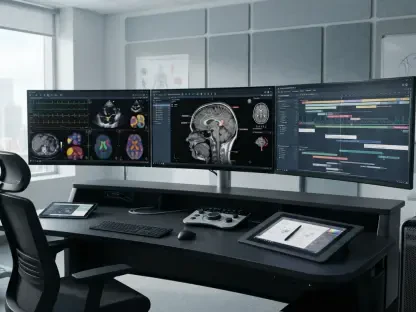

The global deployment of clinical artificial intelligence has reached a critical juncture where the speed of technological adoption frequently outpaces the establishment of necessary safety frameworks. In many emerging markets, these sophisticated algorithms are being integrated into hospitals and remote clinics with the promise of bridging the vast gap in specialist accessibility. However, this rapid rollout creates a troubling paradox: the regions that stand to benefit the most from diagnostic automation are often the ones least equipped to identify and mitigate the technical failures of these systems. While a high-end medical facility in a city might have dozens of specialists capable of cross-referencing an AI-generated diagnosis, a rural clinic might rely on that software as its only source of clinical insight. This creates an environment where algorithmic errors can propagate without detection, leading to systemic vulnerabilities that threaten patient safety. The enthusiasm for digital transformation must therefore be balanced against the realities of infrastructure.
The Disconnect Between Digital Data and Patient Reality
Clinical Perception: Assessing the Limitations of Algorithmic Observability
A primary challenge in current medical AI implementation involves the concept of observability, which refers to the system’s ability to interpret a patient’s internal state based solely on digital data points. While human clinicians rely on a wealth of “analog” information—such as the subtle rhythm of a patient’s breathing, the pallor of their skin, or a specific type of restlessness—artificial intelligence is limited to a digital representation of these symptoms. These algorithms process lab results, vital sign streams, and medical imaging, but they frequently lack the context provided by bedside observation. In a developing health system where nursing staff may be stretched thin, the absence of this physical oversight means that an AI might flag a deviation in blood pressure without recognizing that the patient is simply agitated or in physical discomfort. This narrow focus creates a significant safety gap, as the software operates on a filtered version of reality that ignores the holistic nuances of human health.
Data Localization: Bridging Contextual Gaps in Health Systems
Furthermore, the disparity in data quality across different geographical regions often exacerbates the limitations of algorithmic perception. Most medical AI models are trained on datasets originating from highly digitized urban hospitals, which do not always reflect the demographic or environmental realities of rural populations. When these tools are deployed in developing health systems, they encounter “blind spots” where the local prevalence of certain diseases or nutritional factors is not adequately represented in the code. This lack of representative data can cause an algorithm to misinterpret symptoms that are common in one region but rare in the training environment, leading to incorrect diagnostic suggestions. Without a robust local infrastructure to validate these automated outputs against actual clinical outcomes, healthcare providers risk making decisions based on fragmented information. Ensuring that AI can truly “see” the patient requires a deliberate effort to broaden data sources and maintain rigorous human-led verification at every step.
The Erosion of Clinical Oversight and Professional Expertise
Professional Integrity: Mitigating the Risks of Implicit Trust
As health systems become increasingly reliant on automated tools, the disappearance of clinical oversight poses a long-term threat to the integrity of medical practice. In many instances, the introduction of AI leads to a phenomenon known as “de-skilling,” where experienced doctors begin to outsource their critical thinking to the machine. This implicit trust in the “black box” of algorithmic decision-making can diminish the diagnostic edge that clinicians have spent years developing. When the software provides an answer, there is a psychological tendency to accept it without sufficient scrutiny, especially in high-pressure environments where resources are scarce. This transition from active reasoning to passive acceptance reduces the clinician’s role to that of a data entry clerk rather than a primary caregiver. In developing regions where there are few senior mentors to challenge these automated conclusions, the risk of undetected errors increases significantly. The clinical safety net, which relied on human expertise, starts to thin as the software becomes the final arbiter.
Safety Benchmarks: Lessons From Aviation on Manual Proficiency
Beyond the de-skilling of current professionals, there is a growing concern regarding “never-skilling” among medical students who are entering a technology-heavy landscape. New practitioners might never develop the fundamental intuition required to recognize when an automated system has failed because they have always operated with a digital co-pilot. To combat this erosion of expertise, the healthcare industry may need to look toward the aviation sector for guidance on maintaining manual proficiency. Pilots are required to undergo regular training to fly aircraft without the aid of automation, ensuring they can take control in the event of a system malfunction. Similarly, medical training programs must emphasize the importance of traditional diagnostic methods alongside the use of advanced AI tools. By mandating that students perform manual assessments before consulting digital aids, health systems can preserve the human intuition that is vital for patient safety. This dual-track education ensures that clinicians remain capable of identifying anomalies that a machine might overlook.
Strategic Paths Toward Resilient Healthcare Ecosystems
Workflow Integration: Designing Active Human-in-the-Loop Models
Designing safer healthcare workflows requires a fundamental shift toward a human-in-the-loop strategy that treats artificial intelligence as an assistant rather than a replacement. Modern system design must ensure that practitioners remain actively engaged in the decision-making process, providing them with the tools to question and override algorithmic suggestions when necessary. As medical AI becomes more autonomous during the 2026 to 2028 expansion, the risk of unpredictable behavior in edge cases increases, making human judgment the most critical safety feature in the clinic. Developers must prioritize transparency in AI outputs, offering clinicians a clear view of the reasoning behind a particular recommendation. This transparency allows doctors to identify potential biases or errors before they impact patient care. Moreover, the integration of wearable sensors may improve the observability of these systems, yet data alone will never substitute for the complex social understanding that a human provider brings to the bedside.
Future Resilience: Establishing Sustainability Through Oversight
The successful integration of these technologies required a committed investment in human-led review processes and specialized staff training. Healthcare administrators across various jurisdictions realized that purchasing software was only the first step in a much larger journey toward digital resilience. They developed rigorous protocols that mandated secondary human verification for any AI-driven diagnosis that significantly altered a patient’s treatment plan. These measures effectively transformed the technology from a potential point of failure into a reliable support mechanism for clinical teams. Policy frameworks were enacted to ensure that medical institutions maintained high standards of data literacy among all staff members, preventing the blind adoption of unverified tools. By fostering an environment of continuous learning and skepticism, organizations preserved the critical thinking skills necessary to navigate an increasingly complex technological landscape. Ultimately, the prioritization of human oversight ensured that the benefits of medical AI were realized without compromising patient safety.