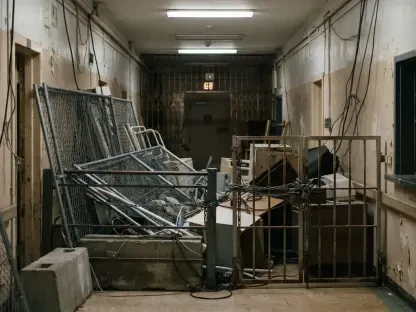

Administrators at Seti Provincial Hospital point to the lack of provincial funding and the absence of a modern legal framework as the primary causes of service degradation. This facility, which serves as the medical epicenter for nine districts in Sudurpaschim Province, is currently struggling to bridge the gap between its modest origins and the massive demands of 2026. Originally established as a 15-bed clinic in 1940, the hospital has seen only incremental upgrades, with the last significant formal expansion occurring over four decades ago. Today, the hospital operates roughly 240 beds, yet it receives financial and legal support for only 125, an unsustainable arrangement that forces staff to ration care and space. The transition to federalism was supposed to streamline such regional issues, but instead, the hospital remains caught in a cycle of neglect. This failure has created an environment where medical service quality is secondary to the sheer struggle of managing volume.
The Persistent Stagnation: Medical Infrastructure
The history of Seti Provincial Hospital is a narrative of delayed progress and administrative stagnation that has fundamentally hampered the delivery of public health in Nepal. Following its inception in 1940, the hospital underwent minor expansions in 1981 and 1983, which brought its formal capacity to 50 beds as a zonal facility. However, the official approved staffing and resource allocations have not seen a comprehensive update in more than 40 years, despite the massive population growth in Dhangadhi and the surrounding regions. In 2026, the hospital functions as a 240-bed center in practice, but on paper, it is restricted to the budget of a 125-bed operation. This misalignment means that every aspect of hospital life, from the availability of clean linens to the procurement of basic pharmaceuticals, is under-resourced by nearly half. The physical buildings reflect this strain, with outdated plumbing and electrical systems struggling to support modern equipment.
Overcrowding has become the defining characteristic of the patient experience at Seti, with the disparity between bed capacity and patient volume leading to congested wards and a loss of basic hygiene. Patients like Sita Khadka and Manita Chaudhary have shared accounts of the exhaustion and skepticism that now permeate the local community, emphasizing that the facility often lacks the privacy and sterile environment required for recovery. When wards are perpetually over capacity, the risk of cross-contamination increases, and the workload for existing sanitary staff becomes unmanageable. This physical degradation is not merely an aesthetic issue; it directly impacts the clinical outcomes for residents of remote districts like Bajura who travel for days to reach the hospital. Without a significant architectural overhaul and a legal realignment of its capacity, the hospital remains a place where the most vulnerable citizens are forced to endure substandard conditions while seeking interventions.
The Paradox: Performative Governance and Inspections
A recurring theme in the hospital’s ongoing struggle is the phenomenon of performative governance, often referred to as the “inspection culture,” which yields few tangible results for the facility. Currently, high-ranking officials such as Chief Minister Khagraj Bhatta conduct formal inspections every 15 days, touring the halls and issuing directives to staff regarding patient-friendly behavior. While these visits are designed to show government concern, they rarely translate into the structural reforms needed to fix deep-seated issues like the shortage of specialized doctors or the lack of modern diagnostic tools. Public sentiment suggests that these routine visits have become a political exercise rather than a functional catalyst for change, as the same problems are documented repeatedly without resolution. This cycle of observation without action has eroded trust among the local population, who see the bi-monthly ministerial tours as a distraction from the fundamental failure to provide the province with a functioning hospital.
The history of ministerial promises at Seti Provincial Hospital stretches back through several administrations, with leaders like Trilochan Bhatta, Kamal Bahadur Shah, and Dirgha Sodari all pledging significant reforms that never fully materialized. Despite the presence of international delegations and frequent high-level briefings, the hospital’s core infrastructure remains largely unchanged from what it was years ago. Service recipients note that while officials are quick to gather information and issue verbal instructions, the necessary funds for permanent medical staffing and equipment maintenance are often withheld or tied up in provincial bureaucracy. This disconnect between political rhetoric and clinical reality is particularly frustrating for the medical personnel who must manage the fallout of empty promises on a daily basis. The inspection culture ultimately highlights a gap in accountability, where the act of visiting a facility is mistaken for the act of solving the crisis itself, leaving the system in a state of assessment.
Critical Workforce Deficits: Legal Bottlenecks
The most severe bottleneck preventing Seti Provincial Hospital from evolving into a modern medical hub is the chronic shortage of personnel driven by an outdated Organization and Management survey. This administrative document, which dictates the number of approved positions for specialists, nurses, and technicians, has remained in a state of bureaucratic limbo for years despite consistent pleas from hospital management. Acting Medical Superintendent Dr. Sher Bahadur Kamar has highlighted that the current workforce is stretched far beyond its breaking point, as the hospital cannot legally hire the staff required for a 200-bed referral center without updated approval. This legal obstacle means that even if the province provides funding for temporary hires, the lack of permanent, specialized positions prevents the hospital from building a stable medical team. Consequently, patients face excruciatingly long wait times for basic consultations, and the few doctors on site are often too overwhelmed to provide care.
This staffing deficit creates a damaging domino effect that renders many of the hospital’s technological investments useless, as equipment often sits idle without qualified personnel to operate it. In recent years, while some modern diagnostic tools have been donated or purchased, the absence of trained technicians and radiologists means that results are either delayed or must be sent elsewhere for interpretation. This failure to align equipment procurement with manpower development underscores a lack of strategic planning within the provincial health ministry. For the residents of Sudurpaschim, this means that even when the hospital appears to have advanced capabilities on paper, the practical reality is a continued reliance on expensive private clinics or long journeys to India for treatment. Until the legal framework is updated to allow for the recruitment of a full-scale medical workforce, the hospital’s potential as a regional referral center will remain unfulfilled, leaving the health system in a state of underperformance.
Strategic Pathways: Regional Medical Reform
The long-standing crisis at Seti Provincial Hospital demonstrated that a fundamental shift in administrative priorities was the only way to break the cycle of degradation. Stakeholders determined that the immediate approval of the 200-bed Organization and Management survey was the most critical step toward stabilizing the facility’s operations. By formalizing these positions, the hospital finally gained the legal authority to recruit the specialized medical teams necessary to handle the region’s complex health needs. Furthermore, transitioning from a culture of performative inspections to one of measurable infrastructure investment became a primary objective for provincial leaders. This included the construction of specialized wards and the implementation of a dedicated maintenance budget for high-end diagnostic technology. These actions were aimed at ensuring that the hospital no longer functioned as a zonal facility in a provincial center’s clothing, but rather as a robust institution capable of providing high-quality care.
Ultimately, the path forward required a renewed focus on government accountability and a departure from the historical pattern of empty ministerial rhetoric. It was clear that the provincial government needed to establish a transparent mechanism for tracking hospital improvements against specific budgetary allocations to prevent funds from being lost to bureaucratic delays. By prioritizing the recruitment of permanent staff over temporary fixes, the hospital administration aimed to create a sustainable environment for medical excellence in the Sudurpaschim Province. Moving beyond 2026, the focus shifted toward making Seti Provincial Hospital a true referral center that could offer diagnostic and surgical services without forcing patients to seek care across international borders. These structural changes provided the foundation for a more resilient healthcare system, where the rights of the patient were protected by both modern technology and a properly supported workforce. This evolution was essential for restoring public trust.