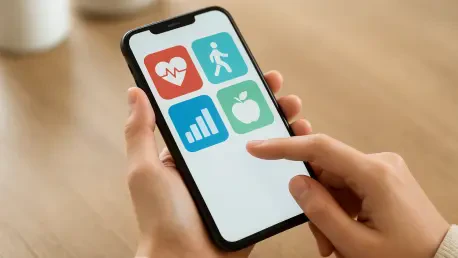

Voluntary industry codes of conduct allow the Federal Trade Commission to prosecute companies for deceptive practices if they fail to uphold their public privacy attestations. This regulatory mechanism currently serves as a primary line of defense for millions of Americans using fitness trackers, period cycles monitors, and mental health applications. As the digital health market continues to expand this year, a intense debate has emerged regarding whether the Health Insurance Portability and Accountability Act, commonly known as HIPAA, should be extended to cover these consumer-facing technologies. While some privacy advocates argue that such an expansion would provide a uniform standard for data security, legal experts Deven McGraw and Lucia Savage suggest that this approach is fundamentally misaligned with the needs of modern digital citizens. The prevailing misconception is that HIPAA serves as a comprehensive privacy shield, when in reality, it was designed as a specialized tool for institutional data management. Bringing consumer apps into this framework could inadvertently strip users of newer, more robust protections that have emerged at the state level to address the unique risks of the smartphone era.
The Architectural Flaws: Institutional Flow versus Personal Privacy
The structural foundation of HIPAA was built upon a permissive-use framework specifically intended to facilitate the frictionless movement of information within the healthcare system. In the late 1990s, the primary goal was to ensure that doctors, hospitals, and insurance companies could share patient records for treatment, payment, and healthcare operations without needing to stop and obtain explicit patient authorization for every single administrative step. While this institutional convenience is essential for a functioning hospital system, it creates a significant privacy deficit when applied to the consumer tech world. If a fitness application were suddenly governed by HIPAA, it would inherit a broad set of permissions that allow the developer to share sensitive user data with any business associate for operational purposes. This clinical plumbing model prioritizes the efficiency of the provider over the autonomy of the individual, which is the exact opposite of what most health app users expect when they download a service to track their personal wellness.
Furthermore, the legal architecture of HIPAA includes twelve specific categories where personal health information can be disclosed to third parties without any user consent or notification. These categories encompass everything from public health activities and research to requests from law enforcement and judicial proceedings. For a person using a digital tool to manage sensitive issues like reproductive health or substance recovery, these built-in exceptions represent a massive potential for data exposure that the user cannot legally block. HIPAA was never meant to be an opt-in system; it is a regulatory floor that mandates how institutions can use data they already possess. In contrast, modern consumer expectations are centered on the idea of explicit, affirmative consent. By forcing apps into an outdated institutional mold, regulators risk legitimizing a culture of passive data sharing that contradicts the very privacy goals they are attempting to achieve for the general public in the current digital landscape.
The De-identification Trap: A Loophole in Digital Protection
One of the most concerning aspects of the HIPAA framework is the standard for de-identification, which allows companies to share or sell health data once certain personal identifiers are removed. Under current rules, once a dataset is scrubbed of eighteen specific identifiers, such as names and social security numbers, it is no longer considered protected health information and falls entirely outside the jurisdiction of federal health privacy law. In the age of sophisticated data analytics and machine learning, this “anonymization” is often a legal fiction. Researchers have repeatedly demonstrated that supposedly de-identified datasets can be re-linked to individuals using only a few external data points, such as zip codes or birth dates. For a fitness enthusiast whose daily running routes and heart rate patterns are unique to them, the HIPAA standard provides almost no protection against the commercial sale of their behavioral patterns to data brokers or advertisers who can easily reconstruct a digital profile of the user.
This reality creates a dangerous incentive for consumer health app developers to package and monetize user insights under the guise of HIPAA compliance. If a company claims it follows HIPAA standards, it can legally profit from “anonymized” user data without ever informing the consumer about who is buying the information or how it is being used. This institutional focus on data mobility fails to address the modern reality where health data is a high-value commodity in the global advertising ecosystem. In the current year, the definition of sensitive information has expanded to include biometric markers and behavioral inferences that HIPAA’s original authors could never have anticipated. Rather than relying on a decades-old standard that allows data to be sold once it is “scrubbed,” the modern regulatory trend is moving toward treating all health-related data as sensitive by default, regardless of whether it is linked to a name or a random device identifier.
The Federal Trade Commission: A Modern Privacy Guardian
While the debate over HIPAA continues, the Federal Trade Commission has emerged as a much more agile and effective regulator for the consumer health tech sector. Through the enforcement of the Health Breach Notification Rule, the commission has clarified that a security breach is not limited to external hacking events; it includes any unauthorized sharing of sensitive health data with third-party advertising platforms. Recent high-profile enforcement actions against companies like GoodRx and BetterHelp have demonstrated that the commission is willing to penalize deceptive data practices that HIPAA might otherwise permit under its “operations” exceptions. These actions have focused on the use of invisible tracking pixels and software development kits that transmit user activity to social media giants without clear and conspicuous disclosure. This shift toward a consumer-protection model ensures that companies are held accountable for the promises they make in their privacy policies, providing a layer of oversight that is far more relevant to the app economy.
The commission’s approach is fundamentally different from HIPAA because it centers on the concepts of transparency and deception. When a mental health app promises that user data will remain private but then shares that information with a marketing firm to target ads, it has committed an unfair and deceptive act that falls squarely under the commission’s jurisdiction. This enforcement mechanism is highly responsive to new technologies, such as the use of artificial intelligence to predict health conditions or the collection of precise location data near medical clinics. Unlike the static requirements of HIPAA, the commission’s authority allows it to adapt to evolving industry practices and set new precedents through consent decrees and public settlements. This has created a growing body of “common law” for digital privacy that provides much clearer guidance for tech startups than the institutional rules designed for legacy healthcare providers and insurance carriers.
The State Law Revolution: Raising the Privacy Floor
The most significant advancements in protecting consumer health data are currently happening at the state level, where legislators are passing comprehensive privacy acts that are often more rigorous than federal standards. Washington’s My Health My Data Act and Nevada’s SB 370 have established a new gold standard for privacy by requiring companies to obtain affirmative, opt-in consent before collecting or sharing any consumer health information. These laws also grant individuals a “rights bundle” that includes the ability to access, correct, delete, and port their data at will. Importantly, these state-level statutes offer a much broader definition of health data than HIPAA, covering biometric information, genetic data, and even data generated by algorithms that infer a user’s health-seeking behavior. They also specifically target modern threats like geofencing, which involves setting a virtual perimeter around a medical facility to capture the device IDs of visitors for the purpose of targeted advertising.
Crucially, these state laws bridge the gap that HIPAA leaves wide open by focusing on the sensitive nature of the data itself rather than the type of entity that holds it. Whether a heart rate measurement is taken by a cardiologist or a smartwatch, the state-level protections apply equally, ensuring that the consumer is protected throughout the entire health data lifecycle. If the federal government were to mandate HIPAA as the universal standard for apps, there is a significant risk that it could preempt these stronger state laws, effectively rolling back the privacy rights of millions of Americans. Many tech companies would likely prefer a “HIPAA compliant” label as a way to bypass the more stringent opt-in and deletion requirements of individual states. Maintaining a multi-layered regulatory environment allows states to serve as “laboratories of democracy,” testing new protections that can eventually inform a more modern and effective federal privacy law designed specifically for the digital age.
The Strategic Path Forward: Empowering Digital Citizens
The evolution of the consumer health app market demanded a shift from institutional data management to an individual-centric model focused on agency and control. Industry groups like the CARIN Alliance and frameworks such as the Trusted Exchange Framework and Common Agreement represented a move toward establishing auditable consent logs and transparent data-sharing practices. These initiatives recognized that in a world where health data was increasingly generated by the users themselves, the old “clinical plumbing” of HIPAA was no longer sufficient. Developers found that building trust through plain-language notices and easy-to-use privacy dashboards was a more effective business strategy than hiding behind complex legal jargon. This trend toward transparency was further supported by the emergence of decentralized data storage solutions and localized processing, which allowed sensitive information to remain on a user’s device rather than being uploaded to a centralized corporate server for analysis.
In the final assessment, the push to force consumer health applications into the HIPAA framework was identified as a misdiagnosis of the core problem facing digital privacy. Legislators and industry leaders eventually understood that strengthening the consent-based tools already in use provided a more sustainable path than adopting an outdated institutional model. They prioritized the expansion of the Federal Trade Commission’s resources and the harmonization of high-standard state laws to create a cohesive national environment that favored the individual over the data broker. By focusing on the unique risks of the smartphone ecosystem—such as tracking pixels, geofencing, and algorithmic inferences—policymakers successfully transitioned to a regulatory era where personal technology was governed by transparency and individual agency. This strategic alignment ensured that the rapid pace of innovation in health technology did not come at the expense of the fundamental rights of the people who used those tools to improve their daily lives.