
Thirteen adult participants in an epilepsy monitoring unit exchanged over one thousand messages with a conversational AI agent to better understand their own seizure activity. This landmark pilot study, conducted by researchers at the University of Pennsylvania’s Perelman School of Medicine, signaled a definitive departure from the era of passive medical monitoring. For decades, chronic disease management relied on hardware that functioned solely as a silent data logger, capturing physiological metrics for retrospective analysis by clinicians. Patients often felt disconnected from their own health data, waiting weeks or even months for a specialist to interpret the recorded signals. However, the integration of generative artificial intelligence has fundamentally altered this dynamic, transforming medical devices into active, communicative partners. By creating a bridge between complex raw data and human understanding, the research team demonstrated that patients could finally engage in a meaningful, real-time dialogue with their own biological processes.
Bridging the Gap Through Brain-Computer Interfaces
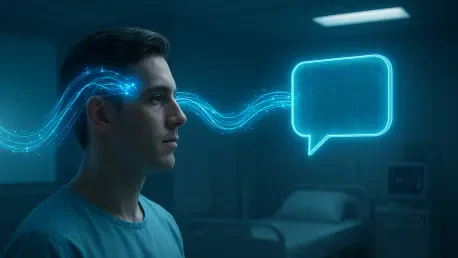
The core of this technological evolution is a sophisticated brain-computer interface designed to democratize access to complex medical data that was once the exclusive domain of specialists. In the Penn study, participants used a smartphone application known as BrainChat, which served as a natural language interface for their neural activity. This system effectively translated the high-frequency electrical signals of the brain into accessible, conversational text. Instead of viewing intimidating waveforms on a monitor, patients could interact with their data as if they were speaking with a knowledgeable assistant. This shift allowed for a level of transparency previously unseen in neurology, as the conversational agent could explain specific neural events or provide updates on brain health in plain English. The ability to decode biological complexities on the fly represents a major leap toward empowering patients to take immediate ownership of their treatment journeys.
Beyond the immediate convenience of communication, this interface facilitated a deeper psychological connection between the patient and the technology managing their condition. By reporting subjective symptoms like mood swings or cognitive fatigue directly through the BrainChat interface, users added a vital layer of context to the objective data recorded by the sensors. This approach effectively bridged the gap between how a patient felt and what their brain activity actually showed at any given moment. The research highlighted that patients were not merely passive recipients of care but were deeply invested in navigating their daily lives with the help of these insights. This democratization of raw medical data turns high-level physiological metrics into actionable information, allowing individuals to make informed decisions about their activities, social interactions, and rest periods based on the real-time feedback provided by their own neural signatures.
The Synergy of Real-Time Data and Cloud Analytics
To facilitate such complex interactions, the platform relied on three synchronized technological pillars that worked in harmony to ensure data integrity and responsiveness. The first pillar involved continuous data capture, utilizing high-fidelity sensors to gather real-time neural signals directly from the patient’s brain. This information was then transmitted to the second pillar: a secure, HIPAA-compliant cloud infrastructure designed for rapid processing. In this digital environment, advanced machine learning algorithms analyzed the incoming stream of data, identifying subtle patterns or precursors to seizure activity that might be invisible to the naked eye. The final pillar was the user interface itself, which served as the delivery mechanism for these analytical insights. This robust architectural framework ensured that the conversation between the human and the machine was backed by rigorous computational power and strict data privacy standards at every step.
During the trial, the effectiveness of this cloud-integrated system was evidenced by the high volume of engagement from the participants. Over the course of the study, the thirteen adult volunteers exchanged exactly 1,307 messages with the conversational agent, proving that there was a significant appetite for this type of interactive health management. These interactions were not limited to simple data requests; they often involved complex inquiries about the relationship between certain lifestyle factors and brain health. The system processed these queries against the backdrop of the analyzed neural data, providing specific feedback that helped patients understand the nuances of their condition. This level of engagement suggests that when provided with the right tools, patients are eager to become active participants in their healthcare. The synergy between local data capture and remote cloud analytics provided a reliable foundation for a new model of chronic disease oversight.
Redefining the Patient-Device Partnership
The conclusion of the pilot study revealed that AI-driven communication fundamentally altered the traditional relationship between individuals and their medical technology. Researchers observed that the integration of a conversational agent transformed the device into a personal health companion, a role that was likened to a digital Jiminy Cricket. This shift was supported by data showing that patient engagement remained consistently high when individuals felt their feedback directly influenced the behavior of their hardware. The study established that synthesizing subjective human reports with objective sensor data provided a far more comprehensive picture of health than either source could offer in isolation. This partnership model allowed for a more nuanced understanding of how environment and behavior intersected with physiological symptoms. Ultimately, the trial demonstrated that a communicative medical device could provide constant, helpful alerts to physiological changes.
As the research team moved forward with these findings, several actionable steps were identified to ensure the successful transition of this technology into everyday clinical practice. It was determined that future development should focus on the deployment of minimally invasive sensors and the expansion of the platform into outpatient settings. These steps aimed to reduce emergency room visits and lower overall healthcare costs by preventing medical crises through early detection and patient education. The findings suggested that the next phase of implementation should involve broader clinical trials across diverse patient populations to validate the disease-agnostic nature of the framework. By prioritizing the user experience and clinical safety, the project paved the way for a new era of medical equipment that was not just responsive, but truly intelligent. This progression represented a significant milestone in the journey toward turning medical devices into collaborative allies that empowered patients to live healthier lives.