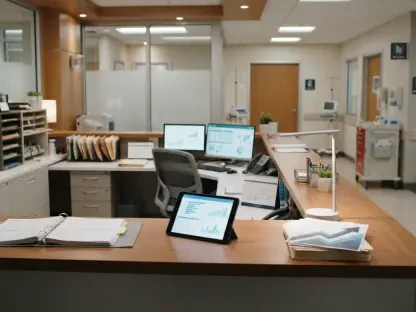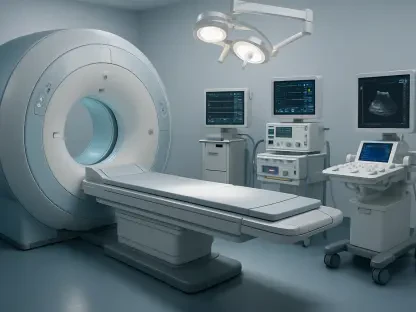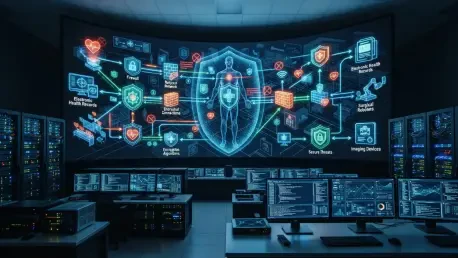

Hospitals that prioritize collaborative decision-making between technical experts and clinical staff establish a more durable defense against digital disruptions. This realization marks a significant shift in how healthcare institutions perceive the relationship between technology and patient safety. Historically, cybersecurity was relegated to the basement, treated as a technical hurdle for IT departments to clear in isolation from the medical staff. Today, however, the digital tools used to manage electronic health records, monitor vitals, and control surgical robotics have become inseparable from the clinical environment. When these systems falter, the impact is felt immediately at the bedside, transforming a network outage into a life-threatening crisis. Consequently, cyber resilience has emerged as a fundamental pillar of medical ethics, requiring hospital leadership to integrate digital defense into the core of patient care protocols. By acknowledging that a secure system is a safe system, institutions can better protect the lives of those they serve.
The Convergence: IT Infrastructure and Clinical Care
The modern hospital functions as a sophisticated, interconnected ecosystem where a single point of failure in the network can cascade through every department, from the laboratory to the intensive care unit. Because digital risk now directly mirrors clinical risk, it has become essential for medical professionals to have a permanent seat at the cybersecurity decision-making table. This multidisciplinary framework ensures that if a technical system must be taken offline to contain a malware threat, the decision is not made in a vacuum. Instead, it is the result of a coordinated assessment involving surgeons, nurses, and IT specialists who understand the immediate stakes for patients currently undergoing procedures or requiring life-support. By bridging the gap between those who manage the servers and those who manage the patients, hospitals can create a nuanced defense strategy that prioritizes the continuity of care, ensuring that digital protection never comes at the cost of human health.
Business Continuity: Proactive Operational Survival
Shifting the focus toward a culture of shared responsibility allows healthcare organizations to move beyond reactive troubleshooting and toward a more proactive state of business continuity. This transition involves a comprehensive reevaluation of what it means to be resilient, looking past simple data restoration to consider the operational survival of the entire institution. A truly resilient hospital develops a plan that addresses how every department will function during a total infrastructure collapse, where digital tools might be unavailable for days or even weeks. This requires reconciling technical recovery time objectives with the reality of patient needs, ensuring that the time it takes to repair a server does not lead to an avoidable delay in treatment. When the mean time to repair is aligned with clinical safety windows, the organization can maintain a steady state of care regardless of the digital chaos occurring in the background, effectively decoupling patient outcomes from the vulnerabilities of the IT network.
Manual Readiness: The Importance of Back to Basics
Paradoxically, the most advanced stage of modern cyber resilience involves a deliberate return to manual, paper-based processes that do not rely on digital connectivity. The most prepared healthcare institutions are currently those that regularly train their staff to perform critical tasks, such as charting, medication administration, and vital sign monitoring, using traditional methods. When clinical teams are proficient in these old school techniques, the immense pressure on IT departments to rush a system recovery—a situation that frequently leads to further technical errors or overlooked security gaps—is significantly mitigated. This manual readiness acts as a safety valve, providing a stable operational floor that prevents the hospital from descending into panic when the screens go dark. Ensuring that the staff can pivot to physical record-keeping without hesitation preserves the integrity of patient care and allows for a more methodical and secure restoration of digital services after a significant disruption.
Tabletop Exercises: Strengthening Defense through Simulation
This emphasis on manual proficiency forms a central component of a sophisticated Business Continuity Plan, which differs fundamentally from a standard incident response strategy. While an incident response plan is designed to address specific digital threats like ransomware or data breaches, a Business Continuity Plan is an all-hazards approach that ensures institutional survival through any catastrophe, whether digital or physical. To make these plans effective, hospitals must conduct rigorous tabletop exercises and simulated system failures that force different departments to collaborate under simulated pressure. These drills help identify which legacy systems and manual workarounds are most critical for maintaining patient safety in a crisis. This proactive approach prevents the fragmented and chaotic recovery efforts that often plague organizations that have become overly dependent on their automated tools, ensuring that the roadmap to restoration is clearly defined long before an actual emergency occurs within the hospital.
Economic Disparities: Addressing the Funding Gap in Security
A persistent challenge in the quest for universal cyber resilience is the widening economic gap between large academic medical centers and smaller, community-based or nonprofit hospitals. Financial constraints often dictate the quality of an institution’s backup infrastructure and the level of specialized cybersecurity expertise it can afford to maintain on staff. Without sufficient funding, smaller facilities frequently find themselves relying on aging technology or stale backups that might be corrupted or encrypted by an attacker without the hospital’s knowledge. Investment in both modernized hardware and the skilled personnel required to monitor it is no longer an optional luxury; it is a necessary expenditure to ensure that patient safety is not a privilege reserved only for the wealthiest health systems. Addressing these disparities requires a strategic reallocation of resources, focusing on the human element of security to ensure that every facility has the eyes and ears necessary to detect and mitigate threats in real time.
Technological Oversight: Human-in-the-Loop AI Strategies
As the integration of Artificial Intelligence and automated diagnostics accelerated, the necessity of maintaining robust human oversight became more apparent than ever before. While AI optimized administrative efficiency and improved the speed of laboratory results, it also introduced novel layers of digital complexity that required a human-in-the-loop strategy. Forward-thinking institutions recognized that the goal of resilience was not to achieve a state of digital invulnerability, but to ensure a steadfast clinical sanctuary regardless of technical failure. Moving forward, the most successful hospitals established clear protocols for when to disconnect advanced algorithms in favor of expert human judgment. They prioritized the development of interoperable systems that could be isolated without compromising the entire network. These institutions ultimately proved that the true foundation of patient safety rested on the ability to combine cutting-edge innovation with the disciplined readiness of the medical staff to act independently.