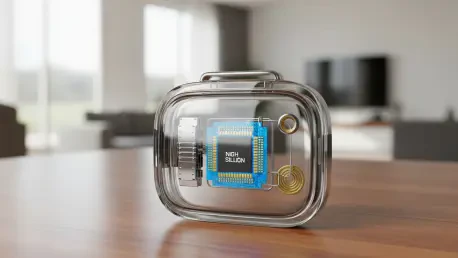

The silent transformation of the global healthcare landscape is currently being orchestrated not just by surgeons and medical researchers, but by the microscopic silicon components that reside within the machinery of modern medicine. These microcontrollers, functioning as the primary intelligence within embedded systems, are moving far beyond the simple logic tasks of the past to become the indispensable engines of real-time diagnostics and life-sustaining therapy. As clinical environments transition toward highly personalized and data-driven models, the demand for medical-grade microcontrollers is experiencing an unprecedented surge that reflects a broader shift in how human health is monitored and managed. Current market valuations highlight this rapid expansion, with the sector starting at roughly $484.96 million in 2025 and projected to reach a significant milestone of nearly $1 billion by the year 2035. This growth trajectory, characterized by a compound annual growth rate of 8.1%, underscores the increasing complexity of medical hardware and the necessity for high-performance silicon to manage sophisticated patient data streams. The evolution of these components ensures that doctors receive more accurate information while patients gain the autonomy to monitor their own health with a level of precision that was once reserved for hospital settings. Beyond the raw processing power, these chips are the foundation of a more accessible healthcare system, where intelligent devices bridge the gap between periodic clinical visits and continuous, non-intrusive monitoring.
Technical Architecture: The Shift Toward High Performance Silicon
The architectural landscape of medical electronics is currently defined by a decisive and rapid migration toward 32-bit architectures, which now power more than 82 percent of modern portable medical devices. This transition is not merely a preference for higher numbers but a strict technical requirement driven by the need to process multi-modal sensor data simultaneously while maintaining sophisticated encryption protocols. Legacy 8-bit and 16-bit units, while still utilized for basic logic in digital thermometers or simple pulse oximeters, are increasingly insufficient for the demands of modern connected health. Today’s devices must manage complex graphical user interfaces and wireless communication stacks, all while running advanced algorithms that filter out environmental noise from delicate bio-signals. This shift toward higher bit-depths allows engineers to implement more robust error-checking routines and integrate multiple functionalities into a single chip, effectively reducing the overall footprint of the device. Consequently, the 32-bit segment is growing at a rate that significantly outpaces its predecessors, becoming the standardized platform for everything from wearable cardiac monitors to portable ultrasound machines that require high-speed data throughput.
Miniaturization remains a core driver of innovation within the semiconductor fabrication process, with industry leaders transitioning from 40nm and 28nm processes toward even more advanced 5nm architectures. These smaller fabrication nodes allow for a significantly higher density of transistors, which translates directly into faster processing speeds and reduced power consumption for the end-user. Such advancements are particularly vital for high-resolution clinical imaging systems that require immediate data interpretation to assist in surgical or diagnostic environments. As these components shrink, they enable the creation of smaller, more comfortable wearable devices that patients can wear for extended periods without discomfort or social stigma. The move toward sub-10nm nodes also facilitates the integration of larger on-chip memory, which is essential for storing the vast amounts of telemetry data generated by continuous monitoring systems. By packing more intelligence into a smaller physical space, the industry is paving the way for a new generation of “invisible” medical technology that integrates seamlessly into a patient’s daily life without sacrificing the analytical depth required for clinical intervention.
Power management has emerged as a primary differentiator for hardware engineers who are tasked with designing the next generation of life-saving medical devices. Recent improvements in power efficiency and the development of specialized ultra-low-power modes have allowed wearable monitors to function for two consecutive weeks on a single battery charge, a feat that was considered impossible just a few years ago. This efficiency is achieved through sophisticated clock-gating techniques and the implementation of multiple power domains that allow the microcontroller to shut down unused peripherals during periods of inactivity. For patients with chronic conditions, this means fewer interruptions for battery swaps and a more consistent flow of data for their healthcare providers. Furthermore, the integration of high-precision analog-to-digital converters within the microcontroller package has become a standard feature in premium models. This level of hardware integration simplifies the design of complex circuit boards and significantly enhances the signal-to-noise ratio when capturing heart rates or neural activity. By minimizing the distance between the analog sensor and the digital processor, these chips ensure that the raw biological data remains as pure and accurate as possible during the conversion process.
Market Catalysts: Decentralization and the Digital Health Boom
The global movement toward the decentralization of healthcare services is serving as a massive catalyst for the deployment of medical-grade microcontrollers in residential settings. As healthcare systems look to alleviate the burden on overcrowded hospitals, there is a marked shift toward home-based monitoring kits that allow patients to manage chronic conditions like diabetes and hypertension independently. These devices, ranging from connected glucose meters to smart blood pressure monitors, rely on high-precision peripherals within the microcontroller to maintain the clinical accuracy required for medical diagnosis. This decentralization does not just save costs for the provider; it empowers the patient by providing real-time feedback and early warning signs of health deterioration. The result is a surge in demand for silicon that can handle complex data analytics locally while maintaining a user-friendly interface for non-professionals. As the population continues to age, the reliance on these home-based smart systems will only intensify, making the microcontroller the essential link between the patient’s home and the professional medical network.
Telehealth expansion is inextricably linked to the capabilities of modern microcontrollers, particularly as 5G network coverage becomes the standard for high-speed connectivity. New generations of microcontrollers are being designed with integrated modems and specialized communication controllers to provide the ultra-low latency required for complex remote procedures. This connectivity is the backbone of the “Internet of Medical Things,” where every device in a hospital or a patient’s home can communicate securely and instantly with a centralized data hub. In the context of remote surgery or telesonography, the microcontroller must ensure that haptic feedback and high-definition video streams are delivered with nearly perfect uptime and zero perceptible lag. This requirement for high-availability communication is driving the development of chips that can manage multiple wireless protocols simultaneously, from Bluetooth Low Energy for local sensors to 5G for long-distance data transmission. As these technologies mature through the decade, the ability to provide healthcare in rural or underserved areas will depend entirely on the reliability and speed of these integrated processing units.
Edge computing is fundamentally transforming the way medical data is handled by moving artificial intelligence and machine learning directly onto the device’s local processor. By processing data at the “edge” rather than sending everything to a distant cloud server, devices like automated external defibrillators can reduce the latency of their analysis, which is often a critical factor in life-or-death situations. Developers are increasingly selecting microcontrollers that feature dedicated Neural Processing Units designed specifically to handle localized machine learning tasks with extreme efficiency. These specialized units allow for the sophisticated analysis of complex heart rhythms or respiratory patterns without the need for an external internet connection, ensuring that the device remains fully functional even in isolated environments. This localized intelligence also addresses privacy concerns by ensuring that sensitive medical data does not have to leave the device unless it is absolutely necessary. By enabling real-time, on-device decision-making, the latest silicon architectures are making medical tools smarter, faster, and more resilient to the challenges of real-world deployment.
Strategic Navigation: Regulatory Compliance and Supply Chain Resilience
Navigating the complex world of international medical regulations remains one of the most significant hurdles for semiconductor manufacturers and medical device developers alike. Compliance with strict safety and quality management standards, such as ISO 13485 and the latest FDA requirements, adds substantial time and financial investment to the product development cycle. For many smaller technology firms, these rigorous regulatory barriers can be daunting, often leading to delayed product launches and the need for significant R&D budgets to ensure every component meets life-critical standards. However, this high bar for entry also serves to maintain the integrity of the market, ensuring that only the most reliable and well-tested silicon reaches the patient. Microcontroller manufacturers are responding to these challenges by offering “pre-certified” modules and software stacks that help developers move through the regulatory process more quickly. This collaborative approach between silicon providers and device manufacturers is essential for maintaining the pace of innovation while upholding the safety standards that define the medical industry.
The global semiconductor supply chain continues to be a point of extreme vulnerability for the medical device industry, necessitating a fundamental rethink of procurement strategies. Many original equipment manufacturers have experienced long lead times for specialized medical-grade silicon, which has forced a departure from the traditional “just-in-time” manufacturing models that dominated the previous decade. In response to these fluctuations, companies are increasingly moving toward a strategy of silicon agnosticism, where software layers are designed to be easily ported between different chip architectures. This flexibility allows manufacturers to switch to alternative microcontrollers if a primary supplier faces a shortage, effectively de-risking their production lines. Furthermore, strategic stockpiling and the establishment of “just-in-case” inventory models have become standard practices for firms producing essential life-support equipment. These shifts in supply chain management reflect a broader industry realization that the availability of silicon is just as important as the clinical effectiveness of the medical device itself.
Rising production costs and shortages of critical raw materials have further complicated the landscape for medical hardware designers who must balance performance with economic viability. The manufacturing of high-performance microcontrollers requires rare earth elements and specialized chemicals that are often subject to geopolitical instability or environmental regulations. To mitigate these risks, leading semiconductor firms are investing heavily in more sustainable and diversified sourcing strategies to ensure a steady flow of materials for their fabrication plants. Additionally, the move toward higher levels of hardware integration is helping to offset some of these costs by reducing the total number of components required on a single circuit board. By consolidating multiple functions—such as power management, wireless connectivity, and analog sensing—into a single microcontroller, manufacturers can lower their overall bill of materials. This economic pressure is driving a new wave of engineering creativity, where the goal is to maximize the utility of every square millimeter of silicon while maintaining the affordability of the final medical product for the global market.
Application Layers: From Diagnostic Tools to Life-Critical Treatment
The current market for medical microcontrollers is defined by the diverse roles that different bit-depths and processing capabilities play across the spectrum of patient care. While high-end 32-bit units command the most attention for their connectivity and security features, 16-bit units continue to hold a significant share of the market in mid-range devices like automated blood pressure monitors and basic laboratory equipment. Even the simplest 8-bit microcontrollers remain a staple for cost-sensitive tools like digital thermometers, where basic logic and low power consumption are the only requirements. This stratification allows for a wide range of price points and technical capabilities, ensuring that medical technology is available for both high-end hospital environments and low-resource clinical settings. As the industry moves through 2026 and beyond, the focus is shifting toward ensuring that even the most basic devices feature at least some level of data logging and connectivity. This ubiquitous intelligence ensures that no piece of medical data is lost, regardless of how simple the device that captured it may be.
Monitoring equipment currently represents the largest application segment in the medical silicon market, with a focus on both wearable and bedside systems that track vital signs in real-time. This area is seeing rapid expansion driven by the specific needs of geriatric care and the long-term management of chronic respiratory and cardiovascular diseases. The “Internet of Medical Things” is a primary theme in this segment, as devices now track everything from oxygen saturation to stress markers and sleep patterns. These monitoring systems require microcontrollers that can maintain high accuracy while operating under strict power constraints, often for years at a time in the case of implanted devices. The integration of high-resolution displays and haptic feedback also adds to the complexity of these systems, requiring processors that can manage a rich user interface without draining the battery. As the population of older adults grows globally, the demand for non-intrusive, continuous monitoring will continue to be a primary engine of growth for the semiconductor industry.
Treatment equipment, such as insulin pumps, ventilators, and automated drug delivery systems, demands the highest level of operational safety and silicon reliability. In these life-critical applications, the microcontroller is responsible for the precise delivery of medication or the regulation of breathing, meaning that any failure could have catastrophic consequences for the patient. This segment requires specialized chips that feature redundant processing cores and extensive self-diagnostic capabilities to detect and correct errors in real-time. As medical technology becomes more autonomous, these treatment devices are beginning to use closed-loop systems, where the microcontroller analyzes sensor data and adjusts the treatment without manual intervention from a clinician. For example, an advanced insulin pump might use a microcontroller to analyze blood glucose levels and automatically deliver the correct dose of insulin. This move toward autonomy is expanding the possibilities of modern medicine, providing patients with a “robotic” level of care that is both more precise and more consistent than traditional manual methods.
Geographic Evolution: Regional Priorities and Global Manufacturing Hubs
North America continues to hold a dominant position as the global leader in the medical microcontroller market, supported by a high concentration of leading medical device headquarters and a rapid adoption rate of smart hospital technology. The region’s aging population in the United States is a significant factor in this growth, as a large majority of older adults are now using at least one form of wearable or home-based monitoring device. Investment in research and development is particularly focused on the burgeoning field of surgical robotics and high-fidelity diagnostic imaging, where the most advanced microcontrollers are required. Furthermore, the presence of a robust venture capital ecosystem allows startups to experiment with niche applications, such as specialized neural interfaces or advanced prosthetic controls. This regional leadership is reinforced by a strong regulatory framework that, while demanding, provides a clear pathway for the commercialization of sophisticated medical silicon. As the region moves toward more integrated healthcare networks, the demand for chips with advanced cybersecurity and networking features will continue to rise.
The Asia-Pacific region is currently the fastest-growing market for medical microcontrollers, acting as both a massive manufacturing hub and a rapidly expanding consumer base for medical technology. Countries like China and South Korea have seen a significant increase in localized semiconductor production, reducing their reliance on Western suppliers and creating a more competitive global landscape. In India, the rapid expansion of private healthcare and the government’s focus on digital health initiatives have created a massive demand for cost-effective diagnostic tools for the growing middle class. This region is particularly adept at producing high volumes of mid-range medical electronics, such as portable scanners and laboratory analyzers, which are essential for expanding healthcare access in developing economies. The synergy between regional semiconductor assembly plants and medical device manufacturers allows for a more streamlined supply chain and faster iteration cycles. As these economies continue to modernize their healthcare infrastructure, the Asia-Pacific region will likely become the primary driver of volume in the global microcontroller market.
Europe’s market for medical silicon is heavily influenced by a unique focus on sustainability and rigorous safety validation regulations that prioritize long-term patient wellbeing. There has been a notable increase in the development and adoption of energy-harvesting technologies that allow medical devices to be powered by body heat or physical motion rather than traditional batteries. This focus on green technology is coupled with a strong emphasis on data privacy, which is driving the demand for microcontrollers with hardware-based encryption that complies with strict regional data protection laws. Additionally, the region has become a central hub for integrating artificial intelligence into point-of-care testing devices, providing clinicians with immediate diagnostic results at the bedside. European manufacturers are also leading the way in the development of “circular” medical electronics, where devices are designed to be easily refurbished or recycled at the end of their life cycle. This combination of safety, privacy, and sustainability ensures that the European market remains at the forefront of ethical and environmentally conscious healthcare innovation.
Competitive Ecosystem: Leadership and Innovation in Medical Silicon
The competitive landscape of the medical microcontroller market is highly consolidated, with a handful of major semiconductor manufacturers controlling the vast majority of the global supply. these industry giants leverage their massive research and development budgets to stay ahead of the curve, often developing proprietary technologies that become the de facto standards for the industry. Their success is built on more than just high-performance silicon; it is rooted in providing a comprehensive ecosystem of analog components, digital processors, and software tools that simplify the design process for medical engineers. By offering a “one-stop-shop” approach, these leaders can ensure that their components work together seamlessly, reducing the risk of integration errors in complex medical systems. This consolidation also allows for better economies of scale, making high-performance medical technology more affordable for a wider range of healthcare providers. However, the dominance of these large players also creates a high barrier to entry for smaller firms, who must often find niche applications or focus on hyper-specialized technology to compete.
Texas Instruments currently maintains a leading position in the global market, a status built on a long-standing reputation for producing chips with extreme reliability and ultra-low power consumption. Their strategic focus on providing an integrated ecosystem of precision analog and digital components has made them the preferred choice for engineers designing sophisticated diagnostic equipment. By focusing on the specific needs of the medical sector—such as high-fidelity signal acquisition and long-term hardware availability—they have created a loyal customer base across the globe. Their microcontrollers are often found at the heart of precision laboratory analyzers and high-end imaging systems, where accuracy is the most critical metric. This focus on the “precision” end of the market has allowed them to maintain high margins and a strong brand presence even as the market becomes more crowded. Their continued investment in medical-specific silicon ensures that they remain a cornerstone of the industry as devices move toward higher levels of autonomy and data processing.
STMicroelectronics is another pivotal player in the medical silicon space, particularly favored by the growing community of startups and mid-sized firms developing wearable medical devices. Their success is largely attributed to an extensive and user-friendly software library that allows engineers to “drag and drop” pre-validated medical algorithms into their hardware designs. This synergy between hardware and software significantly reduces the time required to bring a new medical product to market, which is a critical advantage in the fast-moving digital health sector. They have also been a leader in integrating advanced security features directly into the silicon, addressing the growing concerns over medical device hacking and data breaches. By focusing on the “wearable and connected” segment of the market, they have positioned themselves at the center of the consumer health revolution. Their approach demonstrates that in the modern medical market, providing the tools to build a product is just as important as the performance of the chip itself.
Protection and Reliability: The Fail-Safe Standards of Modern Silicon
As medical devices become more interconnected and reliant on wireless communication, the integration of hardware-based security features has become a non-negotiable requirement for silicon manufacturers. Modern microcontrollers now feature advanced encryption accelerators, secure key storage, and secure boot capabilities to ensure that only authenticated firmware can run on the device. These protections are essential for preventing cyber threats that could lead to the unauthorized modification of medical settings or the theft of sensitive patient data. For instance, an insulin pump or a pacemaker that is connected to a network must be completely shielded from external interference to prevent potentially lethal malfunctions. This focus on “security by design” means that protection is baked into the silicon at the physical level, making it much harder for malicious actors to bypass software-based defenses. As the healthcare industry continues to move toward a fully digital model, the role of the microcontroller as a secure gateway for patient information will only become more vital.
Functional safety certifications have become a standard part of the development process for any device that performs an automated medical function, from infusion pumps to surgical assists. Innovation in this area has led to the widespread use of dual-core lockstep architectures, where two processor cores run the same code simultaneously and compare the results in real-time. If a discrepancy is detected between the two cores—caused by a hardware glitch or cosmic ray interference—the system can automatically move into a safe state or trigger an alarm. This level of redundancy ensures that a single point of failure within the microcontroller does not lead to a patient injury. Furthermore, these chips are designed with extensive self-test routines that run in the background to monitor the health of the memory and peripheral units. This “fail-safe” philosophy is what allows clinicians to trust autonomous medical systems with the most sensitive tasks in the operating room or the intensive care unit.
Integrity of firmware is further protected through secure boot features that verify the digital signature of the operating system every time the device is powered on. This ensures that the device has not been tampered with and that the software controlling it is exactly what the manufacturer intended. For clinicians and patients, this provides a critical layer of trust, knowing that the data being generated and the treatments being administered are based on validated and secure code. As the threat landscape for medical technology evolves, these security measures are being integrated even deeper into the hardware, with specialized “security enclaves” that isolate sensitive cryptographic operations from the rest of the processor. This architectural isolation ensures that even if one part of the system is compromised, the core safety and security functions remain intact. By prioritizing these fail-safe standards, the semiconductor industry is providing the foundational trust necessary for the widespread adoption of advanced medical automation.
The Future Frontier: Bio-Electronic Medicine and Novel Materials
Looking toward the horizon of 2035, the most exciting frontier of medical technology lies in the field of bio-electronic medicine, which uses microcontrollers to interface directly with the human nervous system. These sophisticated devices are being designed to stimulate or block specific neural pathways to treat a wide variety of chronic inflammatory diseases and neurological disorders. Such applications require microcontrollers that can operate on extremely low power levels—often harvested from the body itself—and maintain biocompatibility for decades while implanted. The signaling required for these devices is incredibly complex, necessitating chips that can mimic the electrical patterns of natural nerve impulses with high precision. This marriage of biology and silicon represents a paradigm shift in treatment, moving away from chemical pharmaceuticals toward precise, electrical interventions. As this field matures, the microcontroller will evolve from a simple data processor into a sophisticated biological modulator, opening up new possibilities for treating conditions that were once considered unmanageable.
Significant investment is also being directed toward the development of disposable and biodegradable electronics, which are designed to reduce cross-contamination risks and lower the environmental impact of medical testing. This segment includes ultra-low-cost diagnostic patches that can be applied to the skin to monitor vital signs for a short period before being safely discarded. These single-use devices represent a major shift toward more accessible and hygienic testing methods, particularly for infectious disease screening or short-term post-surgical monitoring. The challenge for silicon designers is to create microcontrollers that are inexpensive enough to be disposable while still maintaining high diagnostic standards and reliable wireless connectivity. This “frugal innovation” is driving the use of organic semiconductors and flexible substrates that can bend with the patient’s body. By making sophisticated diagnostic tools as easy to use as a traditional adhesive bandage, the industry is democratizing access to high-quality healthcare monitoring across the globe.
Advancements in materials science, such as the adoption of Gallium Nitride and Silicon Carbide, are helping engineers manage the heat generated by increasingly powerful medical processors. Thermal efficiency is a critical factor for any device that is implanted in the body or kept in direct contact with the skin, as excessive heat can cause tissue damage or patient discomfort. These new materials allow for faster switching speeds and lower power loss, which in turn reduces the thermal footprint of the microcontroller. This is particularly important for high-performance devices like brain-computer interfaces or advanced prosthetic limbs, where high computational loads are required in a very small, enclosed space. As the industry moves closer to 2035, these material innovations will enable the creation of even more powerful medical tools that remain safe for long-term physical contact. The microcontroller will remain the silent heart of this healthcare revolution, driving the innovations that make modern medicine safer, more autonomous, and more integrated into the human experience than ever before.
Industry Evolution: Actionable Steps for a More Resilient Healthcare System
The healthcare and semiconductor sectors achieved a historic milestone by successfully transitioning toward a more integrated and data-centric model of patient care. Manufacturers moved away from generic processing units and prioritized medical-grade silicon that featured built-in functional safety and hardware-based security protocols. This shift ensured that the next generation of life-critical devices remained resilient against both hardware failures and external cyber threats. Industry leaders recognized that the long-term success of digital health depended on the reliability of the underlying components, leading to a surge in R&D investment focused on ultra-low-power architectures and advanced fabrication nodes. By 2026, the strategy of silicon agnosticism became a standard practice, allowing the industry to maintain steady production levels even during periods of supply chain volatility. Engineers also focused on the integration of neural processing units at the edge, which significantly reduced the latency of life-saving diagnostic tools.
As the decade progressed, the deployment of decentralized monitoring systems proved to be a vital solution for the challenges of an aging global population. Healthcare providers successfully utilized these smart devices to shift a significant portion of chronic disease management from clinical settings to the patient’s home. This transition was supported by the development of highly efficient microcontrollers that offered weeks of battery life and seamless connectivity via 5G networks. The adoption of biodegradable and flexible electronics further expanded the reach of diagnostic tools, making high-quality healthcare more accessible in low-resource environments. Ultimately, the industry established a more robust and flexible ecosystem that prioritized patient safety and data integrity above all else. These advancements provided a clear roadmap for the future, where the fusion of biology and silicon continued to drive the development of personalized, autonomous, and highly effective medical treatments.