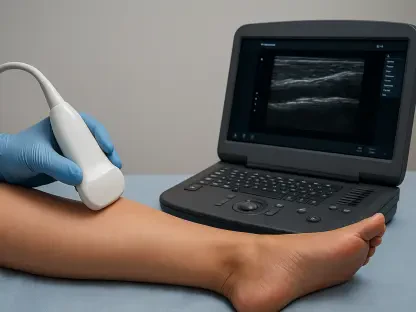

The concept of clinical continuity has replaced simple data confidentiality as the primary driver for multi-billion dollar investments in modern healthcare security infrastructure. As hospitals and clinics across the globe have transitioned from traditional paper charts to fully integrated digital ecosystems, the stakes of technological failure have migrated from administrative nuisances to life-threatening crises. Today, in 2026, the global healthcare cybersecurity market has reached a valuation of $27.8 billion, a figure projected to climb toward nearly $90 billion by 2036. This explosive growth reflects a profound transformation in how medical institutions perceive risk. No longer just a matter of protecting patient privacy or satisfying regulatory requirements, cybersecurity is now the bedrock upon which all clinical operations are built. The integration of Internet of Medical Things devices and artificial intelligence in diagnostics has created a vast attack surface that necessitates a paradigm shift in defense. Every heartbeat monitor, insulin pump, and imaging machine is a potential entry point for malicious actors who now target the operational heartbeat of the hospital rather than just its database. This evolution demands a sophisticated blend of proactive threat hunting and resilient infrastructure to ensure that care delivery remains uninterrupted even in the face of persistent digital aggression.
The Evolution: Navigating the Surge of Operational Risks
The landscape of medical threats has shifted dramatically, with a documented 102% increase in large-scale healthcare breaches observed over the most recent five-year cycle. Modern cybercriminals have moved beyond the simple theft of patient records for identity fraud, recognizing that the disruption of hospital workflows provides much greater leverage for extortion. When a medical facility is hit by ransomware today, the consequences are immediate and physical, often manifesting as canceled elective surgeries, the redirection of emergency ambulances to distant counties, and the loss of access to critical diagnostic imaging. This shift toward targeting operational availability means that the defense of a hospital network is now indistinguishable from the defense of patient lives. As these attacks become more frequent and sophisticated, the traditional perimeter-based security models are proving insufficient, forcing a move toward more granular, internal monitoring. The psychological impact on the patient population is equally severe, as the erosion of trust in digital health records can lead individuals to withhold sensitive information from their providers, further complicating the delivery of effective care.
National governments and health ministries are attempting to keep pace with these rising threats by establishing new governance models that emphasize executive-level accountability for digital safety. However, a significant gap persists between the creation of these policies and their practical implementation on the hospital floor. While many jurisdictions now mandate the appointment of dedicated security managers within healthcare institutions, the supply of qualified professionals with deep expertise in both medical informatics and cybersecurity remains critically low. Many organizations find themselves with a formal security structure that looks robust on paper but lacks the technical depth to counter state-sponsored campaigns or advanced persistent threats. This imbalance creates a precarious environment where the theoretical protection of a facility is often undermined by a lack of real-time response capabilities. To close this gap, healthcare leaders are increasingly prioritizing the development of specialized training programs that treat digital literacy as a core clinical competency, ensuring that every nurse and physician understands their role in maintaining the security of the hospital environment.
Strategic Layers: Investment in Security Software and Assets
Software solutions currently dominate the healthcare security market, accounting for nearly half of all global expenditures as of 2026. These digital tools provide the necessary visibility for administrators to track and manage thousands of connected medical assets that were previously invisible to IT departments. In a modern hospital, the ability to identify every device connected to the network—ranging from smart beds to robotic surgical assistants—is the first step in enforcing a strict zero-trust policy. Continuous updates and persistent monitoring through these software layers allow institutions to stay ahead of evolving malware variants that are specifically designed to bypass traditional antivirus programs. By employing advanced encryption and automated patch management, hospitals can significantly reduce their attack surface without requiring a massive increase in physical headcount. This software-centric approach also facilitates the rapid deployment of security protocols across diverse clinical settings, ensuring that a small rural clinic has access to the same level of protection as a metropolitan teaching hospital.
Beyond simple asset discovery, the modern security software stack is increasingly focused on the integrity of clinical data as it moves between different points of care. As interoperability becomes a mandate for improving patient outcomes, the risk of data corruption or unauthorized interception grows exponentially. Advanced software platforms now use blockchain-inspired logging and end-to-end encryption to ensure that a lab result or a prescription order remains unchanged from the moment it is generated to the moment it is reviewed by a physician. This level of verification is essential for preventing “silent” attacks, where a malicious actor alters a patient’s blood type or allergy information within the digital record—an action that could have fatal consequences. By prioritizing software that integrates directly into clinical workflows, healthcare providers can maintain a high level of security without introducing friction that might slow down time-sensitive medical procedures. The goal is to create a transparent layer of protection that operates in the background, allowing clinicians to focus on patient care while the software handles the complexities of digital defense.
Managed Services: Bridging the Specialized Talent Gap
The chronic shortage of in-house cybersecurity expertise has led to the rapid rise of managed services as a primary defense strategy for healthcare organizations of all sizes. Many hospital boards have realized that building and maintaining a 24/7 security operations center is financially and logistically impossible given the current competition for tech talent. Managed service providers offer a scalable solution, providing clinical facilities with access to elite teams of threat hunters and incident responders who monitor hospital networks around the clock. This model is particularly attractive to mid-sized providers who lack the capital to compete with Silicon Valley for top-tier security engineers but face the same level of risk as global medical centers. By outsourcing the monitoring of network traffic and the management of security alerts, healthcare administrators can ensure that potential threats are identified and neutralized within minutes, rather than hours or days. This rapid response capability is often the difference between a minor contained incident and a facility-wide system failure that requires a total operational shutdown.
Furthermore, managed services provide a layer of strategic consultation that helps healthcare organizations navigate the increasingly complex web of global regulatory requirements. These external partners bring a cross-industry perspective, applying lessons learned from the financial and defense sectors to the unique challenges of the medical field. This is especially valuable when it is necessary to conduct regular vulnerability assessments and penetration testing, which are now required by most insurance underwriters and government oversight bodies. The relationship between a hospital and its managed service provider is evolving into a deep partnership, where the provider assists in the design of future infrastructure to ensure that security is not an afterthought. As the healthcare sector moves toward a more collaborative model of care, these services provide the technological glue that allows different organizations to share data safely and securely. The transition to managed services represents a pragmatic admission that in 2026, the complexity of the digital threat landscape has surpassed the capabilities of most general IT departments.
Intelligence: Security Analytics and Proactive Threat Hunting
Security analytics has transitioned from an experimental luxury to a fundamental necessity, serving as the intelligent brain of the modern clinical security ecosystem. These sophisticated platforms use machine learning algorithms to analyze massive volumes of network traffic, looking for subtle anomalies that might indicate a breach or a system malfunction. Unlike traditional security tools that rely on a database of known threats, analytics can identify “zero-day” attacks by recognizing patterns of behavior that deviate from the established norm. For instance, if a workstation in the radiology department suddenly attempts to access financial records or begins sending encrypted data to an unknown external server, the analytics system can automatically flag the activity for investigation. This shift from reactive to proactive defense is crucial in an environment where every second of downtime can impact patient health. By identifying potential issues in their infancy, security teams can prevent the lateral movement of an attacker before they reach critical systems like the electronic health record or the laboratory information system.
The implementation of behavioral analytics also extends to the monitoring of user activity, providing a vital tool for preventing both accidental and malicious insider threats. In a high-pressure hospital environment, clinicians may occasionally bypass security protocols to save time during an emergency, unintentionally creating vulnerabilities. Security analytics tools can identify these patterns and allow administrators to address the underlying workflow issues rather than simply punishing the user. This creates a feedback loop where the security system actually helps improve the efficiency of clinical operations by highlighting bottlenecks and unauthorized workarounds. Moreover, as AI-driven diagnostic tools become more common, analytics systems are being used to monitor the integrity of the AI models themselves, ensuring that the data used for medical decision-making hasn’t been tampered with. This comprehensive approach to data intelligence ensures that the hospital’s digital environment remains a trusted source of truth for both patients and providers, regardless of the complexity of the underlying technology.
Cloud-First: Protecting the Modern Distributed Care Network
Healthcare organizations are rapidly migrating their security infrastructure to cloud-based models to manage the increasing decentralization of medical services. With the continued growth of telehealth, home-based monitoring, and regional satellite clinics, the traditional “castle and moat” approach to security is no longer effective. Cloud-native security controls allow hospital systems to protect their data and applications regardless of where the physician, the patient, or the device is physically located. This flexibility is essential for maintaining a consistent security posture across a regional health network, ensuring that a doctor accessing a patient’s records from a home office is subject to the same rigorous protections as one working within the main hospital. By centralizing security management in the cloud, IT teams can push out updates and policy changes across the entire organization simultaneously, eliminating the “security lag” that often plagues large, fragmented institutions. This transition also provides the scalability needed to handle the massive influx of data generated by wearable medical devices and remote diagnostic tools.
The adoption of cloud-first security also enhances the resilience and disaster recovery capabilities of healthcare providers, which is a critical component of clinical continuity. In the event of a local hardware failure or a natural disaster that impacts a hospital’s physical data center, cloud-based backups and security configurations allow clinical operations to resume almost immediately from an alternative site. This level of redundancy was previously too expensive for many providers to maintain, but the cloud has democratized access to enterprise-grade disaster recovery. Furthermore, cloud providers often invest far more in physical and digital security than any individual hospital could ever afford, providing a level of baseline protection that is difficult to replicate on-premise. As healthcare continues to move toward a model of “anywhere, anytime” care, the cloud serves as the secure foundation that makes this transformation possible. The ability to quickly spin up new secure environments for clinical research or emergency response ensures that the technological infrastructure can adapt as fast as the medical needs of the population.
Network Integrity: Segmentation and Identity Governance
The physical safety of patients depends heavily on the integrity of the hospital’s internal network, making segmentation one of the most critical defensive strategies in use today. By dividing a hospital’s digital environment into smaller, isolated zones, security teams can prevent a digital infection from spreading beyond its initial point of entry. For example, the network that controls the life-critical equipment in an Intensive Care Unit can be completely separated from the guest Wi-Fi or the administrative billing system. If a malicious file is inadvertently downloaded on a laptop in the hospital café, the segmentation protocols ensure that the malware cannot reach the infusion pumps or the ventilators in the surgical wing. This approach is vital for maintaining uptime in critical care areas even when other parts of the facility are under investigation or repair. Modern network security tools allow for “micro-segmentation,” where security policies are applied to individual devices rather than just broad categories, providing a granular level of control that was impossible just a few years ago.
Complementing network isolation is a rigorous approach to identity and access management, which ensures that only authorized personnel can interact with sensitive systems. In 2026, multi-factor authentication has become the standard for every digital interaction within the healthcare environment, from accessing a patient’s history on a bedside tablet to adjusting the settings on a robotic pharmacy dispenser. Identity governance systems are now being integrated with clinical scheduling software to provide “just-in-time” access; for instance, a surgeon might only be granted permission to access a specific patient’s data and the operating room controls during the hours they are scheduled for that patient’s procedure. This limits the “blast radius” of a compromised credential, as an attacker would only have access to a very narrow window of data and functionality. By treating identity as the new perimeter, healthcare organizations can protect their most valuable assets even in an era of high staff turnover and increased reliance on temporary contract labor. This strict control over who can do what on the network is the primary defense against the unauthorized entry of both external hackers and malicious insiders.
Stakeholders: Divergent Objectives Across the Healthcare Sector
The priorities for cybersecurity vary significantly across the different sectors of the healthcare industry, reflecting their unique operational risks and business models. Healthcare providers, including hospitals and primary care clinics, are the most aggressive investors in security because they face the most immediate and tangible consequences of a system failure. For these organizations, the primary objective is clinical availability; every minute of downtime directly correlates to a decrease in the quality of patient care and a potential increase in mortality rates. Consequently, providers focus their investments on technologies that prioritize uptime, such as redundant networks and rapid-response managed services. In contrast, health insurance payers and government health agencies are more concerned with the protection of massive databases containing insurance claims and personal identifiers. For them, a breach is primarily a financial and regulatory catastrophe that involves massive fines and the long-term loss of consumer trust, leading them to invest heavily in encryption and data loss prevention tools.
Life sciences companies and pharmaceutical manufacturers represent a third distinct group, with a focus on protecting intellectual property and the integrity of clinical trial data. These organizations are often the targets of industrial espionage, where state-sponsored actors attempt to steal proprietary research related to new drug formulations or medical devices. A breach in this sector can result in billions of dollars in lost research and development costs and can undermine years of scientific progress. To combat this, life sciences firms invest in highly specialized security measures that protect the entire research lifecycle, from initial laboratory discovery to the final regulatory submission. Despite these differing primary goals, all stakeholders in the healthcare ecosystem are increasingly united by the need for secure and resilient data exchange. As the industry moves toward value-based care and population health management, the secure sharing of information between providers, payers, and researchers has become essential. This shared dependency is driving a new level of collaboration on security standards, ensuring that data remains protected as it moves through the complex global healthcare supply chain.
Global Policy: Regulatory Frameworks and Regional Dynamics
Regional variations in regulatory enforcement and governance models are significantly shaping the global healthcare security market. In the United States, the Department of Health and Human Services has moved beyond the privacy focus of the original HIPAA regulations to emphasize the operational resilience of the national healthcare infrastructure. New federal mandates require hospitals to participate in collective threat-sharing networks and to demonstrate a baseline level of cybersecurity maturity to receive full government reimbursement. This “carrot and stick” approach is designed to close the security gap between well-funded urban medical centers and resource-constrained rural facilities. Meanwhile, in the European Union, the focus has remained on board-level accountability and the concept of “security by design.” Regulations such as the NIS2 Directive require healthcare technology suppliers to prove that their products will not interfere with clinical availability and that they have robust plans for managing vulnerabilities throughout the product’s lifecycle. This has forced manufacturers to prioritize security during the initial engineering phase of new medical devices.
In the Asia-Pacific region, Japan has emerged as a leader in formalizing cybersecurity duties for hospital executives, moving the responsibility for digital safety out of the IT basement and into the boardroom. Japanese national guidance now explicitly states that the safety of the patient is the responsibility of the hospital’s leadership, which has driven a surge in demand for integrated training and executive support services. This regional focus on a culture of security awareness aims to ensure that technology is managed effectively at every level of the organization. Similarly, in emerging markets, there is a growing trend toward “leapfrogging” older security models in favor of cloud-native and mobile-first defense strategies. These regions are often building their digital health infrastructure from the ground up and can avoid the legacy technology hurdles faced by more established systems. Despite these different regional paths, the global trend is moving toward a more standardized and rigorous approach to medical security, reflecting a worldwide acknowledgment that the digital and physical worlds of medicine are now permanently intertwined.
Modernization: Mitigating the Risks of Legacy Medical Technology
One of the most persistent hurdles to modernizing healthcare security is the continued presence of legacy medical devices that were manufactured years or even decades ago. Many of these “frozen” systems, such as older MRI machines or specialized laboratory analyzers, were designed before cybersecurity was a primary concern and often run on obsolete operating systems that cannot be patched or updated. Replacing these multi-million dollar assets is often not financially feasible, yet they represent a significant vulnerability on the hospital network. To address this, security teams have developed creative “wrapping” strategies, where these older devices are isolated behind specialized firewalls and protocol converters that filter incoming traffic. This allows the devices to continue their vital clinical functions while being shielded from the modern threat environment. This compensatory control model is a temporary but necessary solution as hospitals work through the long cycles of capital equipment replacement, ensuring that the legacy past does not compromise the digital future.
The budgetary tension between clinical upgrades and security investments remains a major challenge for hospital administrators. When faced with the choice between a new diagnostic tool that can save lives immediately and an invisible infrastructure upgrade, the clinical tool often wins the funding. However, as the frequency of cyberattacks increases, the financial argument for preemptive security investment has become much more compelling. Industry data now shows that the cost of recovering from a major ransomware attack—including legal fees, forensic investigations, and lost revenue—is significantly higher than the cost of implementing a comprehensive security program. This realization is shifting the conversation within hospital finance committees, where cybersecurity is increasingly viewed as an insurance policy for clinical operations. By 2026, forward-thinking organizations have begun to integrate security costs into the total cost of ownership for every new piece of medical equipment, ensuring that the necessary defenses are funded at the point of purchase. This lifecycle-based approach to funding is essential for building a truly resilient medical infrastructure that can withstand the tests of the coming decade.
Resilience: Navigating the Future of Care Delivery
By the mid-2030s, the focus of the healthcare industry shifted from defending the perimeter of the hospital to a comprehensive model of “resilience by design.” The integration of AI-driven automation became the primary method for managing the overwhelming volume of data generated by billions of connected medical devices. These autonomous systems were capable of detecting, investigating, and neutralizing threats in real-time, often resolving incidents before a human analyst was even aware of a problem. This evolution was necessary as the complexity of the medical environment grew beyond the capacity of traditional human-led security teams. The successful adoption of these technologies ensured that the global healthcare system could continue to innovate, bringing the benefits of remote surgery and personalized medicine to millions of people without compromising their safety or privacy. The industry moved toward a philosophy where security was no longer a separate IT function but an invisible and inseparable part of the care delivery process itself.
Ultimately, the safeguarding of global healthcare required a fundamental change in how the medical community perceived the digital world. The journey toward the 2036 market valuation of $90 billion was marked by a shift from reactive fear to proactive preparation. Organizations that succeeded were those that prioritized the human element of security, fostering a culture where every staff member felt responsible for the digital health of the facility. The path forward involved a deep commitment to transparency and collaboration, as hospitals, manufacturers, and governments worked together to share threat intelligence and develop common standards. This collective effort provided the resilience needed to protect the clinical environment from the increasingly sophisticated tactics of global adversaries. By treating cybersecurity as a vital pillar of medicine, comparable to sterilization or diagnostic accuracy, the healthcare sector established a secure foundation for the future of human health. The lessons learned during this period of rapid digital transformation provided a blueprint for how other critical industries could protect their essential services in an increasingly interconnected world.