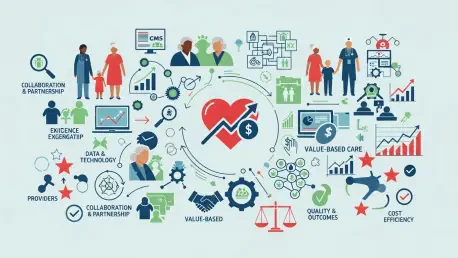

The traditional reimbursement landscape for long-term care facilities is undergoing a dramatic transformation as the Centers for Medicare & Medicaid Services pushes for a unified value-based framework. This systemic shift requires nursing home operators to transition away from the comfortable but increasingly outdated Fee-For-Service model toward sophisticated, outcomes-oriented payment structures. As regulatory pressure mounts, facilities that fail to adapt risk being left behind in a healthcare ecosystem that prioritizes clinical efficiency and patient longitudinal management over simple volume-based billing. The introduction of specific initiatives like the Long-Term Enhanced ACO Design and the Transforming Episode Accountability Model provides a roadmap for this evolution. These frameworks are not merely suggestions; they represent a fundamental redesign of how care is financed and delivered across the post-acute continuum. Success now depends on the ability of operators to decode these complex regulatory mandates and integrate themselves into broader networks.
Financial Landscapes: Integrating With New Care Structures
The Integrated Node Model: Aligning With Primary Care
To thrive in this new environment, nursing homes must transition from isolated clinical silos to becoming integrated nodes within a primary care chassis. This conceptual shift involves aligning facility operations with a continuous care pathway, ensuring that every resident is managed within a holistic framework rather than being treated for episodic events in isolation. By establishing these strong ties with primary care providers, nursing homes can foster a collaborative atmosphere where information flows seamlessly across the care continuum. This integration is vital because it allows for real-time adjustments to care plans, which reduces the likelihood of unnecessary hospital readmissions and improves overall patient satisfaction. Furthermore, this model encourages facilities to adopt standardized clinical protocols that are recognized by major health systems, facilitating smoother transitions of care. Ultimately, being part of a primary care chassis means the facility becomes an essential component of the patient’s long-term health journey.
The Financial Frontier: Capturing the Savings
The financial motivation behind this transition is underscored by the massive amount of unmanaged spending currently present within the Medicare Fee-For-Service ecosystem. Industry data suggests that roughly 70% of this spending remains outside of any formal management structure, representing a significant opportunity for cost containment and quality improvement. Within the nursing home sector alone, this unmanaged spending is estimated to exceed $12 billion annually, a figure that highlights the inefficiencies of the legacy payment system. By entering the Accountable Care Organization space, nursing home operators can position themselves to capture a portion of these funds through shared savings arrangements. These arrangements reward facilities that can demonstrably lower the total cost of care while meeting or exceeding established quality benchmarks. This savings frontier serves as a powerful incentive for operators to invest in the technologies and personnel required to track health outcomes and manage costs more aggressively.
Technical Updates: Leveraging Specialized Models
Framework Understanding: Navigating LEAD and TEAM
The Long-Term Enhanced ACO Design, known as LEAD, represents a significant commitment by CMS to provide stability for facilities managing high-needs residents. This model is specifically designed to target populations in nursing homes and assisted living facilities over a ten-year horizon, providing a long-term predictable framework for investment. In parallel, the Transforming Episode Accountability Model, or TEAM, introduces mandatory downside risk for hospitals, compelling them to seek out high-performing post-acute partners. Nursing home operators that can demonstrate high performance in areas like readmission rates and functional improvement will become preferred collaborators for these hospitals. To succeed in this environment, nursing homes must provide transparent data regarding their clinical outcomes and cost-effectiveness. This pressure from the hospital side creates a market-driven incentive for nursing homes to modernize their clinical practices and communication protocols. Mastery of these specific mechanics is essential for maintaining a presence in the market.
Technical Modernization: Lowering Thresholds for Specialized Care
Recent technical adjustments by CMS have made participation in Accountable Care Organizations much more accessible for specialized long-term care operators. One of the most impactful changes is the significant reduction of the participation threshold for high-needs groups to just 800 lives. This lower barrier to entry allows smaller, more specialized facilities to participate in value-based care models that were previously reserved for large health systems. Additionally, CMS has expanded the definition of high needs to include functional frailty, a move that more accurately reflects the patient population typically found in nursing facilities. Another vital update is the implementation of concurrent risk adjustment, which ensures that reimbursement levels are updated in real-time to reflect the resident’s current health status. This protects providers from the volatility of managing complex patients whose conditions may change rapidly. These technical updates represent a major step toward making value-based care a reality for the entire nursing home industry.
Strategic Alignment: Improving Cash Flow and Enrollment
Efficiency in value-based care is further enhanced by new voluntary alignment rules that allow nursing home operators to enroll beneficiaries into an ACO on a monthly basis. This new flexibility permits organic growth throughout the year, mirroring the more agile enrollment processes found in institutional managed care plans. Furthermore, prospective payment mechanisms and advanced payment options now provide a necessary glide path for smaller organizations to cover initial investment costs. Facilities that moved early to establish strong partnerships with primary care providers and hospitals found themselves in a much stronger position as mandatory models took effect. It became evident that the ability to manage complex data and leverage real-time risk adjustment was a primary driver of financial stability in this new era. Operators also learned that utilizing shadow bundles and voluntary alignment rules allowed for a smoother transition. These strategic investments ultimately transformed facilities into indispensable, value-driven partners within the broader healthcare ecosystem.