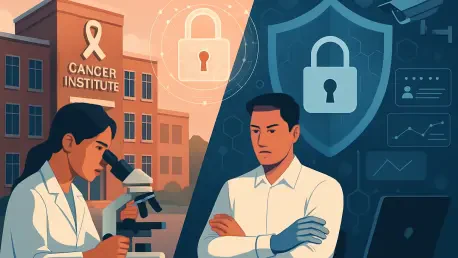

Managing a paperless oncology department means that any digital system failure immediately halts the ability to access vital chemotherapy plans and patient records. This stark reality defines the operational landscape at the Istituto Nazionale Tumori (INT), where the digital transformation strategy must account for the extremely high stakes of oncological care. In this environment, the traditional firewall-based perimeter is no longer sufficient to protect a dual-purpose institution that functions as both a frontline medical facility and an advanced research center. Clinical professionals demand absolute system uptime and reliability because even a momentary disruption can jeopardize patient safety, while researchers push for open, collaborative architectures that allow for global data exchange. The IT department, led by Director of Digital Transformation Rocco Saviano, has pivoted toward a philosophy that prioritizes the protection of the “irretrievable”—the human lives at the center of the mission. By acknowledging that data is valuable but life is paramount, the institute has developed a security framework that favors resilience over simple prevention. This shift ensures that even when the network is under active digital siege, the hospital can continue its life-saving operations without descending into chaos. Building this resilience requires a deep understanding of the unique tensions between healthcare delivery and scientific exploration, necessitating a strategy that is both invisible to the user and invincible against the adversary.
Network Architecture: The Power of Microsegmentation
The transition away from a traditional “flat” network model serves as the cornerstone of the institute’s modern defense strategy. In a legacy configuration, once an attacker manages to bypass the external perimeter, they often find themselves in an open environment where they can move laterally between unrelated systems. For a medical facility, this represents an unacceptable risk, as a single compromised administrative workstation could theoretically provide a pathway to sensitive clinical databases or life-critical biomedical equipment. To mitigate this vulnerability, INT has implemented a rigorous microsegmentation strategy that effectively divides the internal network into hundreds of isolated, granular zones. This approach ensures that every device, from a researcher’s high-powered workstation to a bedside infusion pump, is confined to its own specific segment. By limiting the communication paths to only the specific resources required for a device to perform its immediate function, the institute creates a series of internal barriers that significantly impede an intruder’s ability to navigate the network or cause widespread damage.
Implementing these zero-trust principles essentially shifts the primary objective of cybersecurity from an impossible goal of preventing every single intrusion to the more practical goal of containing them. This containment strategy is designed to minimize the “blast radius” of any potential security incident, ensuring that a breach in one department does not cascade into a facility-wide catastrophe. If a malware infection or an unauthorized access event occurs within a specific research lab, the microsegmented architecture keeps the threat confined to that localized area, preventing it from reaching the critical systems used for patient diagnosis and treatment. This methodology allows the hospital to maintain a high degree of operational continuity even while technical teams are actively responding to a threat in another part of the network. For the staff at INT, this means that the digital environment remains a safe and reliable tool for healthcare delivery, regardless of the localized security challenges that may arise in the complex ecosystem of a modern medical and research institution.
Patient Care: Maintaining Workflow Continuity
As the oncology department moved toward a completely paperless environment, the reliance on digital systems reached a point where redundancy became a clinical necessity rather than just an IT requirement. The institute recognized that even the most advanced cybersecurity measures cannot guarantee 100% uptime, leading to the development of robust continuity protocols designed for the specific needs of cancer treatment. In a scenario where a clinician or nurse is unable to access a digital chemotherapy plan due to a system outage, the priority immediately shifts from operational speed to clinical safety. Staff members are strictly prohibited from relying on memory or unverified personal notes to proceed with treatment. Instead, they activate predefined protocols that use authorized, offline data sources and mandatory multi-person clinical checks. This structured response ensures that the patient care journey remains grounded in verified medical data, even when the primary digital infrastructure is unavailable. The goal is to provide a safety net that protects the patient from human error during periods of technological stress.
Maintaining this level of continuity requires a clear distinction between a routine technical failure and a malicious cyberattack, a task made possible by the underlying microsegmented infrastructure. Because the network is divided into independent zones, the IT department can implement defensive measures in one segment without affecting the performance of clinical systems in another. This granular control allows the hospital to maintain active safety protocols and data access in critical care areas while concurrently isolating and investigating an anomaly detected in the administrative or research departments. This strategy effectively decouples the fate of the hospital’s medical mission from the health of the broader network, ensuring that the primary duty of care is never compromised by digital volatility. By integrating these technical defenses with rigorous staff training and clearly defined emergency procedures, the institute has created a resilient ecosystem where digital tools support medical excellence without becoming a single point of failure for patient safety.
Research Governance: Balancing Innovation and Shadow IT
The phenomenon of “shadow IT”—the use of unauthorized software, hardware, or cloud services—presents a recurring challenge in research-heavy organizations where the pressure to innovate is constant. Scientists and researchers often seek out specialized tools or collaborative platforms to facilitate international projects, and if the official IT approval process is perceived as too slow, they may bypass it entirely to maintain their research momentum. At the Istituto Nazionale Tumori, the approach to this challenge is not one of rigid prohibition, but rather a policy of “see first, then govern.” The IT department acknowledges that researchers do not introduce unauthorized systems out of a desire to create risk, but out of a need for efficiency. By monitoring the network for these unauthorized activities and engaging in an open dialogue with the research staff, the IT team can identify unmet technical needs and provide secure, sanctioned alternatives that match the speed and flexibility of modern scientific exploration.
Despite these efforts, the institution operates under the assumption that some unauthorized systems will inevitably appear within the ecosystem. In these cases, the microsegmentation framework acts as a vital safety net that allows for scientific experimentation without endangering the core clinical infrastructure. By strictly limiting the ability of any new or unvetted system to communicate with the rest of the network, the IT team can effectively “quarantine” research activities that fall outside the standard security umbrella. This allows researchers to use external analytical tools or collaborate with global partners while ensuring that any potential vulnerabilities associated with those activities cannot be exploited to reach sensitive patient databases. This balanced approach allows the organization to fulfill its mission as a leading research center while maintaining a rigorous security posture that protects its most sensitive medical assets. It transforms the IT department from a perceived barrier to innovation into a strategic partner that enables scientific discovery through a lens of risk management.
Data Sovereignty: Managing External Global Collaboration
As a primary hub for the Rare Cancer Network, the institute must frequently share complex medical cases and research findings with external partners who may have varying levels of cybersecurity sophistication. Managing these partnerships requires a strategic shift in how trust is established and maintained across institutional boundaries. The guiding principle at INT is that a digital connection does not imply institutional trust; therefore, the institute treats all external network connections as potentially compromised from the start. To manage this risk, the institution uses segregated collaboration platforms and requires multi-factor authentication for all external access requests. This ensures that only verified individuals can access the shared environment, and only after their identity and device health have been confirmed. By establishing these rigorous entry requirements, the institute protects its internal resources while still facilitating the essential data exchange necessary for high-level medical collaboration.
The management of these external relationships is further refined by the principle of least privilege, which ensures that collaborators are granted access only to the specific data points required for their particular project. These access permissions are often time-limited and restricted to isolated segments of the network, preventing external users from gaining visibility into broader institutional systems. This granular approach to data sovereignty allows the institute to fulfill its “duty of care” for shared information while significantly reducing the digital perimeter of these external connections. By treating every external interaction as a potential vector for risk, the institute can support global medical progress without exposing its internal clinical environment to the diverse vulnerabilities of its many partners. This model of federated security ensures that the institute remains a secure and reliable node in the global fight against rare cancers, providing a safe environment for the exchange of life-saving medical knowledge across international borders.
Regulatory Frameworks: The Paradox of Medical Safety
The digital security strategy at the institute is also heavily influenced by complex European regulatory frameworks, which present a unique set of challenges and opportunities for resilience. The Medical Device Regulation (MDR), while essential for ensuring clinical safety and performance, often creates a “security paradox” for IT departments. Because medical devices are certified as a complete system, manufacturers frequently restrict IT teams from applying urgent software patches or security updates without undergoing a lengthy and expensive recertification process. This can leave sophisticated biomedical equipment vulnerable to known exploits for extended periods. To address this risk, the institute uses microsegmentation as a “compensatory control,” wrapping these unpatchable devices in a protective digital layer that limits their communication to only essential protocols. This allows the hospital to mitigate the risk of a breach at the network level, even when the device itself remains technically vulnerable due to regulatory constraints.
In contrast to the procedural friction often associated with the MDR, the NIS2 Directive is viewed as a transformative driver for institutional resilience and modern risk management. This directive has shifted the focus from simple perimeter defense toward a comprehensive strategy that includes supply chain security, incident response, and active threat hunting. It encourages the “blast radius” thinking that defines the institute’s current architecture, forcing the organization to prepare for the reality that a determined attacker will eventually find a way into the system. By integrating these regulatory requirements into its core operational philosophy, the institute ensures that its digital transformation is both compliant with international standards and inherently secure against modern threats. This proactive approach to compliance allows the organization to turn regulatory hurdles into strategic advantages, building a defense-in-depth model that is robust enough to handle the evolving complexities of the 2026-2028 technological landscape.
The transition toward a comprehensive zero-trust model demonstrated that healthcare institutions could no longer treat cybersecurity as a secondary administrative function. Future-proofing the digital infrastructure required a commitment to continuous monitoring and the adoption of AI-driven threat detection to stay ahead of automated attacks. Organizations found success by moving away from binary “allow or block” rules toward dynamic risk assessment that adjusted access levels based on real-time behavior. This evolution ensured that as the institute integrated more Internet of Medical Things (IoMT) devices, the security layers automatically adapted to protect the most vulnerable segments of the patient care network. IT leaders realized that true digital resilience was not achieved through a single software purchase but through a cultural shift that integrated security into every clinical and research workflow. By establishing these foundations, the institution prepared itself for the increasing complexity of the modern threat landscape, focusing on proactive threat hunting and automated recovery protocols to ensure that the primary mission of healing remained undisturbed by technological volatility.