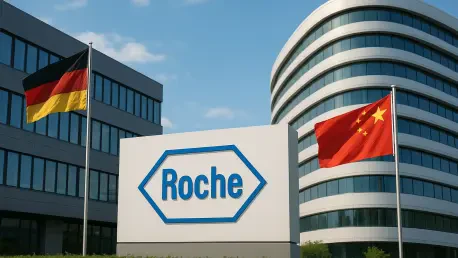

High-ranking officials at Roche have characterized the current German policy environment as a barrier to the capital-intensive research required for medical breakthroughs. The global pharmaceutical industry is undergoing a radical transformation as companies move away from traditional European centers toward regions that offer technological agility and financial clarity. Roche, long a pillar of European medicine, is now diverting billions of dollars into the burgeoning Chinese biotechnology sector while signaling a sharp freeze on new infrastructure within Germany. This decision is not merely a corporate restructuring but a calculated response to a shifting hierarchy of innovation. As medical science moves into the era of complex biological therapies, the demand for predictable regulatory frameworks has become as critical as the research itself. This move highlights a growing rift between nations that incentivize high-risk development and those that prioritize short-term cost containment within their national health systems.
Roche’s Multi-Billion Dollar Bet on Chinese Innovation
This strategic redirection is anchored by a massive expansion of Roche’s partnership with Hansoh Pharma, a deal that could ultimately reach a valuation exceeding $15 billion. The focus of this collaboration is the development of Antibody-Drug Conjugates (ADCs), a sophisticated class of oncology treatments designed to deliver chemotherapy directly to cancer cells while sparing healthy tissue. By utilizing Hansoh’s proprietary platform, Roche aims to secure a dominant position in the next generation of cancer care. The financial structure of the deal involves a significant upfront payment followed by extensive milestone incentives, which effectively allows Roche to spread its financial risk across the development lifecycle. This influx of capital demonstrates a profound shift in where Roche perceives the greatest potential for therapeutic breakthroughs. Instead of relying solely on internal pipelines or traditional Western partners, the company is leaning into the rapid technological maturation of the Chinese biotech ecosystem.
The partnership signifies a fundamental evolution in how the global pharmaceutical value chain operates in 2026. Hansoh Pharma is slated to manage the initial clinical phases, including global Phase 1a trials, proving that China has successfully transitioned from a high-volume manufacturing hub into a premier source of high-value intellectual property. Roche will then take the reins for later-stage global development and commercialization in all territories outside of Greater China. This division of labor underscores the reality that Chinese research centers now possess the sophisticated clinical infrastructure necessary to lead early-stage global drug discovery. For Roche, the primary advantage lies in accessing a specialized technology platform that can produce “targeted missiles” against cancer with a precision that was previously unattainable. This massive commitment suggests that the centers of scientific gravity are migrating toward environments where biotech clusters can innovate at a speed and scale that traditional European markets are currently struggling to match.
Navigating Policy Challenges and Global Competition
Navigating the Chinese market in 2026 involves a complex balancing act between seizing technological opportunities and managing increasingly intricate regulatory requirements. The Chinese government has introduced specific export controls aimed at protecting strategically vital biomedical technologies, particularly those involving novel genetic therapy platforms. These measures are designed to ensure that the intellectual property generated within the country remains a national asset, creating a new layer of oversight for multinational corporations. Despite these hurdles, Beijing continues to actively court foreign capital through specialized action plans that streamline cross-border investment and facilitate the establishment of foreign-led research centers. For a global giant like Roche, the challenge lies in harmonizing its global operational standards with these local mandates while ensuring that its intellectual property remains secure. The Hansoh deal serves as a litmus test for how multinational pharmaceutical firms can effectively integrate into the Chinese innovation landscape without falling afoul of tensions.
This pivot toward Asia also reflects a broader competitive reality where the pursuit of medical discovery outweighs the perceived risks of shifting government mandates. The biotechnology sector has become a primary battlefield for technological supremacy, and Roche’s aggressive expansion indicates that the potential for significant clinical rewards in China justifies the operational complexity. As other global pharmaceutical firms observe this $15 billion commitment, it sets a precedent for how to engage with emerging scientific powerhouses that offer both state-of-the-art facilities and a vast pool of patient data for clinical trials. The success of this venture will likely depend on Roche’s ability to remain agile within a landscape where policy can shift as quickly as the science itself. By establishing such a deep financial and operational footprint, Roche is not just purchasing a pipeline but is actively participating in the creation of a new global standard for collaborative research. This approach suggests that the future of drug development will be defined by strategic alliances.
The Standoff With German Health Policy
In sharp contrast to its multi-billion dollar expansion in Asia, Roche has signaled a complete moratorium on new investment decisions within Germany. This decision marks a significant turning point for the company’s relationship with its historical European base, where it currently employs nearly 19,000 workers across major sites in Mannheim and Penzberg. The primary catalyst for this freeze is a deep-seated frustration with German health policy, particularly legislation designed to stabilize statutory health insurance contribution rates. Industry leaders at Roche argue that these measures effectively place an unsustainable financial burden on pharmaceutical companies by forcing significant price discounts and limiting the returns on long-term research investments. This policy environment has created a climate of unpredictability that makes the authorization of capital-intensive, multi-year projects nearly impossible for corporate boards. Consequently, Germany is being viewed less as a hub for future innovation and more as a legacy market where existing operations are maintained.
The standoff highlights a growing consensus among pharmaceutical executives that European regulatory and economic frameworks are becoming increasingly restrictive. Roche’s refusal to commit to new projects serves as a stark warning to policymakers that capital and high-level research are highly mobile assets that will inevitably flow toward more supportive environments. Other major industry players, including companies like Eli Lilly and Boehringer Ingelheim, have echoed similar sentiments, suggesting that the “pharmacy of the world” is losing its competitive edge due to a focus on short-term fiscal savings. While Roche has committed a massive $50 billion to the United States and $15 billion to Chinese partnerships, the stagnation in Germany illustrates a strategic retreat from markets that do not prioritize the predictability required for drug discovery. This redirection of resources is a pragmatic response to the reality that in 2026, the cost of doing business in certain European jurisdictions has begun to outweigh the benefits of their scientific history.
Strategic Imperatives for the Global Pharmaceutical Sector
The strategic realignment undertaken by Roche provided a clear blueprint for how multinational corporations managed the tension between legacy infrastructure and emerging scientific frontiers. By prioritizing the high-growth potential of the Chinese biotech sector, the company successfully secured access to advanced ADC technologies that were once only conceptual. At the same time, the decision to halt investments in Germany served as a definitive signal to European regulators about the consequences of restrictive healthcare pricing policies. This shift forced a necessary conversation about the balance between public health costs and the incentivization of medical breakthroughs. Future stakeholders in the industry were encouraged to evaluate their portfolios based on regional regulatory stability rather than historical presence. Governments that sought to retain major pharmaceutical hubs realized that they needed to offer more than just a skilled workforce; they required economic frameworks that protected and supported the long-term value of pharmaceutical innovation.