
James Maitland is a prominent figure in the field of public health and medical technology, recognized for his commitment to integrating data-driven solutions with grassroots community care. With a background in robotics and IoT applications, Maitland brings a unique perspective to how simple, portable technologies can serve as the first line of defense in the ever-evolving opioid crisis. In this conversation, we explore the alarming rise of synthetic adulterants found on the streets of Baltimore, the tactical use of drug-testing strips to prevent mass casualty events, and the critical tension between local health initiatives and shifting federal funding policies. We also examine the difficult trade-offs community organizations must make to keep their neighbors alive when traditional resources are restricted.
When street drugs are mixed with benzodiazepines like N-methylclonazepam, how do traditional reversal agents like naloxone fall short, and what does this mean for emergency interventions?
The situation becomes incredibly dangerous because benzodiazepines like N-methylclonazepam operate on the central nervous system much like Xanax or Valium, which are not opioids. When these substances are combined with opioids, they create a synergistic effect that severely suppresses a person’s breathing, making the risk of a fatal overdose skyrocket. We saw the terrifying reality of this in Baltimore’s Penn North neighborhood, where three mass overdose incidents occurred within just a three-month window. In one of those incidents, more than two dozen people were found unresponsive, slumped over on sidewalks or lying in the street, requiring immediate hospitalization. Because naloxone is designed specifically to reverse opioid effects, it has no impact on the respiratory depression caused by the benzodiazepine component. This leaves medical teams and bystanders in a desperate situation, as they may successfully clear the opioid from the receptors only to find the individual is still not breathing properly.
How do organizations like the Baltimore Harm Reduction Coalition utilize test strips to empower individuals in the community to make safer choices?
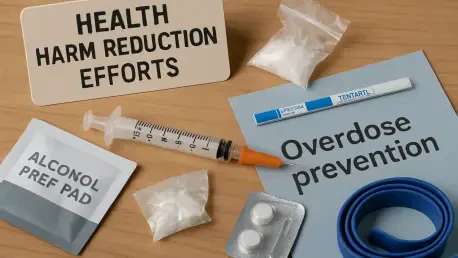
The coalition has taken a very proactive, hands-on approach by distributing specialized test strips that can identify harmful adulterants like fentanyl, xylazine, and even medetomidine. These strips are made available at no cost in highly accessible locations, ranging from neighborhood clinics and community events to local bars and even spread out on street corners for anyone to grab. The process is straightforward but lifesaving: a person mixes a tiny amount of their substance with water and dips the strip into the liquid, watching for a specific color change that signals the presence of a hidden threat. This simple sensory feedback provides a moment of clarity in an otherwise unpredictable environment where, as the coalition points out, nobody truly knows what they are buying on the street. Having this information allows people to “move slower,” reducing their dosage or taking extra precautions that can mean the difference between a controlled experience and a trip to the morgue.
What are the implications of the recent Substance Abuse and Health Services Administration policy that restricts federal grants from being used for these harm reduction tools?
The shift in federal policy is a significant blow to local health departments and nonprofits because it essentially bans the use of taxpayer-funded grants for the distribution of drug test strips and other harm reduction paraphernalia. Under the current guidance, federal funds are no longer permitted for programs that provide clean needles, pipes, or even specialized hotlines where people can call for supervision while using drugs. The rationale provided by the administration is that these practices facilitate illicit drug use and are fundamentally incompatible with federal law. Instead, there is a push to funnel that funding into “common-sense” solutions like naloxone nasal sprays and recovery programs. While the policy allows an exception for law enforcement and medical professionals to use these strips for testing and reporting, it cuts off the direct supply to the very people who are at the highest risk of an overdose.
Despite these policy changes, what does the evidence suggest about the effectiveness of providing test strips directly to people who use drugs?
There is a substantial and growing body of evidence, supported by public health experts who have served under multiple administrations, showing that putting test strips into the hands of users directly changes their behavior for the better. These tools have been used for nearly ten years to identify dangerous adulterants, and the data suggests that when people know exactly what is in their supply, they often choose to use less or avoid the substance entirely. Many individuals will take additional safety measures, such as ensuring they have naloxone nearby or making sure they are not using alone so that someone can help if an emergency occurs. This is not about encouraging drug use, but about providing the information necessary to prevent a fatal mistake. Experts like Yngvild Olsen have noted that these small behavioral shifts are a critical component of a comprehensive strategy to keep people alive long enough to eventually seek recovery.
With the loss of federal funding for these specific tools, how are local health advocacy groups forced to reorganize their budgets and services to maintain community safety?
The financial strain on organizations like the Baltimore Harm Reduction Coalition is palpable, as they are now forced to scavenge for alternative funding to keep their test strip programs alive. To avoid the risk of another mass overdose event, they have to make the heartbreaking decision to pull money away from other essential services. This means cutting back on the distribution of hygiene kits and wound care supplies, which are vital for preventing secondary health complications among vulnerable populations. It is a zero-sum game where the health of the community is traded off against the immediate need to prevent fatalities. Despite these hurdles, the multi-front approach in Baltimore has seen remarkable success, with overdose deaths dropping by more than 40% since 2023, proving that these grassroots efforts are making a measurable impact.
What is your forecast for the future of harm reduction in the face of these tightening federal restrictions?
I expect we will see a widening gap between federal policy and local reality, as community organizations are forced to become more creative and self-reliant to fill the gaps left by the government. While the emphasis on naloxone and recovery is important, ignoring the practical utility of test strips and other harm reduction tools risks undoing the progress we have made in cities like Baltimore. My forecast is that we will see a rise in private-sector partnerships and local legislative pushes to protect these programs, as the data on a 40% decline in deaths is too compelling to ignore. We are at a crossroads where the “endless cycle of addiction” can only be broken if we first ensure that people survive the day. Ultimately, the success of our public health response will depend on our ability to prioritize human life over political ideology, ensuring that the most effective tools remain in the hands of those who need them most.