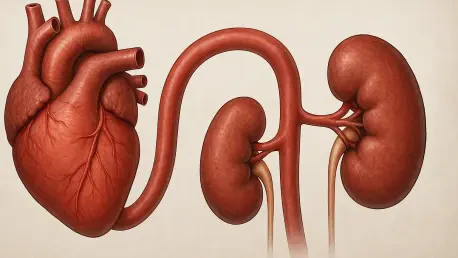

The physical layout of a home and the safety of the surrounding community are essential structural factors that either support or sabotage a patient’s ability to manage syndrome complications. This clinical reality is particularly evident in the treatment of Cardiovascular-Kidney-Metabolic (CKM) syndrome, a classification that the medical community has recently refined to better reflect the intrinsic links between heart disease, kidney dysfunction, and metabolic disorders like type 2 diabetes and obesity. For decades, clinicians approached these ailments as separate battles, often treating the heart in one clinic and the kidneys in another, while metabolic health remained a third, disconnected pillar. However, as medical science progresses through 2026, it has become increasingly evident that these systems do not operate in isolation; they are deeply entangled, with each pathology feeding into the next in a cycle of physiological decline. This medical landscape is exceptionally difficult for patients to navigate because it demands the simultaneous management of multiple chronic conditions, often leading to a sense of overwhelm. The challenge lies in the fact that while clinical guidelines focus on objective data points, the individuals living with these conditions are often far more concerned with how the disease alters the fabric of their daily existence and their ability to remain active members of their communities.
Defining the Personal Experience of Health
Physical Independence and the Preservation of Function: The Primary Goal
At the core of patient priorities is the preservation of physical and cognitive function, which often takes precedence over the achievement of specific laboratory targets. For individuals living with CKM syndrome, the prospect of losing independence or mental clarity is a far more immediate threat than the abstract risk of a future cardiovascular event. Patients frequently view their health through a functional lens, evaluating their well-being based on their ability to perform daily tasks, such as walking to a local market, tending to a garden, or engaging in meaningful conversations with family members. When medical treatments focus exclusively on lowering blood pressure or stabilizing glucose levels without considering the patient’s physical stamina or mental sharpness, a disconnect occurs. Many patients express that a successful treatment is one that allows them to remain “present” and active in their own lives, rather than one that simply produces a perfect set of biomarkers at the expense of their daily energy or cognitive focus.
Furthermore, the maintenance of cognitive health is a significant concern for those navigating the complexities of CKM syndrome. As the interplay between metabolic health and neurovascular function becomes better understood, patients are increasingly vocal about the fear of cognitive decline. The burden of managing multiple medications and rigorous dietary restrictions is only manageable if the patient feels mentally capable of maintaining such a lifestyle. Consequently, the value placed on “functional survival” suggests that medical success should be redefined by the patient’s ability to remain autonomous. Clinicians who recognize this shift are beginning to prioritize treatments that minimize sedating side effects or physical fatigue, acknowledging that a patient’s willingness to adhere to a regimen is directly tied to how that regimen affects their immediate quality of life. This paradigm shift requires a more nuanced approach to care, where the goal of “living well” is given as much weight as the goal of “living long.”
The Quality-Longevity Trade-off and Psychological Well-being: Navigating Choice
The psychological burden of managing multiple chronic conditions is an ever-present factor in patient well-being, often leading to a complex internal calculation regarding the quality of life versus the length of life. Individuals must constantly balance the emotional toll of their diagnosis with the persistent need for informed engagement in their own care. This process is not merely about following doctor’s orders; it is about finding a way to maintain a sense of purpose and joy despite a permanent medical label. Many patients express a desire to understand the “why” behind their treatments, seeking a level of health literacy that allows them to make autonomous choices. This desire for agency is a fundamental health value, as it provides a sense of control in a situation that often feels inherently uncontrollable. When patients feel like partners in their care rather than passive recipients, their psychological resilience increases, which in turn improves their ability to manage the physical symptoms of the syndrome.
A striking finding in recent qualitative research is the explicit way patients weigh the difficult trade-off between the number of years they have left and the quality of those remaining years. It is not uncommon for a patient to decline a life-prolonging intervention if it involves a significant loss of freedom, such as frequent hospitalizations or debilitating side effects that prevent social engagement. This calculation is highly personal and often shifts as the disease progresses, yet it remains a central pillar of patient-defined health. By acknowledging that longevity is not the only metric of success, the healthcare community can better support patients in making decisions that align with their personal values. This involves having honest, transparent conversations about what a patient is willing to sacrifice for a longer life and what they consider to be a “non-negotiable” aspect of their daily routine. Respecting these boundaries is essential for maintaining the trust and psychological health of those living with CKM syndrome.
Connecting the Patient to the Wider World
Social Connectedness and the Importance of Belonging: Strengthening Support
Beyond the individual experience, the social network plays a vital role in how patients experience and manage the complications of CKM syndrome. Social connectedness and a sense of belonging are not supplementary aspects of health; they are central to a patient’s ability to thrive. Chronic illness has a natural tendency to isolate individuals, as the physical limitations and the time-consuming nature of medical management can pull people away from their social circles. However, maintaining strong ties to family, friends, and the broader community remains a primary motivator for patients to stay healthy and adhere to their treatment plans. When an individual feels that they are a valued part of a social fabric, they are more likely to find the motivation necessary to navigate the daily demands of a complex medical regimen. The emotional support provided by these connections acts as a buffer against the stress and depression that often accompany multi-morbidity.
The role of the family is particularly crucial, as they often become the informal care team for the patient. In many cases, the health values of the patient are inextricably linked to the well-being of their family members. Patients frequently express that their greatest concern is not their own suffering, but the burden their illness places on their loved ones. This sense of responsibility can be a double-edged sword; while it motivates adherence, it can also lead to significant guilt if the patient feels they are failing to improve. Recognizing the importance of this interpersonal dynamic is essential for healthcare providers. By involving family members in the care process and acknowledging the social context of the patient’s life, clinicians can create more sustainable and effective management strategies. A sense of belonging provides the emotional foundation upon which physical health can be built, making social health an indispensable component of the overall CKM framework.
Systemic Coordination and Environmental Barriers to Care: Creating Stability
The healthcare system itself represents another major domain of value, specifically regarding how care is coordinated across different medical specialties. Patients with CKM syndrome frequently see a rotating door of specialists, including cardiologists, nephrologists, and endocrinologists, which often leads to what is known as “specialty silo” fatigue. They highly value a responsive system where information flows seamlessly and advice is consistent across all providers. When the burden of coordinating these various appointments and conflicting dietary advice falls entirely on the patient, it leads to increased stress, confusion, and a higher likelihood of medical errors. A system that “talks to itself” is seen as a hallmark of quality care, allowing the patient to focus on their health rather than the logistics of their treatment. The demand for integrated care is not just a matter of convenience; it is a fundamental requirement for safety and efficacy in managing such a complex syndrome.
Furthermore, the physical environment in which a patient lives significantly impacts their ability to manage their condition effectively. A health-supportive living environment, which includes neighborhood safety, access to nutritious food, and the physical layout of the home, can either facilitate or sabotage medical progress. Patients are acutely aware that their surroundings are a functional part of their treatment plan. For instance, a recommendation to increase physical activity is moot if the patient lives in an area without safe walking paths, and a low-sodium diet is difficult to maintain in a “food desert” where fresh produce is unavailable. By recognizing that these external factors are deeply linked to clinical outcomes, the medical community can begin to advocate for more holistic interventions. When the environment supports healthy choices, the clinical advice provided in the doctor’s office has a much higher chance of being successfully implemented in the patient’s daily life.
Transforming Clinical Practice
Shifting Clinical Perspectives from Biology to Personal Values: A New Path
The insights gained from studying patient values offer a clear roadmap for moving toward a model of care that is truly patient-centered. Instead of focusing solely on achieving specific laboratory targets, healthcare providers are encouraged to use the identified value domains to guide their consultations. This approach allows for a “grammatical shift” in the medical narrative, where the primary inquiry moves from “What is the matter with this patient?” to “What matters to this patient?” By asking targeted questions about a patient’s financial concerns, social isolation, or specific functional goals, clinicians can build a more holistic and effective treatment plan. This shift does not mean ignoring the science of biomarkers; rather, it means using those biomarkers as tools to help the patient achieve the life they want to lead. When the clinical goals are aligned with the patient’s personal values, the result is a more compassionate and effective healthcare experience.
Implementing this value-based approach involves the use of specialized conversational aids and decision-support tools that help bridge the gap between clinical necessity and personal preference. These tools can facilitate difficult conversations about the quality-longevity trade-off or the financial impact of a new medication. By making these values an explicit part of the medical record, the entire healthcare team can stay aligned with the patient’s priorities, ensuring that care remains consistent even as it moves across different specialties. This level of transparency fosters a deeper level of trust between the patient and the provider, which is essential for long-term management. Ultimately, addressing CKM syndrome requires the medical community to honor the humanity of the individual, acknowledging that for millions of people, medical treatment is only one part of a much larger and more complex life.
Practical Strategies for Implementing Value-Based Healthcare Models: Moving Forward
The researchers who analyzed the health values of CKM patients demonstrated that a fundamental shift in institutional policy was necessary to support long-term wellness. They found that the integration of social determinants of health into standard clinical workflows allowed for a more accurate assessment of a patient’s risk profile. By the conclusion of the study, it was clear that when healthcare systems prioritized the coordination of specialists, the reported stress levels of participants decreased significantly. The study suggested that future care models should incorporate reimbursement structures that reward clinicians for time spent on shared decision-making rather than just the volume of procedures performed. This transition represented a significant departure from traditional fee-for-service models, highlighting the need for a system that valued the patient’s time and financial security as much as their clinical outcomes.
The implementation of these strategies in early 2026 provided several actionable takeaways for medical administrators and policy makers. The researchers observed that providing patients with direct access to integrated health records reduced the duplication of tests and improved adherence to medication schedules. Furthermore, the study indicated that when environmental factors—such as local access to exercise facilities—were addressed through community partnerships, the physical function of patients improved more rapidly than through clinical intervention alone. These findings paved the way for a more collaborative approach to chronic disease management, where the healthcare provider acted as a navigator within a larger ecosystem of support. The ultimate conclusion of the work emphasized that by honoring the personal values of those living with CKM syndrome, the medical community created a more resilient and sustainable framework for managing the health of the population.