
James Maitland stands at the forefront of the technological revolution in healthcare, bringing years of expertise in robotics and IoT applications to the table. With a deep-seated passion for how interconnected devices can decode the human body’s mysteries, he provides a unique perspective on the emerging frontier of health wearables. We sat down with him to discuss a provocative new development: the discovery of “Entropy,” a biomarker that claims to measure the real-time cost of human life via the temple region. Our conversation explores the physiological significance of this discovery, the balance between resting metabolic states and peak exertion, and the skepticism surrounding unvalidated medical tech in a rapidly expanding global market.
The discovery of a biomarker that is exclusive to the temple region is a bold claim in the wearable tech space. From your perspective in medical IoT, why would this specific anatomical location be the key to unlocking what is being described as the real-time cost of being alive?
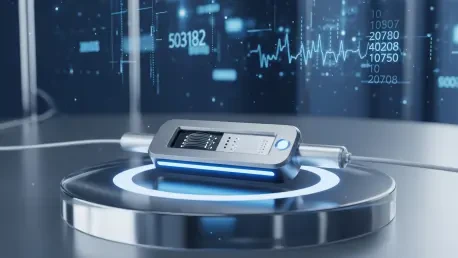
The decision to focus on the temple region is a radical departure from the wrist-based sensors we have grown accustomed to over the last decade. By placing a sensor there, the Temple team suggests they can capture a high-fidelity signal that remains invisible to a ring or a watch. This device generates a live score that ranges from 1 to 250, updating every single second to reflect the body’s immediate energy consumption. In my work with robotics and medical sensors, we prioritize locations where the signal-to-noise ratio is highest, and the proximity to the cranial blood flow might offer a more sensitive window into metabolic activity. It is a fascinating pivot that moves away from the general clutter of movement-based data to find a singular, metabolic signature.
The concept of “Entropy” as a live metric for energy consumption is quite provocative for those of us used to simple calorie counting. How do you interpret the goal of balancing what the team calls Entropy Maxima and Minima for long-term health optimization?
The methodology here involves two distinct targets that define the boundaries of human performance: pushing your Maxima higher while pulling your Minima lower. Your Entropy Maxima represents the absolute ceiling of what your body can achieve when you are pushing it to the limit; a high peak here is essentially the signature of a capable body that can rise to meet physical effort and recover from it efficiently. On the flip side, bringing the Entropy Minima down every day is about lowering the metabolic cost of simply existing at rest, which historically correlates with a longer lifespan across the animal kingdom. As we age, that ceiling naturally falls, so having a real-time number to push upward provides a tangible target for maintaining youthfulness. It is an ambitious attempt to quantify the very rhythm of vitality, turning the abstract idea of “health” into a fluctuating, manageable score.
Despite the excitement, there has been significant pushback from the medical community, with some experts calling the device a “fancy toy” lacking scientific standing. How do you reconcile the tech-driven enthusiasm of one lakh applicants with the need for rigorous peer-reviewed validation?
There is always a friction point where rapid technological innovation meets the slow, methodical scrutiny of medical science. Currently, the project has selected only 100 users from over one lakh applications, creating an air of exclusivity that fuels public interest but does little to satisfy clinical requirements. Critics, including prominent radiologists, have pointed out that without peer-reviewed data, it is difficult to see this as more than an expensive gadget for early adopters. While the founder’s background in mathematics and computing from IIT Delhi is impressive, it does not replace the need for validated medical trials. For “Entropy” to move from a billionaire’s toy to a legitimate health instrument, the company must eventually bridge the gap between their proprietary breakthrough and the transparency demanded by the global health community.
With the sports and fitness wearables market projected to hit nearly $29.5 billion by 2029, how does a specialized metric like Entropy compare to established indicators used by industry giants like WHOOP or Oura?
The market is currently saturated with devices that estimate physiological load, recovery, and stress through heart rate variability and motion. However, Temple is attempting to bypass these standard calculations by offering a single, dynamic score that purports to measure the “cost of being alive” directly. While existing players have spent years refining their energy expenditure models, this new biomarker seeks to provide a more visceral, second-by-second feedback loop that updates constantly on your home screen. This approach aims to capture the deep state of rest that occurs at the Entropy Minima more accurately than a wristband might allow. As we head toward that $29.5 billion market valuation, the successful companies will be those that can turn these complex signals into actionable habits that people can actually feel changing in their bodies.
What is your forecast for the integration of specialized biomarkers like Entropy into the everyday lives of the general public?
I believe we are entering an era where generalized fitness tracking will be replaced by highly specific, niche biomarkers that offer a deeper window into our biological efficiency. As more people seek to optimize their metabolic health and extend their lifespans, the demand for metrics that measure resting metabolic costs and peak physical output will only intensify. We will likely see a shift where these devices transition from being luxury items for a chosen few to essential tools for proactive longevity management across the globe. However, the long-term success of such innovations will depend entirely on their ability to prove that these numbers translate into actual, measurable health outcomes rather than just being data for data’s sake. The next few years will be a critical testing ground to see if “Entropy” becomes a household standard or remains a footnote in the history of wearable tech evolution.