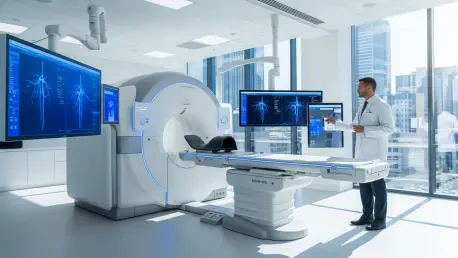

Western Australia’s medical landscape is currently undergoing a massive transformation as the state government invests significantly in sophisticated imaging technologies to redefine diagnostic accuracy for millions of patients across the region. This evolution is driven by the necessity to address a growing population that requires more nuanced and early intervention strategies than ever before. By establishing specialized centers of excellence, the local health department aims to consolidate diverse expertise ranging from radiopharmaceutical science to advanced computational physics. The current initiatives represent a departure from traditional reactive care, moving instead toward a proactive model where high-resolution imaging serves as the primary tool for personalized treatment planning. Consequently, the region is becoming a magnet for international researchers who are drawn to the state’s robust data sets and its commitment to integrating cutting-edge hardware.
Precision: Infrastructure and Capability
Radiopharmaceutical: Production and Cyclotrons
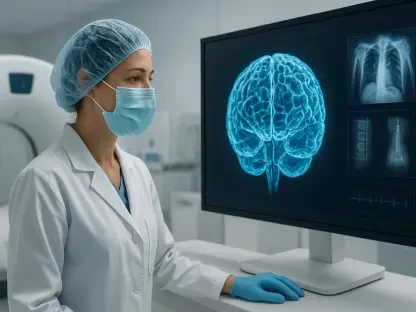
Central to this technological surge is the expansion of local cyclotron facilities which are now capable of producing a broader range of short-lived medical isotopes specifically for the detection of aggressive cancers. These radiopharmaceuticals enable positron emission tomography scans to achieve a level of sensitivity that was previously unattainable, allowing clinicians to observe cellular processes in real time rather than just anatomical structures. The localized production of these tracers is vital because it eliminates the logistical delays associated with transporting decaying materials from overseas facilities, thereby maximizing the window for patient scanning. Furthermore, the integration of these tracers with hybrid imaging systems, such as the latest PET-MRI units, offers a comprehensive view of soft tissue morphology and metabolic activity simultaneously. This dual-capability is particularly transformative for neurodegenerative research in the current year.
Intelligence: Machine Learning Integration
Complementing the physical hardware is a sophisticated layer of artificial intelligence designed to assist radiologists in interpreting the massive influx of complex data generated by modern scanners. These machine learning algorithms have been trained on millions of anonymized images to recognize subtle patterns that might be overlooked by the human eye, particularly in high-volume settings like emergency departments or screening clinics. By automating the preliminary triage of scans, these systems ensure that critical cases involving internal hemorrhaging or acute stroke are flagged immediately for specialist review. This does not replace the human touch but rather augments the decision-making process by providing quantitative analysis of tumor volumes or vascular changes over time. Moreover, the deployment of AI facilitates a more consistent standard of reporting across various healthcare sites to ensure equitable patient outcomes.
Access: Regional Healthcare Delivery
Remote: Mobile Diagnostic Units
The vast geographical spread of Western Australia presents unique logistical challenges that the current health strategy addresses through the deployment of advanced mobile imaging units and decentralized diagnostic hubs. These units are equipped with low-dose computerized tomography and high-resolution ultrasound machines, allowing them to travel to remote communities and provide essential screening services directly to residents. To ensure that the quality of care remains high, these mobile platforms are connected via high-speed satellite links to a centralized cloud-based picture archiving and communication system located in the metropolitan area. This allows specialists to review scans in real-time and provide immediate feedback to local clinicians, effectively negating the need for patients to travel thousands of kilometers for a routine checkup. The focus on portability and connectivity has also spurred the adoption of handheld diagnostic devices across clinics.
Progress: Research and Training
As the initial phases of these imaging enhancements reached completion, the emphasis shifted toward fostering international research collaborations and launching large-scale clinical trials that utilized the newly established infrastructure. Stakeholders recognized that the wealth of data generated by the state-of-the-art scanners provided a unique opportunity to lead the world in developing novel therapeutic protocols for rare diseases. The state government prioritized the creation of a secure, interoperable data exchange that allowed university researchers and private biotechnology firms to collaborate on drug discovery projects. By 2027, the focus expanded to include the training of a new generation of biomedical engineers and data scientists who could further refine the algorithms used in predictive diagnostics. These initiatives ensured that the investment in hardware was matched by a commitment to human capital and long-term scientific progress.