
The ability to elicit a physiological response through a digital interface represents a monumental shift in how modern medicine approaches personal health diagnostics. For decades, the collection of biological fluids has required invasive needles or intense physical exertion, but the emergence of ultrasound-mediated wearables is now bridging the gap between hardware and human biology. This technology uses focused acoustic energy to stimulate sweat glands, transforming a formerly passive biological process into an active, on-demand data stream. By bypassing the need for heat or stress, researchers have unlocked a consistent method for monitoring internal chemistry, offering a world where medical insights are available at the press of a button. This innovation not only simplifies the diagnostic process but also introduces a level of precision that environmental or chemical induction methods simply cannot match in a clinical or home setting. It establishes a pathway for real-time health management that feels less like a medical procedure and more like a seamless extension of the user’s own physiological framework.
Engineering the Interface: Acoustic Innovation
Targeted Energy: Precision Mechanics of Acoustic Stimulation
The core mechanism behind this advancement lies in the sophisticated application of ultrasound-mediated neuromodulation to target specific biological structures. Unlike traditional electrical stimulation, which often causes discomfort or localized skin irritation, focused ultrasound waves penetrate the dermal layers to interact directly with the nervous system or the glands themselves. Operating within the low-megahertz range, these acoustic pulses generate enough energy to trigger the eccrine sweat glands without inducing any thermal damage or mechanical pain. This method, often referred to as acoustic triggering, allows for high spatial specificity, meaning that only the area directly beneath the wearable patch is activated. This precision is a stark contrast to full-body heat exposure, which places unnecessary strain on the cardiovascular system. By focusing energy so tightly, the device ensures that the user can generate the necessary biofluid for testing without the fatigue or dehydration typically associated with traditional sweat induction techniques.
Digital Integration: Smartphone Control and Biocompatible Design
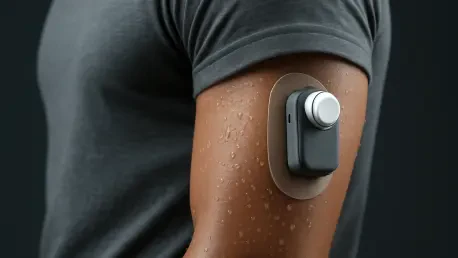
Engineering such a precise tool required the development of a flexible, skin-conforming patch that houses a miniaturized transducer array capable of delivering targeted pulses. This hardware is designed to maintain constant contact with the skin, ensuring that the acoustic energy is directed accurately toward the sweat glands or the controlling cholinergic nerves. The integration of a smartphone interface allows users to initiate the process digitally, effectively giving them a remote control for their own biology. This digital mastery over a physiological function once considered involuntary represents a significant milestone in wearable technology. The software side of the system manages the duration and intensity of the pulses, providing a customized experience based on the individual’s skin thickness and sensitivity. Consequently, the device moves away from the “one-size-fits-all” approach of older medical tools, favoring a personalized strategy that prioritizes both user comfort and data reliability through advanced acoustic engineering.
Material Science: Optimizing Energy Transfer and Skin Safety
A primary technical hurdle in the development of this wearable was ensuring that the ultrasound energy could transition from the device into the human body without significant loss. In many acoustic applications, waves are reflected at the boundary between different materials, which can reduce efficiency and lead to unintended heating. To combat this, the research team utilized specialized materials that provide acoustic impedance matching, effectively synchronizing the physical properties of the patch with those of human tissue. This design choice minimizes energy reflection at the skin’s surface, allowing the majority of the acoustic signal to reach the intended depth. By optimizing the transmission of these waves, the device operates at lower power levels, which extends battery life and reduces the overall footprint of the hardware. This focus on material science ensures that the stimulation remains both effective and safe for long-term wear, facilitating a more natural integration into daily life.
Closed-Loop Regulation: Intelligent Sensing and Real-Time Adjustment
Beyond the initial stimulation, the device incorporates a sophisticated closed-loop system that acts as a continuous safety monitor during the sweat induction process. This system is equipped with high-precision sensors that track variables such as skin temperature and local hydration levels in real-time. If the sensors detect any deviation from safe physiological parameters, the onboard processor automatically modulates the ultrasound intensity or pauses the stimulation entirely. This feedback mechanism is critical for preventing skin burns or over-stimulation of the glandular system, providing a layer of protection that is absent in traditional chemical-based induction methods. Furthermore, the closed-loop design ensures that the volume of sweat produced is consistent across different environments, whether the user is in a climate-controlled office or outdoors. This level of automated regulation transforms the wearable from a simple actuator into an intelligent health companion that prioritizes user safety while gathering essential data.
Clinical Impact: Diagnostic and Therapeutic Breakthroughs
Molecular Insights: Sweat as a Continuous Diagnostic Fluid
The clinical utility of on-demand sweat production cannot be overstated, particularly when considering its role as a rich source of diagnostic information. Human sweat contains a variety of essential biomarkers, including electrolytes, metabolites, and proteins, which provide a non-invasive window into the body’s internal state. However, the inconsistent nature of natural sweating has historically limited the use of these biomarkers in routine medical checkups. With the ability to trigger sweat at any time, healthcare providers can now perform high-sensitivity screenings for conditions like cystic fibrosis, where chloride levels are a primary diagnostic indicator. This technology allows for standardized testing conditions that do not rely on the patient’s ability to exercise or endure high heat. Moreover, the integration of microfluidic channels within the patch enables the immediate analysis of the collected fluid, reducing the time between sample collection and diagnostic results, which is vital for critical care scenarios.
Chronic Management: Non-Invasive Glucose and Chloride Monitoring
This shift toward active biofluid collection is especially promising for the management of chronic metabolic diseases such as diabetes. Traditionally, glucose monitoring has required painful finger pricks or invasive continuous glucose monitors that penetrate the skin. By utilizing the ultrasound-controlled wearable, patients can trigger the secretion of sweat, which carries glucose molecules that correlate with blood sugar levels. The patch’s sensors can then analyze these levels and transmit the data to a healthcare provider or a management app. This method provides a painless alternative that encourages more frequent monitoring, leading to better glycemic control and fewer long-term complications. The ability to access these systemic insights on demand removes the barriers of timing and physical activity, making health data more accessible to elderly patients or those with mobility issues. As a result, the technology serves as a bridge to a more proactive and inclusive model of personalized healthcare.
Glandular Therapy: Recalibrating Autonomic Responses for Patients
In addition to its diagnostic capabilities, this ultrasound technology offers a new pathway for treating various glandular disorders that affect millions of people worldwide. Conditions such as hyperhidrosis, characterized by excessive sweating, or anhidrosis, the dangerous inability to sweat, could be managed by recalibrating the nervous system’s response through regular, controlled stimulation. The device could potentially be programmed to deliver sub-threshold pulses that dampen overactive glands or encourage activity in dormant ones, providing a non-surgical alternative to current treatments like injections or nerve surgery. This approach addresses the root cause of the dysfunction rather than just masking the symptoms. By providing a controlled environment for glandular activity, the wearable helps patients regain a sense of normalcy in their daily lives, reducing the social anxiety and physical discomfort associated with these conditions through a discreet and programmable digital therapeutic interface.
Enhanced Delivery: Transdermal Drug Pathways and Pathogen Clearance
The potential for enhanced transdermal drug delivery represents another significant frontier for this wearable technology. By activating the sweat glands and increasing the outward flow of fluid, the system may simultaneously open up pathways that allow topical medications to penetrate deeper into the skin more effectively. This process, sometimes called sonophoresis when combined with ultrasound, could revolutionize how we administer vaccines or localized pain relief. Instead of relying on passive absorption, which is often slow and inefficient, the device can actively facilitate the movement of large-molecule drugs into the bloodstream. Furthermore, the outward flow of sweat can be used to flush pathogens or environmental toxins from the skin’s surface, providing a dual-action benefit of delivery and detoxification. This capability suggests that the device will eventually become a versatile platform for multi-modal therapy, combining diagnostic sensing with active medicinal intervention in a single, compact wearable.
Future Perspectives: Global Security and Predictive Health Protocols
The implementation of robust encryption protocols ensured that sensitive health information remained protected during wireless transmission between the wearable and the user’s mobile terminal. Researchers prioritized data integrity, establishing that the decentralized nature of these devices required a high level of security to prevent unauthorized access to metabolic profiles. Furthermore, the integration of machine learning algorithms allowed for the prediction of thermal stress before the user perceived any physical symptoms, which proved essential for high-performance athletes and industrial laborers. This proactive approach to thermoregulation moved beyond reactive cooling, allowing the system to initiate sweat production at the optimal physiological moment. By standardizing the measurement of sweat rates, the medical community gained a deeper understanding of individual hydration requirements, which led to a reduction in heat-related emergency admissions. Ultimately, the transition from passive monitoring to active biological actuation marked the beginning of a new chapter in personalized medicine.