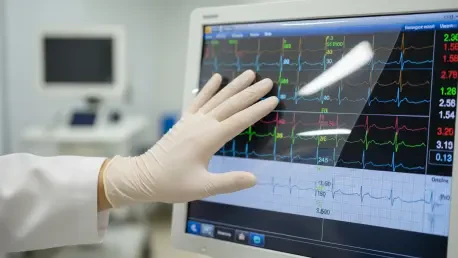

The rapid integration of sophisticated machine learning algorithms into the modern clinical environment has provided cardiologists with unprecedented diagnostic capabilities, yet this technological leap has simultaneously exposed a profound vulnerability in the protection of sensitive patient identity. Electrocardiograms, which serve as a foundational tool for monitoring the electrical rhythms of the human heart, are no longer viewed as simple waveforms; instead, they have become complex data repositories that AI can mine for deeply personal information. As these diagnostic tools become more pervasive, the risk of exposing identifiable biometric markers grows, potentially leading to unauthorized profiling or discrimination. To combat this escalating threat, researchers at the University of Kansas have introduced a sophisticated architecture known as the privacy-preserving variational autoencoder. This system represents a pivotal shift in medical data management by focusing on the active separation of clinical utility from personal identifiers, ensuring that the march of technological progress does not trample the fundamental right to individual privacy.
The Privacy Crisis: Biometric Identity in Cardiac Waveforms
Modern machine learning techniques have reached a level of sensitivity where they can extract what experts define as soft biometrics from standard cardiac signals. These markers include a patient’s chronological age, biological sex, and even specific racial backgrounds, all of which are encoded within the subtle peaks and valleys of a heart recording. Even when traditional identifiers like names or social security numbers are meticulously removed from digital records, the raw electrical waveform remains a unique signature that could theoretically be traced back to an individual. This creates a significant ethical dilemma for healthcare providers who must share data for research while preventing the potential misuse of health information by insurance companies or employers. Without a robust method to strip these identifiable traits, the vast potential of big data in cardiology remains hindered by the legitimate fear of privacy breaches that could have lasting socioeconomic consequences for patients.
The development of the privacy-preserving variational autoencoder provides a technical resolution to this conflict by fundamentally changing how neural networks process cardiac data. This architecture utilizes a method known as disentanglement, where independent neural networks are trained to identify and isolate different features within the electrocardiogram signal. By identifying the specific components of the waveform that contribute to a patient’s biometric identity, the model can effectively mask these markers while preserving the underlying data required for medical diagnosis. This process is not a simple blurring of information but a precise surgical removal of identity that leaves the clinical integrity of the recording intact. This advancement ensures that the reconstructed signal can be safely utilized by secondary algorithms or human physicians without the risk of revealing the demographic profile of the person from whom the data originated, thus setting a new standard for data security.
Clinical Performance: Maintaining Accuracy and Diagnostic Utility
A critical challenge in the implementation of any privacy-focused technology in medicine is the potential for a reduction in diagnostic precision. The research team prioritized the maintenance of high-level clinical utility, testing the model against some of the most demanding metrics in modern cardiology. Specifically, they focused on the system’s ability to predict abnormalities in the left ventricular ejection fraction, a vital measurement that determines how effectively the heart is pumping blood throughout the body. The results indicated that the privacy-preserving model was able to detect these life-threatening conditions with a degree of accuracy that matched conventional AI models. By proving that privacy does not require a sacrifice in clinical insight, the study addressed the primary concern held by medical professionals who feared that anonymization would lead to missed diagnoses or less effective treatment plans for patients with chronic heart failure.
Beyond immediate diagnostic tasks, the model demonstrated an exceptional ability to forecast long-term mortality risks and other complex prognostic indicators. In comparative assessments, the performance of the privacy-preserving variational autoencoder frequently met or exceeded the benchmarks set by standard artificial intelligence systems that do not incorporate privacy safeguards. This suggests that the process of stripping away demographic noise may actually help the neural network focus more intently on the pathological signals that matter most for patient outcomes. The success of this model advocates for a privacy-by-design philosophy, where data protection is not an afterthought but a core component of the algorithmic structure. This approach ensures that as healthcare moves toward more automated systems, the trust between the patient and the medical institution remains uncompromised, allowing for the widespread adoption of AI tools in daily clinical workflows.
Ethical Foundations: Promoting Equity and Institutional Collaboration
Algorithmic bias remains a persistent hurdle in the deployment of medical AI, often stemming from training sets that lack sufficient demographic diversity. To ensure the new system functioned equitably for all populations, the researchers utilized a diverse array of datasets that represented a broad spectrum of human backgrounds and clinical conditions. This focus on generalized performance was essential to verify that the privacy-enhancing features did not inadvertently disadvantage specific groups by performing less accurately on certain demographics. By neutralizing the biometric markers that usually trigger biased responses in AI, the system promoted a more objective analysis of cardiac health. This ensures that the technology can be deployed with confidence in diverse urban hospitals and rural clinics alike, providing consistent and fair diagnostic support regardless of the patient’s individual characteristics or their socioeconomic status.
The ability to anonymize data at the source also addresses the systemic issue of data silos, which currently restricts the flow of information between major medical institutions. Hospitals are often hesitant to share patient data for large-scale research due to the complex legal landscape surrounding privacy rights and the fear of data leaks. However, by utilizing a system that strips identifiable biometrics before the data ever leaves the facility, these institutions can collaborate more freely on global health initiatives. This secure exchange of information is expected to accelerate the pace of medical innovation, as researchers can now access massive, aggregated datasets that were previously locked away for legal reasons. The implementation of this technology could lead to the development of more robust and reliable diagnostic tools, as AI models can finally be trained on a truly global scale without infringing on the privacy laws of individual nations.
Beyond Cardiology: Validation and Scalable Privacy Protection
The rigorous validation of this technology was confirmed through its publication in the peer-reviewed journal Scientific Reports, backed by the support of the American Heart Association. This scientific endorsement provided the medical community with a transparent look at the methodology and confirmed that the model was ready for expanded testing in real-world clinical environments. The research team also made the decision to release the model to the public, inviting other health systems to integrate the tool into their existing infrastructures. This collaborative approach allowed different hospitals to refine the technology using their own unique datasets, further improving the model’s reliability across various hardware configurations and patient populations. By making the code accessible, the researchers ensured that the benefits of privacy-preserving AI could be realized by institutions that might lack the resources to develop such complex systems from scratch.
The researchers successfully established a framework that transcended simple data encryption by focusing on the inherent structure of the information itself. Medical practitioners were encouraged to adopt these privacy-preserving models as a standard component of their digital infrastructure to rebuild trust with patient populations who remained wary of data exploitation. Looking toward the immediate horizon, institutions should have initiated comprehensive audits of their existing AI pipelines to identify where identifiable biometric signatures were being unintentionally processed or stored. By implementing decentralized anonymization tools like the PP-VAE, healthcare systems moved closer to a collaborative environment where data could be shared across borders without legal or ethical repercussions. This shift required a fundamental commitment to privacy-by-design, ensuring that every new diagnostic tool prioritized the individual as much as the illness. The success of this cardiac study served as the primary blueprint for an ethical evolution in all sectors of digital medicine.