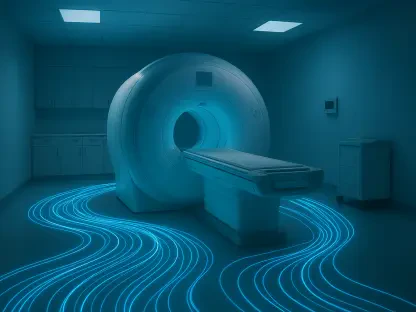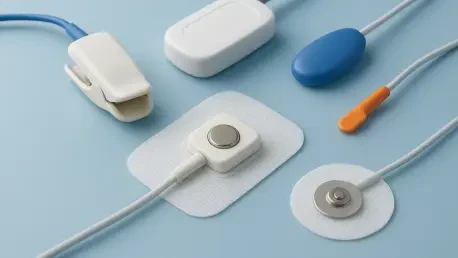

Wearable patches and biosensors allow the elderly to remain in their homes while staying under the constant digital eye of medical professionals, fundamentally altering the relationship between patients and their healthcare providers. This technological evolution marks a definitive departure from the traditional, reactive model of clinical visits toward a continuous stream of real-time health data that informs every medical decision. As biological systems increasingly interface with digital platforms, the once-distinct line between the human body and diagnostic machinery has begun to blur. Today, sensors are no longer mere peripherals but are the vital heart of modern medicine, facilitating early detection and personalized intervention. By integrating these sophisticated tools into the fabric of daily life, the industry has successfully bridged the gap between acute clinical observation and long-term wellness management. This shift ensures health monitoring is persistent rather than episodic, allowing for a level of precision previously unattainable.
Explosive Economic Growth and Global Projections
The financial trajectory of the medical sensor sector suggests a period of intense growth as aging populations and chronic disease rates drive demand for innovative tracking solutions. In the United States, the market is poised to expand from its 2026 valuation toward a substantial $153.08 billion by 2035, representing a robust compound annual growth rate of nearly twenty percent. This domestic surge reflects a broader global trend where the total market value is anticipated to reach approximately $356.01 billion by the middle of the next decade. Such rapid appreciation is not merely a reflection of increased sales but indicates a fundamental reorganization of healthcare spending toward preventative technologies. Governments and private insurance providers are increasingly recognizing the cost-effectiveness of early detection systems that reduce the frequency of expensive emergency interventions. Consequently, capital is flowing into the development of high-resolution sensing hardware that promises to stabilize healthcare costs over time.
Driving this massive economic expansion is a demographic shift that has prioritized home-based care for the growing number of seniors across developed nations. Chronic conditions like hypertension, diabetes, and cardiovascular disease require the kind of constant oversight that only automated sensing systems can provide without exhausting human clinical resources. Investors are focusing on companies that can demonstrate high levels of data accuracy and long-term battery life in their devices, as these factors are critical for widespread patient adoption. The push for decentralizing health services has created a competitive landscape where innovation is rewarded with rapid regulatory approval and market penetration. As the cost of manufacturing sophisticated biosensors continues to drop, these devices are becoming accessible to broader demographics, further fueling the global volume of sales. This economic momentum ensures that the medical sensor industry remains a cornerstone of the global tech economy, attracting talent from every corner of the globe.
Technological Synergy: AI and the Internet of Medical Things
The utility of modern medical sensors is profoundly amplified by the integration of Artificial Intelligence, which serves as the analytical brain for the raw data harvested from the body. AI algorithms are now capable of processing thousands of data points per second to identify subtle anomalies that would be invisible to the human eye during a standard physical exam. This synergy allows for the prediction of significant medical events, such as cardiac episodes or sudden changes in glucose levels, before physical symptoms even manifest. By turning physiological noise into actionable medical intelligence, AI transforms a simple sensor into a powerful diagnostic partner for clinicians. This shift toward predictive analytics represents the next major milestone in personalized medicine, where treatment is based on individual data trends rather than general population statistics. The reliability of these automated insights has fostered greater trust among physicians, who now rely on sensor-driven reports to adjust dosages and therapeutic interventions in real time.
Parallel to the advancements in AI, the widespread implementation of high-speed 5G networks and the Internet of Things has created a seamless infrastructure for health data transmission. These high-bandwidth connections ensure that data from a patient’s wearable device can be transmitted to a hospital server with zero latency, even from remote or rural locations. This connectivity is essential for the functionality of modern biosensors, which must maintain a constant link to clinical databases to remain effective. The miniaturization of hardware has also reached a point where sophisticated sensing components can be embedded in jewelry, clothing, or even temporary tattoos, making the technology almost invisible to the user. This “invisible” healthcare approach reduces the psychological burden on patients, who no longer feel tethered to medical equipment. As the ecosystem of connected devices expands, the ability to monitor diverse health metrics simultaneously provides a holistic view of patient health that was previously impossible, leading to better diagnostic outcomes.
Specialized Solutions and Strategic Industry Leadership
Several key players are driving the market forward by specializing in high-impact sensing technologies that cater to specific patient needs and lifestyle requirements. Dexcom Inc. has revolutionized diabetes management through its latest systems, which integrate continuous glucose monitoring directly with consumer electronics like smartwatches and mobile applications. Meanwhile, Siemens Healthineers AG focuses on the intersection of laboratory diagnostics and imaging, using high-precision sensors to accelerate clinical decision-making in acute care environments. These companies are at the forefront of a movement toward personalized care, where medical technology adapts to the lifestyle of the patient rather than requiring the patient to conform to clinical constraints. By making health data more accessible and easier to interpret, these firms are empowering individuals to take an active role in their own wellness journeys. This shift not only improves individual health outcomes but also reduces the overall burden on the healthcare system by minimizing the need for emergency room visits.
Other major corporations are focusing on the infrastructure and connectivity aspects of the sensor ecosystem to ensure a holistic approach to long-term health management. Koninklijke Philips N.V. is a leader in “connected care,” designing sensors that track vital signs as patients transition from hospital wards to home recovery settings. Honeywell International Inc. provides the industrial backbone for the industry, specializing in the sensors that monitor airflow and pressure in life-support equipment and advanced respiratory systems. Additionally, Becton, Dickinson and Company ensures the safety of clinical workflows by utilizing sensors for precise medication administration and accurate laboratory diagnostics. These industry giants are creating a cohesive network where data flows securely and accurately across different stages of treatment. By focusing on reliability and safety, they provide the necessary assurance that digital health tools can be trusted for critical medical decisions. Their contributions are essential for scaling sensor technology across large populations while maintaining the highest standards of clinical excellence and patient safety.
Future Frontiers in Predictive Care and Internal Sensing
As the industry moves toward 2035, the focus will shift even further toward total wellness and the expansion of internal sensing capabilities that go beyond simple wearables. The emergence of implanted biosensors will allow for the long-term monitoring of drug levels and biochemical markers from within the body, providing a persistent stream of internal data for years. In surgical settings, tactile and optical sensors will grant robotic systems a heightened sense of touch, further increasing the precision and safety of complex procedures. Ultimately, the industry will transition from mere monitoring to sophisticated forecasting, where sensors detect the subtlest physiological shifts before a patient experiences physical symptoms. This move away from traditional clinical settings is expected to reduce the burden on hospital infrastructure while providing patients with a higher quality of life. The future of healthcare lies in this ability to provide constant, non-invasive oversight without disrupting the daily routine, ensuring that medical intervention is always timely, accurate, and personalized for every individual.
The evolution of the medical sensor market demonstrated a clear trajectory toward a more integrated and intelligent healthcare paradigm. By the close of the recent fiscal cycles, the industry successfully addressed the challenges of data accuracy and device power management, paving the way for the current era of ubiquitous sensing. Moving forward, stakeholders must prioritize the development of robust cybersecurity protocols to protect patient privacy in an increasingly connected world. Furthermore, it is critical to ensure that these life-saving technologies are made accessible to underserved populations to prevent a widening gap in healthcare outcomes across the globe. As the transition from simple monitoring to sophisticated forecasting becomes the standard of care, the focus should remain on the ethical handling of the vast datasets generated. By leveraging predictive analytics and deep learning, healthcare providers were able to move toward a truly proactive model, ensuring that every patient benefits from the ongoing digital revolution.