
The landscape of neurovascular medicine is undergoing a radical transformation as the sonic pressure waves once used to shatter kidney stones are now being adapted to treat the life-threatening calcifications within the carotid artery. Calcified carotid artery disease presents a formidable challenge in stroke prevention because hardened plaque narrows the vessel and increases the risk of embolic events. While traditional surgical interventions like carotid endarterectomy have served as the clinical benchmark for decades, the invasiveness of open surgery often limits its application in fragile patient populations.
The introduction of Intravascular Lithotripsy (IVL) marks a significant evolution in vascular care, leveraging acoustic energy to modify arterial walls without the trauma of manual excision. This shift is highlighted by massive industrial movements, including the $13.1 billion acquisition of Shockwave Medical by Johnson & Johnson (J&J). This strategic investment led to the launch of the SkyRunner investigational device, which is designed to bring IVL specifically into the carotid space. As the market tightens, other major players like Boston Scientific and Stryker are also advancing their own platforms to compete in this rapidly growing field.
Understanding the Landscape of Carotid Artery Interventions and Key Industry Players
Carotid artery disease involves the progressive buildup of plaque that can lead to catastrophic strokes if left untreated. For years, the only reliable way to address severe calcification was through open surgery, where a surgeon physically clamped the artery and scraped the blockage away. However, the emergence of the SkyRunner device by J&J demonstrates a move toward utilizing sound-wave technology to fracture these calcified deposits from the inside out.
The acquisition of Shockwave Medical was a pivotal moment, allowing J&J to integrate established IVL success into the delicate neurovascular environment. This expansion is not happening in a vacuum, as the emergence of various acoustic platforms from rivals indicates a broad shift in clinical preference. The goal is to provide a standardized tool that can handle complex, hardened vessels that were previously considered too high-risk for conventional stents or surgical tools.
Comparing Interventional Approaches for Calcified Carotid Disease
Mechanism of Action: Acoustic Energy vs. Manual Plaque Removal
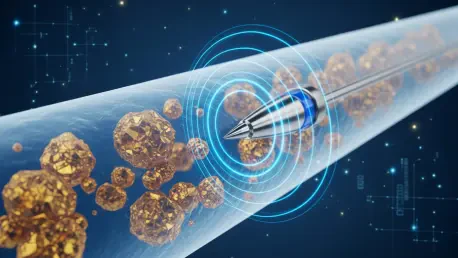
The SkyRunner device utilizes integrated emitters to create localized sonic pressure waves that travel through soft tissue to fracture the brittle calcium within the vessel wall. This mechanism cracks the internal “eggshell” of the plaque while leaving the sensitive arterial layers intact, facilitating easier vessel expansion. Unlike standard angioplasty, which uses physical force that may tear the vessel, the acoustic approach modifies the plaque’s structure to allow for safe stent delivery.
In contrast, traditional carotid surgery involves a direct manual removal of the obstructive material. While endarterectomy provides a clean vessel lumen, it is inherently traumatic to the surrounding tissue and requires a high degree of surgical skill to avoid damaging the cranial nerves. The transition to lithotripsy represents a move from physical extraction toward structural modification, allowing the vessel to regain flexibility without the risks associated with open incisions.
Procedural Access and Anatomical Adaptability
Modern IVL platforms offer significant advantages in terms of procedural access, supporting both transcarotid and transfemoral surgical approaches. The SkyRunner is engineered with specific shaft lengths and vessel-sizing options that are tailored to the unique constraints of the carotid anatomy. This versatility allows physicians to navigate tortuous vessels that would be difficult to reach through traditional surgical fields, making it a more adaptable solution for complex anatomies.
Traditional endarterectomy is generally restricted to the cervical segment of the carotid artery, meaning lesions located higher or lower in the neck are difficult to access. Intravascular lithotripsy bypasses these physical limitations by working within the vessel itself, providing a treatment option for blockages that are surgically unreachable. This flexibility ensures that a wider range of patients can receive treatment regardless of where their specific calcification is located.
Safety Profiles and Target Patient Populations
The classification of “high-risk” patients for traditional surgery often includes those with significant comorbidities or advanced age who cannot tolerate general anesthesia. J&J has launched pivotal clinical trials for the SkyRunner involving approximately 160 patients to specifically address this cohort. The performance of the device is being measured against a composite endpoint of death, stroke, and myocardial infarction, aiming to prove its safety as a secondary alternative to invasive surgery.
While surgical data has shown a consistent success rate, the newer lithotripsy technology seeks to reduce the incidence of periprocedural complications. By modifying the calcium at low balloon pressures, IVL minimizes the risk of vascular dissection and vessel recoil. The ongoing monitoring of real-world performance will eventually determine if the acoustic method can provide the same long-term durability that has characterized traditional surgical plaque removal for years.
Challenges, Limitations, and Technical Considerations in Carotid Treatment
Navigating the delicate anatomy of the carotid arteries requires a high degree of precision to avoid the risk of embolization, where dislodged plaque fragments could cause a stroke. While lithotripsy fractures calcium in place, the potential for microscopic debris remains a technical hurdle that requires robust distal protection filters. Furthermore, patients with complex blockages who are unfit for anesthesia still face limited options if the calcification is too dense for sound waves to penetrate effectively.
The competitive pressure from Boston Scientific and Stryker ensures that J&J must continue to innovate to maintain its lead in the IVL market. Transitioning these technologies from coronary or peripheral applications into the carotid space requires miniaturization without sacrificing the power of the acoustic emitters. Engineering a device that is small enough for the neck’s vessels but powerful enough to break through “eggshell” calcium remains a central focus of current vascular research.
Summary of Findings and Recommendations for Clinical Selection
The comparison between these two modalities suggested that the SkyRunner IVL system provided a critical alternative for patients who faced prohibitive risks with traditional surgery. It was observed that the ability to modify calcium through acoustic energy allowed for safer stenting in anatomies that were previously considered untreatable. Guidance for clinical selection shifted toward prioritizing sound-wave technology for high-risk cohorts with complex, circumferential calcifications.
The results of J&J’s clinical milestones through 2027 and 2032 were expected to pave the way for a new standard in vascular modification. It was ultimately concluded that the integration of specialized IVL platforms like the SkyRunner would likely reduce the reliance on open endarterectomy for the most difficult cases. Future healthcare strategies were recommended to focus on the synergy between imaging and lithotripsy to ensure the most precise treatment for patients at high risk of stroke.