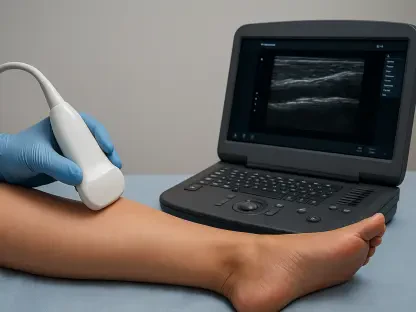

The traditional trajectory for launching sophisticated software-based medical devices often stalls within a labyrinth of regulatory hurdles and technical bottlenecks that can delay life-saving innovations for years. In the current landscape of 2026, where digital health is evolving at an unprecedented velocity, the ability to transition from a conceptual prototype to a market-ready product is no longer just a competitive advantage but a fundamental necessity for clinical survival. Engineering teams frequently find themselves trapped between the rigid requirements of international standards like ISO 13485 and the fluid nature of modern software development cycles. This friction creates a massive overhead, forcing developers to spend more time on documentation and infrastructure than on the core medical algorithms that actually improve patient outcomes. By providing a pre-validated framework, specialized platforms now allow medical technology firms to bypass the foundational grind, ensuring that their intellectual property reaches the clinical setting with both speed and uncompromising safety.
Accelerating Development Through Modular Software Frameworks
Utilizing Pre-Validated Functional Modules
Companies often struggle with recreating basic digital architecture like secure user authentication and cloud-to-device connectivity from scratch for every new project. Camgenium addresses this by offering a suite of pre-validated functional modules that serve as the bedrock for Software-as-a-Medical-Device (SaMD) applications. Instead of spending months building data ingestion pipelines or encryption layers, engineers can integrate these robust components into their existing workflows. This modular approach significantly reduces the time required for verification and validation, as the underlying code has already been tested against rigorous industry benchmarks. By focusing resources on unique clinical algorithms rather than generic infrastructure, organizations can trim several months off their development timelines. This shift from custom-built silos to standardized, reusable components allows for a more agile response to clinical needs, ensuring that hardware and software components interface seamlessly without the typical integration friction that plagues traditional medical device engineering.
Implementing Integrated Quality Management Systems
The burden of regulatory compliance often acts as a heavy anchor, slowing down the release of digital therapeutics and diagnostic tools in an increasingly scrutinized global market. To counter this, advanced platforms integrate quality management system (QMS) requirements directly into the development environment, creating a live connection between code and compliance documentation. By automating the generation of design history files and risk management reports, the platform ensures that every code change is mapped to a specific requirement and verified in real-time. This synchronization eliminates the frantic period of retrospective documentation that usually precedes a regulatory submission. Furthermore, providing a single source of truth for all technical specifications and test results minimizes the risk of human error, which is a primary cause of delays during FDA or CE mark reviews. When compliance becomes a byproduct of the development process rather than an external obstacle, manufacturers can navigate the path to market with greater confidence and significantly less administrative overhead.
Enhancing Long-Term Scalability and Market Readiness
Facilitating Rapid Integration of Advanced Analytics
Modern medical devices are increasingly reliant on artificial intelligence and machine learning to provide actionable insights, yet integrating these technologies within a regulated framework is notoriously complex. Camgenium simplifies this by providing a dedicated environment for hosting and managing sophisticated medical algorithms while maintaining strict data governance. The infrastructure supports high-volume data processing and real-time analytics, allowing developers to deploy AI models that are both performant and compliant with privacy standards such as HIPAA and GDPR. By utilizing a platform that handles the complexities of edge computing and cloud synchronization, teams can focus on refining their diagnostic accuracy. This readiness for advanced data handling means that as soon as a device is cleared for market entry, it possesses the computational capacity to scale across diverse hospital networks without requiring extensive re-engineering. The ability to seamlessly push updates and improvements to the field through secure over-the-air channels further ensures that the device remains at the cutting edge.
Adopting Sustainable Deployment Strategies
Successful innovators recognized that the path to market required a fundamental shift toward platform-based development to overcome the escalating costs of compliance. Organizations that adopted these pre-configured environments moved away from the outdated model of bespoke infrastructure, choosing instead to prioritize speed and clinical reliability. By integrating automated documentation and modular architecture early in the design phase, they ensured that their regulatory submissions were robust and less prone to rejection. Moving forward, the focus should remain on maintaining these digital ecosystems through proactive post-market surveillance and continuous feedback loops. Companies were encouraged to conduct thorough audits of their current software pipelines to identify where manual processes could be replaced by automated governance. Ultimately, the transition to specialized development platforms provided the necessary agility to react to new clinical data without compromising safety. Prioritizing these streamlined methodologies enabled manufacturers to deliver high-quality medical solutions to patients efficiently.