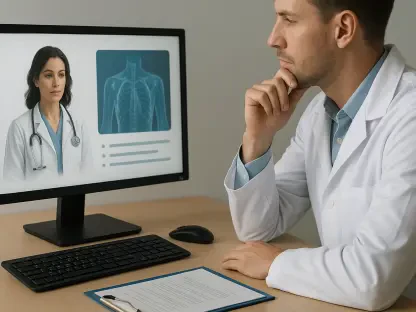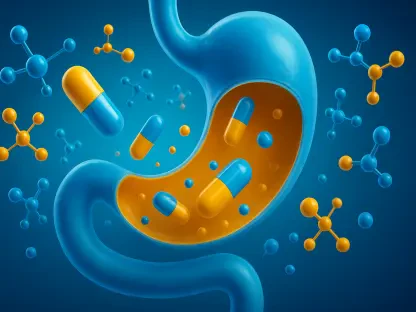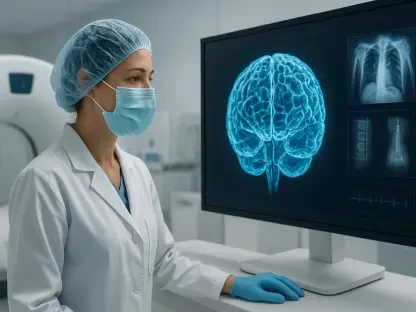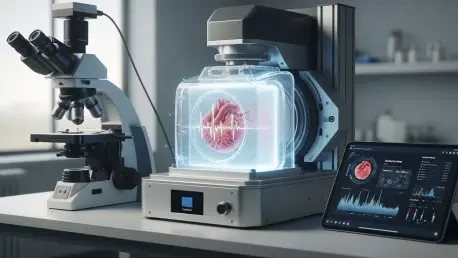

The traditional pharmaceutical development pipeline has long been plagued by a staggering failure rate, where approximately nine out of ten drug candidates that appear promising in animal trials ultimately fail to produce safe or effective results in human patients. This biological disconnect has prompted a revolutionary shift toward the use of engineered human tissues that can simulate the complex responses of the human body with far greater accuracy. Brisbane-based biotechnology firm Gelomics is at the forefront of this transformation, combining artificial intelligence with cutting-edge tissue engineering to create functional human organ models. From beating cardiac tissues to intricate liver structures, these lab-grown models allow researchers to observe how potential treatments interact with human cells in a controlled environment. By bridging the gap between laboratory research and clinical reality, the company is not only improving safety but also significantly reducing the industry’s reliance on unethical animal testing methodologies that have historically failed to predict human outcomes.
The Crisis of Inaccurate Animal Models
Addressing the Translation Gap: Rethinking Biological Testing
The failure of drug candidates during human clinical trials is rarely a matter of poor chemistry, but rather a direct result of the fundamental physiological differences between species. While animal models served as the industry standard for decades, they often lacked the cellular nuances required to predict human toxicity or therapeutic efficacy accurately. This discrepancy creates a “translation gap” where promising laboratory data fails to survive the transition to human physiology, leading to massive financial losses and the abandonment of potentially beneficial therapies. Gelomics targets this specific problem by offering human-centric tissues that mirror the mechanical and chemical properties of actual organs. These models allow for the identification of adverse reactions much earlier in the development cycle, ensuring that only the most viable candidates progress to human testing. By focusing on human biology from the outset, the research community can avoid the pitfalls of cross-species extrapolation that have hindered medical progress.
Enhancing Predictability: The Shift to Human-Centric Research
Beyond biological limitations, the ethical implications and logistical costs associated with using over 200 million animals annually for research have become increasingly difficult for the industry to justify. The current paradigm is not only ethically fraught but also incredibly time-consuming, requiring years of animal studies before a drug can even be considered for human application. Gelomics provides an alternative that addresses both concerns by delivering high-fidelity tissue models that provide faster, more reliable results. These engineered tissues react to chemical compounds like real human organs, providing scientists with a predictive toolset that animal models simply cannot match. This approach allows for a more streamlined research process, where the focus remains on human safety and biological relevance. As the industry moves away from outdated methodologies, the adoption of human-centric testing environments is becoming a prerequisite for any developer seeking to reduce risk and improve the speed of discovery.
Synergizing Biological Engineering and Digital Intelligence
Advanced Biofabrication: Hydrogels and Photocuring Technology
At the core of these tissue models is a sophisticated hydrogel technology designed to mimic the extracellular matrix, which is the protein-rich environment that supports cell growth in the body. These specialized scaffolds allow human cells to organize themselves into complex, three-dimensional structures that function as miniature organs. To make this process commercially viable, the platform utilizes a proprietary laboratory device that employs advanced photocuring technology to automate tissue formation. This hardware represents a significant leap in laboratory efficiency, as it can synthesize a functional tissue model in as little as ten minutes, a process that previously required several hours of manual labor. This level of automation ensures consistency across batches, reducing the variability that often plagues laboratory experiments. By combining high-precision bioengineering with rapid fabrication techniques, the system enables researchers to scale their testing capabilities without sacrificing biological integrity.
AI Integration: Accelerating Discovery Through Machine Learning
The integration of artificial intelligence into the tissue engineering process has further revolutionized how experiments are planned and executed within the biotechnology sector. A deep-research AI agent continuously monitors the global scientific landscape, synthesizing vast amounts of literature to provide researchers with the most current insights and data available. This digital intelligence then assists in the design of experimental protocols, using machine learning to optimize the conditions for each specific tissue type. These automated workflows are managed within a cloud-based environment, allowing for real-time data analysis and seamless collaboration across international research teams. By offloading the logistical burden of literature review to AI, scientists can focus their efforts on interpreting results and making critical decisions about drug safety. This synergy between digital intelligence and bioengineering creates a responsive research ecosystem that can adapt to new findings instantly, reducing the time required to validate efficacy.
Strategic Growth and Global Market Adoption
Commercial Scaling: The Role of Strategic Partnerships
The successful transition from a laboratory innovation to a globally recognized platform was facilitated by strategic collaborations that prioritized secure infrastructure and market accessibility. A key partnership with the Advanced Robotics for Manufacturing Hub allowed for the development of a robust, cloud-based framework that met the stringent security requirements of the pharmaceutical industry. Because drug development involves highly sensitive intellectual property, providing a secure environment for data analysis was essential for gaining the trust of international corporations. This infrastructure not only protected proprietary information but also allowed the platform to scale its operations to meet the demands of hundreds of researchers worldwide. The support provided through these initiatives helped refine the business strategy, paving the way for participation in global technology accelerators and ensuring long-term commercial viability. By building on a foundation of security, the technology has established itself as a reliable standard.
Measuring Impact: Efficiency Gains and Global Expansion
The practical advantages of adopting AI-driven human tissue models are reflected in the tangible efficiency gains reported by early adopters across the biotech industry. Organizations using the platform have seen an estimated 15% decrease in their reliance on animal models, alongside a 20% reduction in overall research and development costs. These metrics demonstrate that shifting toward human-centric testing is not just an ethical choice, but a sound financial strategy that improves the bottom line of drug discovery. To date, the platform has reached a significant milestone, with over 300 researchers across 23 countries utilizing the technology to advance their medical programs. This widespread adoption in key markets like the United States, Singapore, and Japan highlights a global consensus on the necessity of modernizing drug testing. As more companies integrate these models, the cumulative data further validates the technology, creating a cycle of innovation that continues to drive the sector toward more predictive research.
Regulatory Evolution and National Leadership
Validating Standards: Data Integrity and Regulatory Approval
Regulatory bodies are increasingly recognizing the limitations of traditional testing and are moving toward the formal acceptance of lab-grown cell cultures and AI-driven simulations. For these new methodologies to become standard in the drug approval process, they must be backed by massive, high-quality datasets that prove their reliability. To meet these rigorous standards, the platform utilizes advanced data lakehouses to store and process the vast amounts of information generated by high-resolution imaging and real-time sensors. This emphasis on data integrity ensures that the evidence provided to regulators is both comprehensive and transparent, meeting the scrutiny required for medical validation. By establishing these digital benchmarks, the technology is helping to define the future of regulatory compliance, where biological simulation plays a central role in proving safety. This shift not only accelerates the approval timeline but also ensures that the therapies reaching the market are safer for the human population.
Strategic Integration: Future Pathways for Medical Innovation
The pharmaceutical industry realized that the integration of AI-driven human tissue models provided a decisive roadmap for organizations aiming to eliminate the unpredictability of early-stage trials. Researchers within the medical technology sector shifted their focus from outdated cross-species testing to a paradigm where data-driven biological simulations informed every major investment decision. This evolution necessitated a firm commitment to building robust digital ecosystems that could handle the massive datasets generated by live-cell imaging and automated sensor feedback. By prioritizing these advanced methodologies, the industry established a more ethical and financially sustainable foundation for the rapid discovery of life-saving drugs. Stakeholders who adopted this technology realized significant competitive advantages, effectively streamlining the transition from laboratory research to patient care. This progress marked a definitive departure from the reliance on animal surrogates, ushering in an era of precision medicine that relied on authentic human cellular systems.