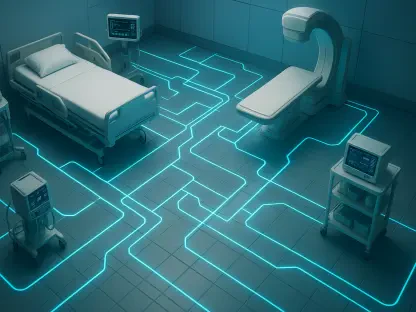

The traditional image of a scientist confined to a sterile laboratory has been replaced by a dynamic, mobile workforce that operates across continents and digital platforms. This fundamental shift marks a departure from centralized research hubs toward a distributed model where clinical trials and laboratory workflows occur in remote settings, residential homes, and satellite clinics. Managing this expansion requires more than just high-speed internet; it necessitates a complete reimagining of the infrastructure that supports scientific inquiry. As organizations move away from localized environmental controls, they are forced to confront the reality that their operational integrity now depends on a complex web of connected hardware. This transition is not merely a logistical adjustment but a strategic pivot toward system-level management capable of sustaining a globalized workforce without sacrificing security or precision. The challenge lies in ensuring that these decentralized elements function as a cohesive whole, maintaining the same rigorous standards found in a traditional lab environment.
The Evolution: Devices as Mission-Critical Assets
In the current landscape of 2026, mobile devices and specialized endpoints have transitioned from simple peripherals into the primary execution layer of the entire life sciences organization. Whether a clinician is using a high-performance tablet to record patient data at a remote site or a researcher is operating a specialized lab endpoint, these tools serve as the essential interface for mission-critical data collection. Because the hardware is the direct point of contact with proprietary applications and sensitive patient information, its performance and reliability are no longer viewed as secondary IT concerns. Instead, device uptime has become a central pillar of the enterprise’s success, directly influencing the speed at which new therapies can reach the market. The reliance on these digital tools means that any technical friction immediately translates into a loss of scientific momentum, making the health of the device fleet as important as the experiments they facilitate.
This shift in importance has led to a paradigm where IT departments are no longer just troubleshooting hardware but are instead managing the very environment where scientific innovation occurs. The device is now where the mission-critical work is executed, requiring a level of stability that matches the precision of the research itself. When a device fails in a decentralized trial, it does not just inconvenience an employee; it risks the integrity of the data being collected and could potentially disqualify an entire patient cohort. Consequently, organizations are prioritizing investments in hardware that offers both high performance and the ability to integrate seamlessly with sophisticated management software. By treating every endpoint as a vital asset, life sciences companies are building a foundation that supports continuous, uninterrupted work, regardless of where the researcher is located. This elevates the role of technology from a supporting function to a primary driver of operational excellence.
Overcoming Complexity: Navigating the Fragmented Hardware Landscape
As organizations scale their operations to meet the demands of global research, they frequently encounter a significant visibility gap caused by the sheer diversity of their hardware fleets. This fragmentation is often a result of rapid growth, where a mix of legacy systems in established labs clashes with modern mobile endpoints deployed in the field. Such a heterogeneous environment creates substantial challenges for IT teams who must ensure that every piece of hardware is secure, updated, and compliant with evolving global regulations. Without a unified view of these assets, organizations struggle to identify which devices are nearing their end of life or which ones are running outdated software that could pose a security risk. This lack of oversight is particularly dangerous in a sector where data breaches or hardware failures can lead to significant regulatory fines and a loss of public trust. The complexity of managing these disparate systems often leads to a reactive IT posture that is inefficient.
Beyond technical hurdles, the time-sensitive nature of clinical research means that any delay in identifying a hardware issue can have cascading effects on the entire project timeline. Regulatory compliance demands a high degree of transparency and accountability, which is nearly impossible to maintain when devices are operating in silos across different regions. To address these vulnerabilities, forward-thinking life sciences companies are moving away from manual tracking toward automated discovery tools that provide real-time insights into the status of every endpoint. These tools allow administrators to see exactly what hardware is in use, its current security posture, and how it is performing in the field. By closing the visibility gap, organizations can more effectively manage their resources and ensure that their infrastructure is always ready to support the next phase of research. Achieving this level of clarity is essential for any company looking to maintain a competitive edge in an increasingly digital industry.
Structural Shift: Building Unified Ecosystems for Compliance
Traditional management models, which have historically relied on manual updates and periodic physical audits, are proving to be entirely insufficient for the rigorous demands of the modern healthcare sector. These reactive approaches often create significant windows of vulnerability, as security patches and software updates may not reach every device simultaneously, especially those operating outside the traditional office perimeter. In a decentralized environment, relying on a manual checklist to ensure compliance is not only labor-intensive but also highly prone to human error. When a researcher is working in a remote location, the likelihood of a device falling out of compliance increases if the management system requires manual intervention or a physical connection to the corporate network. This outdated mentality fails to account for the real-time requirements of decentralized clinical trials, where data integrity must be maintained at all times to meet stringent regulatory standards.
Solving these challenges requires the adoption of unified device ecosystems that prioritize automation and continuous oversight as their core operational principles. These integrated platforms enable remote provisioning, which allows IT departments to configure every piece of hardware to the same rigorous standards from the moment it is taken out of the box. By establishing a standardized baseline for all devices, organizations can eliminate the inconsistencies that often lead to technical failures or security gaps during global deployments. This level of control is vital for large-scale clinical trials where hundreds of devices must be activated across multiple regions simultaneously. When every endpoint is managed through a single pane of glass, IT teams can maintain a high degree of operational agility, responding quickly to new requirements without needing to touch each individual device. This automation forms the backbone of a resilient and scalable infrastructure that supports modern science.
Strategic Outcomes: Sustaining Innovation Through Infrastructure Resilience
Life sciences leaders recognized that a robust technological foundation was the only way to ensure that infrastructure facilitated rather than hindered breakthrough innovations in the field. To achieve this, they prioritized the integration of security and operations into a single framework that provided a real-time view of the entire device fleet. These organizations implemented continuous monitoring protocols and automated compliance checks, ensuring that their systems could adapt to new regulatory demands without slowing down research. By moving away from siloed tools and toward unified ecosystems, they successfully reduced technical friction and protected their mission-critical data. Future success depended on maintaining this proactive stance, where IT infrastructure was treated as a dynamic asset rather than a static expense. These steps allowed companies to turn their technological capabilities into a core competitive advantage, fostering an environment where researchers could focus entirely on discovery.
The final phase of this transformation involved the deployment of self-healing software architectures that automatically addressed hardware vulnerabilities without requiring human intervention. This shift enabled global teams to maintain a consistent state of readiness, even when operating in regions with limited technical support. Organizations also established new protocols for lifecycle management, ensuring that every endpoint was replaced or upgraded before it could become a liability to the research project. By adopting these forward-looking strategies, the industry successfully navigated the complexities of a distributed workforce while maintaining the highest standards of data integrity. These solutions provided a template for how modern life sciences companies could scale their operations globally without compromising on safety or precision. The result was a more resilient and agile infrastructure that proved capable of supporting the next generation of medical breakthroughs, ultimately setting a new industry benchmark.