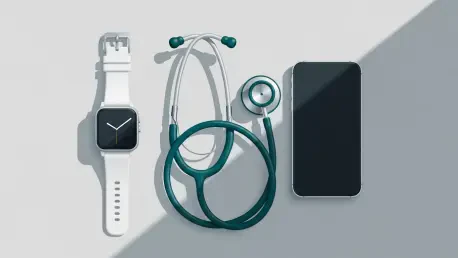

The traditional boundaries between hospital-grade monitoring and consumer-grade wearable technology have begun to dissolve as healthcare systems prioritize continuous patient oversight outside clinical environments. Medtronic’s recent entry into an exclusive distribution agreement with the Dutch firm Corsano Health signals a decisive pivot toward treating wearables as vital clinical infrastructure rather than elective lifestyle accessories. This move focuses on the deployment of the Corsano multi-parameter wearable across the United States, aiming to integrate medical-grade hardware into the core of existing digital ecosystems. By prioritizing established technology that can monitor heart rate, blood oxygen levels, and skin temperature with high precision, the industry is addressing a critical need for reliable data that clinicians can trust. This strategy represents more than a product launch; it is an effort to solve systemic healthcare hurdles like clinician burnout and the fragmentation of patient records.
Healthcare Evolution: Transitioning from Consumer Gadgets to Infrastructure
The choice to partner with Corsano Health allows Medtronic to sidestep the lengthy development cycles typically required for new hardware while gaining immediate access to FDA-cleared technology. This specific wearable has already demonstrated its utility within European emergency rooms and cardiac units, providing a proven foundation for its introduction to the American market. By adopting a device that already meets rigorous clinical standards, Medtronic transforms the wearable from a simple sensor into a critical node within a larger, more complex medical network. This approach redefines the category of wearables, moving them away from the realm of personal fitness and into the world of professional healthcare delivery. The integration of such devices ensures that the hardware is no longer viewed in isolation but as the connective tissue between a recovering patient and their medical team. Such a transition is essential for building a healthcare system that remains responsive and informed.
Central to this transformation is the HealthCast patient monitoring platform, which serves as the bridge between intensive hospital stays and the period of home recovery. This model seeks to eliminate the dangerous data gaps that often occur when a patient is discharged and their vital signs are no longer tracked with clinical frequency. By creating a continuous stream of information, the hospital-to-home model ensures that monitoring remains seamless and proactive, rather than episodic and reactive. The objective is to provide a holistic view of the patient’s physiological state throughout the entire recovery process, which can lead to better outcomes and reduced readmission rates. As medical technology continues to evolve, the focus is shifting away from the aesthetics of the device toward the reliability of the platform. The real value now lies in the ability of these systems to provide a stable, long-term infrastructure for patient care that extends far beyond the traditional four walls of the clinic.
Operational Efficiency: Addressing the Complexities of High-Volume Data
One of the primary obstacles to the widespread adoption of clinical wearables is the risk of overwhelming medical staff with a constant barrage of raw data. This phenomenon, often referred to as alarm fatigue, can lead to decreased responsiveness and increased stress for nurses and doctors who must navigate thousands of notifications daily. To mitigate this, the focus of medtech firms is shifting toward the refinement of data so that it becomes contextually relevant and immediately actionable. It is not enough to simply record a heart rate; the system must be able to understand whether a specific fluctuation is a normal part of the patient’s daily activity or a sign of an impending medical emergency. If the infrastructure can successfully filter out the noise, it allows clinicians to focus their attention where it is most needed. This efficiency is crucial in an era where healthcare resources are stretched thin and the demand for high-quality care continues to grow.
Building trust in the accuracy of wearable sensors is another vital step in making them a permanent fixture of the clinical landscape. Clinicians must be confident that the alerts they receive are based on high-fidelity data that corresponds to the actual physiological state of the patient. Consequently, the industry is investing heavily in sophisticated algorithms that can distinguish between harmless physiological changes and genuine clinical deterioration. This level of precision ensures that the technology fits naturally into a doctor’s existing workflow without adding unnecessary burdens. When these systems are implemented correctly, they act as a force multiplier for medical teams, allowing them to monitor a larger number of patients with greater accuracy. The successful integration of these tools depends on their ability to provide clear, reliable insights that assist in decision-making. By refining the way data is presented, companies can ensure that wearables remain helpful assets rather than distracting hurdles.
Strategic Integration: Establishing a New Standard for Digital Patient Care
The ultimate trajectory for wearable clinical infrastructure is the widespread implementation of proactive care models that emphasize early detection and longevity. By collecting continuous data over long periods, healthcare providers can identify subtle trends in a patient’s health that might otherwise go unnoticed during a standard office visit. This longitudinal approach allows for medical interventions to occur at the optimal moment, often before a patient even realizes they are experiencing symptoms. The integration of artificial intelligence and predictive analytics into these platforms represents the next phase of this evolution, turning raw vital signs into life-saving forecasts. These advanced systems are designed to detect patterns of decline that are invisible to the naked eye, providing a vital early warning system for high-risk individuals. As these technologies become more deeply embedded in daily life, the focus shifts from treating illness to maintaining wellness and extending the healthy years of a patient’s life.
The shift toward clinical wearables necessitated a complete reimagining of the relationship between patients and their healthcare providers. It was recognized that the successful deployment of these tools required more than just advanced sensors; it demanded a robust digital infrastructure capable of handling massive data streams. Medical institutions that prioritized the integration of these systems saw a significant improvement in their ability to manage chronic conditions and post-operative recovery. The lessons learned from the early implementation of the Corsano multi-parameter wearable provided a blueprint for future technological adoption. Administrators and clinicians worked together to ensure that the data generated was not only accurate but also meaningfully incorporated into the patient’s long-term care plan. This collaborative approach proved that when hardware and software were perfectly synchronized, the results were transformative for the entire industry. This move signaled the end of the era of passive monitoring.