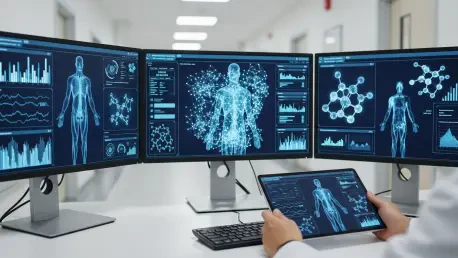

The sheer unpredictability of amyotrophic lateral sclerosis often proves as devastating to families as the physical symptoms themselves, leaving patients and clinicians in a state of perpetual reactive waiting. At Temple University and Temple Health in Philadelphia, a pioneering research initiative has emerged to confront this uncertainty by integrating the latest advancements in artificial intelligence and data science. By developing digital twins—sophisticated, virtual replicas of individual patients—the team aims to provide a granular forecast of how the disease will evolve within a specific person’s body. This shift marks a departure from traditional medicine, where treatment decisions are frequently based on broad statistical averages that fail to account for the unique biological nuances of each case. Instead, the focus has moved toward a precision-driven framework that allows medical teams to anticipate needs rather than simply reacting to the latest loss of motor function. This evolution in care offers families a data-driven path through a diagnosis formerly defined by a tragic lack of clarity.
Addressing the Uncertainty and Engineering of Virtual Health Models
The Human Impact: Navigating Life with Unpredictability
Families living with the reality of an ALS diagnosis often describe the experience as an agonizing descent into the unknown, where the lack of a specific timeline for physical decline creates an immense psychological toll. The story of the O’Donnell family serves as a poignant illustration of this struggle; while their young child was hitting major developmental milestones like walking and running, the father was simultaneously losing those same abilities following a diagnosis at only thirty years old. Although physicians typically cite a broad survival window of two to five years, this range is far too wide to allow for meaningful life planning or emotional closure. The inability to pinpoint when a patient might lose the power of speech or the ability to breathe independently leaves loved ones in a constant state of hyper-vigilance. This emotional exhaustion is compounded by the fact that no two patients follow the exact same path, making generic advice from support groups less effective.
Beyond the emotional strain, the logistical burden of managing a disease that refuses to follow a standard script requires caregivers to stay several steps ahead of a rapidly shifting target. Families are frequently forced to navigate monumental decisions on their own, such as the appropriate time to modify a home for wheelchair access or when to prepare for permanent respiratory support. Without a data-driven forecast, these choices often become reactive, made in the heat of a medical crisis rather than through calm, strategic deliberation. The digital twin project seeks to provide the foresight necessary to move away from a “hope for the best” mindset and toward a proactive preparation for the future. By transforming a diagnosis defined by uncertainty into a manageable clinical journey, the project empowers families to make informed, life-altering decisions. This evolution in care ensures that every intervention is tailored to the patient’s unique profile, reducing the fear of the unknown.
Technical Adaptation: From Industrial Systems to Biological Models
While the concept of a digital twin may seem futuristic within the context of neurology, it has served as a foundational tool in high-stakes industries like automotive manufacturing and aerospace for years. In these sectors, engineers create high-fidelity virtual copies of complex mechanical systems, such as jet engines or power grids, to simulate performance under various conditions. These models allow for predictive maintenance, identifying potential failures before they manifest in the physical world and preventing catastrophic outcomes. For instance, utility companies utilize these virtual representations to predict how aging infrastructure or extreme weather events might impact a power grid, enabling repairs to be made before a blackout occurs. By importing this established industrial framework into the realm of human biology, researchers at Temple are creating a way to monitor the complex, interacting systems of the human body with the same level of engineering precision and foresight.
The transition from mechanical systems to biological models requires a shift from static medical records to dynamic, evolving simulations that grow alongside the patient. Unlike a traditional patient profile, which offers a mere snapshot in time, a medical digital twin is a living model that is constantly updated with new information. This allows physicians to run sophisticated “what-if” scenarios in a safe, simulated environment, testing the potential effects of various medications or therapeutic strategies before applying them in reality. For a condition as aggressive as ALS, the ability to experiment virtually could mean the difference between choosing an effective treatment and wasting precious time on a drug that yields no benefits. By using these virtual mirrors, clinicians can visualize the probable outcomes of different care pathways, ensuring that the final decision is backed by a robust, data-driven simulation of the individual patient’s specific physiological response.
Data Synthesis and the Future of Clinical Research
Synthetic Analysis: Building a Comprehensive Patient Profile
To construct an accurate digital twin, the artificial intelligence must process and integrate a massive amount of personal and environmental data into a single, cohesive framework. This technical synthesis includes analyzing genetic markers, comprehensive medical histories, and specific lifestyle factors that might influence disease progression. Furthermore, the system incorporates social determinants of health, such as local environmental conditions and a patient’s access to specialized medical resources, to understand the external pressures acting on the individual. By viewing the patient as a complete, multifaceted system rather than just a collection of symptoms, the AI can build a comprehensive picture of how ALS interacts with that specific person’s biology. This holistic approach is essential for identifying the subtle triggers that might accelerate decline in one patient while sparing another, leading to a much higher level of predictive accuracy than traditional methods.
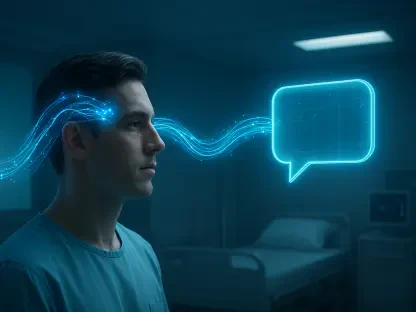
A critical component of the digital twin’s efficacy lies in its reliance on continuous updates from real-time clinical check-ups and sophisticated wearable technology. In the current medical landscape, smartwatches and advanced biosensors provide a steady flow of objective data regarding a patient’s mobility, respiratory function, and muscle strength. These devices capture subtle changes in physical performance that might go unnoticed during a standard monthly doctor’s visit, offering a much more granular view of the disease’s actual pace. When this real-time biometric data is fed into the virtual model, the digital twin adjusts its forecasts accordingly, reflecting the patient’s current state with remarkable precision. This constant stream of information ensures that the simulation remains a relevant tool for decision-making throughout the entire course of the illness. It bridges the gap between clinical visits, providing doctors with a 24/7 window into the patient’s health status.
Clinical Innovation: Proactive Interventions and Ethical Trials
By utilizing a vast library of historical information, the AI identifies patterns that would be invisible to the human eye, even for the most experienced neurologists. This comparison allows the system to place the individual patient within a broader context, recognizing early warning signs of progression based on how similar profiles have behaved in the past. If the model predicts a significant decline in respiratory function several months before it occurs, the medical team can begin preparations early. This might involve fitting a patient for a ventilator or discussing a feeding tube long before an emergency situation arises, reducing the trauma and risk associated with crisis-driven procedures. As the database grows with every new patient, the predictive capabilities become increasingly refined, creating a self-improving cycle of medical intelligence. This ensures that even the rarest variations of the disease are accounted for, providing a high-definition view of the patient’s future health.
The technology also allows for the simulation of drug therapies, helping doctors determine which medications are most likely to slow progression for a specific person. Furthermore, digital twins are poised to solve the persistent “placebo problem” that has long hindered progress in ALS clinical trials. Because the disease often progresses with such speed, many patients have only one opportunity to join a trial, and being assigned to a control group can feel like a lost chance for survival. By using AI-generated virtual controls to simulate how a patient would progress without an experimental drug, researchers can significantly reduce the number of human subjects required for placebo groups. This makes trials more ethical and accessible, as more participants can receive the actual treatment being tested. Moreover, these virtual models accelerate the discovery of life-saving therapies by providing researchers with a more accurate baseline for measuring a drug’s effectiveness in real time.
The digital twin initiative at Temple Health successfully shifted the conversation from general prognosis to specific, actionable data points for those navigating the complexities of ALS. Researchers recognized that the integration of artificial intelligence was not merely about technological prowess but about restoring a sense of agency to patients who had felt abandoned by the limitations of traditional neurology. By moving past the constraints of the placebo-controlled trial, the medical community took a significant step toward a more ethical and efficient research landscape. The findings from this project indicated that the future of neurodegenerative care lies in the synthesis of environmental, genetic, and real-time biometric data. This paradigm shift encouraged other institutions to adopt similar modeling techniques for conditions like Alzheimer’s and Parkinson’s. Ultimately, the transition to these virtual models offered a pathway for families to regain control over their clinical journeys.