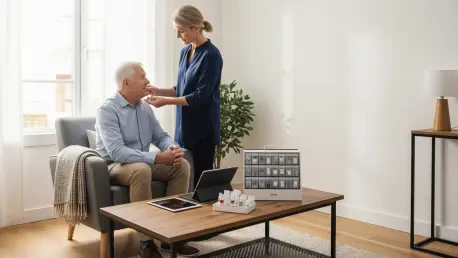

The rugged landscapes and wide-open spaces of Wyoming provide a scenic backdrop for retirement, yet for thousands of aging residents, this isolation has transformed into a dangerous barrier to essential healthcare and daily support services. As the demographic shift accelerates in 2026, the existing infrastructure is buckling under the weight of an aging population that requires more complex medical attention than the current system can realistically provide. This systemic failure is not merely a matter of logistics or funding; it is a profound societal challenge that leaves families scrambling for solutions while seniors face the prospect of declining health without a safety net. The current environment has forced many into a state of perpetual uncertainty, where the absence of a cohesive state strategy means that access to quality care is often determined by zip code or personal wealth rather than need. Without immediate intervention, the gap between those who can afford professional assistance and those left to navigate the complexities of aging alone will only continue to widen, threatening the fundamental well-being of the state’s most vulnerable citizens and the families that support them.
The Financial Realities: Costs and Funding Misconceptions
One of the most pressing issues for Wyoming’s seniors is the extreme cost associated with professional home care and assisted living, which has reached levels that are simply unsustainable for the average household. For many, the cherished goal of “aging in place” has become a financial impossibility, with the cost of non-medical caregivers projected to reach nearly $8,000 per month for standard weekly assistance in the current market. These expenses have consistently outpaced general inflation and wage growth, leaving even those with modest savings unable to afford the market price for basic survival and daily support. The reality is that many middle-class residents find themselves in a precarious “wealth gap” where they have too many assets to qualify for state-subsidized programs but not enough liquidity to fund a decade of professional nursing care. This financial squeeze is exacerbated by the rising costs of medical supplies and the higher wages necessary to attract staff to rural areas, creating a localized inflation cycle that disproportionately impacts those on a fixed income.
Adding to the financial strain is a widespread and dangerous misunderstanding of how elder care is actually funded within the United States. A significant portion of the Wyoming population continues to operate under the incorrect assumption that Medicare will cover long-term nursing home stays or non-medical home assistance, such as help with bathing and meal preparation. In reality, Medicare is designed to address acute medical needs and short-term rehabilitation following a hospital stay, leaving a massive void in long-term support coverage. This leaves families to face the agonizing choice between paying entirely out of pocket, exhausting their life savings to qualify for Medicaid, or taking on the full-time caregiving duties themselves. This “spend-down” process often leaves surviving spouses in financial ruin, as the assets accumulated over a lifetime are liquidated to cover just a few years of high-level care. The lack of financial literacy regarding these programs often means that by the time a crisis occurs, the opportunity for effective long-term care insurance or asset protection has already passed.
The Economic Impact: Reliance on the Shadow Workforce
Because professional care is so prohibitively expensive, Wyoming has become almost entirely reliant on an informal “shadow workforce” consisting of over 100,000 unpaid family caregivers. This group, which now makes up nearly a quarter of the state’s adult population, provides a massive financial benefit to the state’s budget by keeping seniors out of Medicaid-funded facilities for as long as possible. The economic value of this unpaid labor is staggering, effectively serving as the primary pillar of the state’s long-term care system without receiving any direct compensation or formal recognition. However, this reliance on family labor is not a sustainable long-term strategy for 2026, as it places an immense, often invisible burden on the individuals providing the care. The state is essentially offsetting its public health responsibilities onto the private shoulders of family members who are often ill-equipped to handle the medical and physical demands of advanced elder care, leading to a fragility in the care network that could collapse if economic conditions shift further.
The personal and economic costs for these family caregivers are significant and frequently lead to a cycle of long-term financial instability for the caregivers themselves. Many are forced to reduce their working hours, pass up promotions, or leave the workforce entirely, which depletes their own retirement savings and significantly reduces their future Social Security contributions. Beyond the immediate financial hit, the physical and emotional stress of managing complex medical tasks—often without formal training—leads to chronic caregiver burnout and secondary health problems. This creates a secondary public health crisis, as the caregivers themselves become patients due to the stress of their responsibilities. When a daughter or son leaves the workforce to care for an aging parent, the state loses tax revenue and productive labor, creating a ripple effect that weakens the local economy. This hidden cost of caregiving is rarely accounted for in state budget discussions, yet it represents a significant drain on the long-term economic health of Wyoming’s communities and the future security of its working-age population.
Geographic Isolation: The Planning and Access Deficit
A major hurdle in addressing the senior care crisis is the psychological tendency to avoid planning for the inevitable complexities of aging. Many families engage in what sociologists call “magical thinking,” operating under the assumption that they will never need long-term care or that the system will automatically step in to provide a solution during a medical crisis. This lack of advance planning often results in “crisis-mode” decision-making following a sudden fall or illness, leading to suboptimal care choices made under extreme duress. When families are forced to choose a facility or a care plan in a matter of hours while a senior is in the emergency room, they rarely have the opportunity to vet the quality of the provider or consider the long-term financial implications. This reactive approach frequently results in avoidable hospital readmissions and a lower quality of life for the senior, as the lack of a proactive support structure makes it impossible to manage chronic conditions effectively before they escalate into emergencies.
Wyoming’s unique and challenging geography further complicates this issue, as the state faces a critical shortage of medical specialists such as neurologists, geriatricians, and palliative care experts. This creates a significant “access gap,” particularly for rural residents who may have to travel hundreds of miles across mountain passes to receive specialized treatment for conditions like dementia or Parkinson’s disease. Consequently, Wyoming often ranks poorly in national scores for care affordability and provider choice, leaving residents with few options other than nursing home placement when home-based support is unavailable. The sheer distance between patients and providers means that even basic check-ups become day-long expeditions, which is physically exhausting for frail seniors and logistically difficult for their working family members. This geographic reality effectively creates two tiers of aging in Wyoming: those in urban centers with some access to services, and those in the vast rural stretches who are essentially left to fend for themselves in a medical desert.
Community Initiatives: The Path toward Reform
In the face of these systemic challenges, community-based nonprofits and local initiatives have emerged to fill the gaps left by the traditional healthcare system. These organizations often utilize private grants and local donations to subsidize the cost of care, making it more accessible for middle-class families who do not qualify for Medicaid but cannot afford the exorbitant private-pay rates. These groups focus on a holistic approach to aging, providing not just medical assistance but also emotional support, transportation, and help with critical legal documents like advance directives. By offering sliding-scale fees and volunteer-led programs, these nonprofits serve as a vital buffer against the total isolation of rural seniors. However, while these programs are incredibly effective on a local level, they often lack the scale and permanent funding necessary to serve the entire state, functioning more as a temporary patch on a deeply fractured system than a comprehensive solution for the growing senior population.
Ultimately, the resolution of this crisis required significant policy shifts and a departure from the previous model of survival by circumstance. Findings from recent healthcare studies suggested that Wyoming needed to address its inadequate public funding by expanding the reach of home and community-based service waivers. Legislative bodies eventually recognized that the reliance on individual resilience was no longer a viable strategy for public health. They initiated programs that incentivized the relocation of medical specialists to rural counties and modernized the state’s approach to caregiver support by providing tax credits and training resources to the informal workforce. By transitioning to a model that prioritized early intervention and regional care hubs, the state began to reduce the burden on emergency departments and nursing homes. These actions demonstrated that a proactive approach to state-level intervention was the only way to close the gap between the needs of the aging population and the services available to them, ensuring that the final years of Wyoming’s residents were defined by dignity rather than a struggle for basic access.