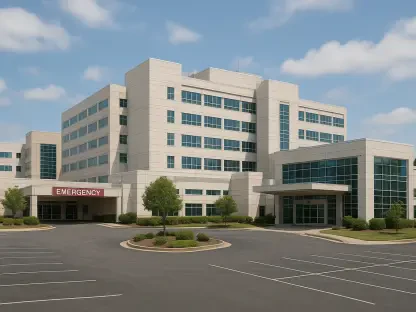

The financial viability of the universal primary care proposal hinges on whether the state can successfully redirect funds that are currently managed by private insurers and federal agencies. This central challenge defines the current gubernatorial race, where Amanda Janoo has positioned healthcare as a fundamental human right. Her platform envisions a Vermont where financial barriers to medical services are dismantled, allowing residents to seek preventive care without the burden of copays or deductibles. By making primary care free at the point of use, the proposal aims to foster a healthier population while driving economic efficiency through early intervention. Beyond cost adjustments, Janoo advocates for a structural transformation characterized by the Community Health Team model, which integrates doctors and mental health specialists within local municipalities to ensure comprehensive support for all citizens.
Fiscal Projections and Economic Realities
Savings Projections: Debating the $300 Million Claim
Proponents of the universal primary care initiative argue that a robust preventive system will inevitably lead to a drastic reduction in the most expensive forms of medical intervention. They maintain that when patients can visit a local doctor without worrying about an immediate bill, they are far more likely to address minor symptoms before they escalate into chronic conditions requiring emergency room visits or long-term hospitalizations. This logic suggests that the state could see upwards of $300 million in annual savings by shifting the focus from crisis management to consistent wellness monitoring. Such a transition would theoretically alleviate the strain on large regional hospitals, which currently operate as the default primary care providers for uninsured individuals. This redirection of resources is seen as the primary engine for financial sustainability, transforming how public health is valued and maintained within the state’s unique rural landscape.
The $300 million figure has come under intense scrutiny from fiscal analysts who question the underlying math and the mechanics of fund redirection. Critics point out that several state studies estimated the total operational cost of a universal primary care program to be nearly identical to the projected savings, potentially resulting in a net-zero budget impact. Furthermore, a critical hurdle involves the decentralized nature of the current healthcare payment infrastructure. When a patient avoids an emergency room visit, the financial benefit does not flow directly into the state treasury; instead, it remains with the entity that would have paid the bill, such as federal Medicare or private insurers. Consequently, without a specific mechanism to aggregate and redirect these disparate savings, the state cannot easily use them to fund the program. This complexity highlights a significant gap between the aspirational goals of universal coverage and the practical constraints of state-level accounting.
Empirical Research: Trends in Federal Care
To validate the claims of universal primary care supporters, it is essential to examine empirical data from federal and state-level research conducted over the past several years. Comprehensive reviews published in the JAMA Health Forum have analyzed federal primary care expansion programs from 2026 to 2028, offering a nuanced view of their financial impact. These findings indicate that while enhanced access does lead to higher levels of patient engagement and modest decreases in emergency room usage, the net effect is often an increase in total healthcare spending. This occurs because the operational costs of providing expanded services to a larger portion of the population frequently outpace the savings achieved through avoided hospitalizations. The data suggests that while the health benefits are undeniable, the transition does not automatically result in a more affordable system for the government. Researchers emphasize that primary care is an investment in human capital rather than a direct cost-saving measure.
Further analysis of Medicare primary care redesign programs has shown that the financial shifts are often too small to be statistically significant in the context of a multi-billion-dollar budget. For instance, studies focusing on patient-centered medical homes found that the average savings per patient were negligible when compared to the overhead required to manage the expanded care networks. Similarly, private sector initiatives that aimed to reduce avoidable hospital visits through intensive primary care management often struggled to find a definitive link to lower total expenditures. While these programs successfully improved the quality of life for participants and reduced the frequency of medical crises, the financial burden of maintaining the clinics remained a persistent challenge. These national trends suggest that Vermont’s proposal may face similar headwinds, where the social value of healthier citizens must be weighed against the reality of increased public spending on healthcare infrastructure.
Funding Mechanisms and Legislative Progress
Funding Models: The Fair Share Tax
To address the immediate funding requirements of a “free” primary care system, the proposal includes the introduction of a “Fair Share Tax” specifically designed to target Vermont’s highest earners. This revenue-generating measure seeks to recapture income equivalent to the gains seen from previous federal tax cuts, focusing on individuals with an annual income exceeding $500,000. Several variations of this plan are currently under review, including a 3% surcharge that could generate between $74 million and $114 million annually for the state’s healthcare fund. Other more aggressive models suggest a tiered system starting at $250,000, which would aim to balance the tax burden across the top 1% of the population. Proponents of these taxes argue that they are a necessary tool for social equity, ensuring that the wealthiest residents contribute a larger portion toward a public good that benefits all citizens. This approach mirrors legislative efforts seen in other states attempting to expand their social safety nets.
The debate over these tax models is central to the political divide, as lawmakers weigh the benefits of access against the reality of rising medical inflation. Experts caution that relying on data from nearly a decade ago, such as the 2017 cost reports, may result in significant funding gaps. Since that time, the healthcare sector has experienced substantial inflationary pressures, leading to higher costs for supplies and personnel. Furthermore, the rising cost of living in Vermont has impacted the wages required to attract and retain primary care providers and mental health professionals. If the state’s financial projections do not account for the competitive salaries needed to fill these roles, the infrastructure of the program may remain understaffed. Adjusting for these market-driven costs is a critical task for the incoming administration, as it will determine whether the “free” services promised to residents can actually be delivered in a sustainable manner.
Legislative Progress: Act 173 and Regional Goals
Regardless of the specific political promises made on the campaign trail, the state of Vermont is already legally committed to exploring the path toward universal primary care through the framework of Act 173. Signed into law recently, this legislation officially codifies the intent of the General Assembly to establish a primary care system that is accessible to all residents regardless of their ability to pay. The law does not immediately mandate the removal of fees, but it sets in motion a rigorous process of financial discovery and administrative planning that must be completed by early January. Among the most critical requirements is a comprehensive audit of current primary care spending, which will identify exactly how much money is currently being exchanged within the system and who is responsible for those payments. This data will serve as the essential baseline for any future attempts to transition toward a fixed-payment or “global budget” model for medical practices across the entire state.
The journey toward universal primary care in Vermont was defined by a search for balance between social equity and economic pragmatism. Leaders recognized that while the vision of a system free from financial barriers remained a powerful motivator, the practicalities of funding such an endeavor required rigorous data and careful negotiation. The state prioritized a gradual transition, using the findings from financial audits and pilot programs to inform its next legislative steps. By focusing on the structural transformation of the delivery model and seeking regional cooperation, policymakers sought to build a foundation that was both resilient and adaptable to future challenges. This process moved the conversation from abstract ideals to a series of concrete, manageable actions that targeted the most critical gaps in the existing system. The ultimate success of these efforts relied on the ability of the administration to translate health data into sustainable policy, ensuring that the commitment to universal access was backed by a sound and transparent fiscal strategy.