
The quiet hum of a high-tech neonatal unit in southern Utah has been replaced by the frantic rustle of plastic biosafety suits and the sharp hiss of oxygen concentrators as pediatricians battle a virus once thought to be a ghost of the American past. This sudden and violent resurgence of measles represents more than a simple cluster of infections; it is a fundamental breakdown in the modern social contract that once prioritized collective immunity. While the United States officially celebrated the elimination of this pathogen at the turn of the century, the current landscape in the Mountain West suggests that those victories were far more fragile than the public realized. Medical professionals now find themselves in a regressive era where the tools of the nineteenth century are being used to fight twenty-first-century battles, all while the scientific consensus that underpinned domestic health for decades begins to fray under the pressure of widespread skepticism.
From Elimination to Endemic Reality: The Return of a Forgotten Plague
The transformation of measles from a historical footnote to a contemporary crisis has occurred with a speed that caught many local institutions off guard. Since the initial reports surfaced in August, the outbreak has evolved into a persistent medical emergency that shows no signs of dissipating by the middle of the current year. This resurgence is viewed by many in the medical field as a “regressive next chapter” for domestic medicine, signaling a shift where the presence of highly contagious, vaccine-preventable diseases is no longer an anomaly but an expected reality. The geographic concentration of these cases provides a stark look at how quickly a lack of herd immunity can turn a localized issue into a regional epidemic that threatens to rewrite the rules of public engagement and safety.
Public health infrastructure, which was designed to handle occasional, imported cases, is currently buckling under the weight of sustained transmission. The virus is no longer merely passing through travelers; it is circulating freely within communities that have seen a steady decline in immunization coverage over the last few years. This shift reflects a profound indicator of a fragile national health framework that relies on a level of cooperation that may no longer exist. As the virus moves through schools, malls, and places of worship, the reality of an endemic status becomes more plausible, suggesting that the era of complete elimination may be over. Understanding the nuances of this Utah outbreak is therefore essential for any national strategy aimed at preventing a similar slide into pre-vaccine conditions across the rest of the country.
Consequently, the situation demands a rigorous dissection of the clinical, socio-political, and administrative failures that allowed this “forgotten plague” to reclaim its territory. It is not enough to simply treat the symptoms of the sick; there must be a broader recognition of how modern medicine has lost its footing in the face of rising cultural resistance. This exploration highlights the necessity of viewing the current crisis as a multidimensional problem where biological facts are increasingly treated as matters of opinion. By examining the clinical toll on the most vulnerable and the systemic shifts that have hindered containment efforts, it becomes possible to see the true scale of the challenge facing American public health in 2026 and beyond.
Analyzing the Multidimensional Forces Driving the Resurgence
The Clinical Toll of Measles and the Crisis of Pediatric Vulnerability
On the medical frontlines, the daily reality for healthcare workers has become increasingly desperate as they manage cases that should never have occurred in a modern society. In southern Utah, pediatricians like Dr. Ben Dowse have had to adopt extreme biosafety measures, including full-body protective gear and plastic face shields, just to treat infants who have been exposed to the virus. These protocols are a grim reminder of the high-containment environments usually reserved for the world’s most dangerous pathogens. The clinical complexity of treating a newborn who may have been infected by an unvaccinated mother is immense, involving a high-stakes race to provide the infant with concentrated antibodies before the virus can cause permanent neurological damage, deafness, or even death. This biological “ammo” is often the only thing standing between a child and a lifetime of disability.
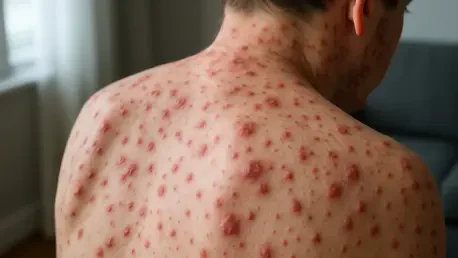
The physical manifestation of the disease is also far more severe than the “mild childhood illness” often described in online misinformation circles. Pediatric experts like Dr. Nathan Money and Dr. Kerri Smith have documented children arriving at hospitals with fevers reaching 105 degrees and skin “retracting” below the ribs as they struggle to pull oxygen into inflamed lungs. This condition, often termed “measles pneumonia,” represents a significant cause of hospitalization and mortality during these outbreaks. Beyond the immediate respiratory distress, the virus is known to cause a phenomenon called “immune amnesia.” This biological “reset button” erases the body’s memory of previous pathogens, effectively wiping out the immunity a child has built up against other common illnesses. This leaves survivors uniquely vulnerable to a host of secondary infections for years after the initial measles rash has faded.
Furthermore, medical providers are increasingly finding themselves in the middle of a conflict between evidence-based medicine and anecdotal “natural” health beliefs. During active outbreaks, it is not uncommon for parents to reject proven antibody treatments in favor of supplements like Vitamin A, based on the belief that these can replace the complex immunological response provided by modern medicine. This forced negotiation over biological reality places pediatricians in an ethical bind, as they attempt to save children from preventable harm while respecting parental autonomy. The resulting atmosphere in hospitals is one of palpable tension, where the struggle for a child’s health is compounded by a fundamental disagreement over what constitutes valid medical information.
Historical Distrust Meets the Modern Wellness Industrial Complex
The roots of the current crisis are buried deep in the historical soil of the American West, where a legacy of isolationism has merged with modern commercial interests. In communities like Hildale, a deep-seated suspicion of government intervention can be traced back to mid-century police raids on religious sects. These events fostered a culture of withdrawal from mainstream institutions, including medical systems. Under the influence of subsequent isolationist leaders, many families were encouraged to abandon traditional healthcare entirely. While many individuals have since moved away from these specific religious movements, the vacuum left by that historical distrust has been filled by a new and powerful force: the digital misinformation landscape and a burgeoning “wellness” economy.
Utah has become a central hub for a $6.1 billion supplement and “wellness” industry, which often thrives on the same skepticism of authority that historically defined the region. Multi-level marketing networks have successfully co-opted the rhetoric of “detoxification” and “natural purity” to sell products like essential oils and peptides as alternatives to immunization. One prominent example is the rise of “detox sprays” marketed specifically to counteract the supposed harms of vaccines, providing a financial and ideological infrastructure that sustains hesitancy. In regions where vaccination rates for kindergartners have dropped as low as 30 percent, these commercial interests offer a socially acceptable alternative to mainstream medicine, effectively dismantling herd immunity from the inside out.
This intersection of historical grievances and modern profiteering creates a unique challenge for public health officials. The traditional methods of community outreach are often ineffective when up against sophisticated marketing campaigns that frame “medical freedom” as a consumer right. By positioning vaccinations as a “government imposition” and supplements as “empowerment,” the wellness industrial complex has created a self-sustaining cycle of doubt. This ideological shift is not limited to a single religious group but has permeated broader social circles, making the act of refusing a vaccine a badge of cultural identity. As a result, the mission of protecting public health is no longer just a logistical or scientific one; it is a battle against a multi-billion-dollar industry that benefits from the erosion of trust in public institutions.
Legislative Erosion and the Surrender of Containment Strategies
The administrative response to the measles resurgence has undergone a radical and troubling shift from proactive containment to reactive damage control. Traditionally, public health departments could rely on quarantine measures and rigorous contact tracing to snuff out small outbreaks before they became epidemics. However, recent legislative changes centered on the concept of “medical freedom” have stripped health officials of their primary tools. New laws in several jurisdictions now prohibit or severely limit the ability of public health departments to mandate vaccinations for school attendance or to track the vaccination status of employees in sensitive environments like daycares. This regional deregulation has created a environment where the virus can move through public spaces with virtually no institutional resistance.
State health officials, including epidemiologists like Leisha Nolen, have been forced to acknowledge that the virus is now moving faster than their ability to track it. When a significant superspreader event occurred at a wrestling tournament in Orem, the sheer number of exposures made traditional contact tracing impossible. Public health departments were reduced to monitoring wastewater to confirm what they already suspected: the virus was present in nearly every major community, from grocery stores to temples. This move toward “mitigation” is essentially a surrender of the hope for total containment, focusing instead on protecting high-risk areas like neonatal units while accepting that the virus is a permanent fixture of public life.
This loss of administrative power is compounded by a drastic reduction in the resources available to ground-level health workers. The clawing back of billions of dollars in federal public health grants has led to the layoff of community health liaisons who were once vital for building bridges in skeptical neighborhoods. Without these human connections, public health departments are forced to rely on social media posts and radio warnings, which are often drowned out by the louder, more aggressive voices of the “medical freedom” movement. The resulting vacuum has left many parents, such as Kandace Hyland, feeling as though they have no “choice” but to expose their children to risk, as daycares are no longer required to provide transparency regarding the vaccination status of their staff.
The National Implications of Losing Measles Elimination Status
The crisis in Utah is not an isolated incident but a harbinger of a national health failure that could see the United States lose its status as a country that has eliminated measles. For twenty-five years, the U.S. was held up as a model of successful immunization, but that designation is currently hanging by a thread. Experts such as Demetre Daskalakis have warned that the loss of this status would signify a total collapse of the national immunization strategy, returning the country to a pre-vaccine era where infectious diseases dictate the flow of the economy and social life. This potential regression would have profound implications for international travel, school safety, and the overall reliability of the healthcare system.
At the federal level, a growing divide between traditional public health priorities and new political leadership has created a confusing message for the public. While the CDC continues to recommend the MMR vaccine as the gold standard for protection, the overarching rhetoric from high-ranking health officials has shifted toward priorities that align more closely with the wellness movement. Themes like “Make America Healthy Again” often focus on banning fluoride or easing restrictions on raw milk, which can inadvertently validate the skepticism felt by parents who are already hesitant about vaccines. This shift in leadership priorities suggests that the federal government may be less willing to use its authority to enforce the broad immunization goals that once defined American public health.
The economic and systemic burdens of this national slide are staggering. Each hospitalization for measles can cost tens of thousands of dollars, and the protective antibody treatments required for the immunocompromised are equally expensive. When these costs are multiplied across an entire nation experiencing recurring outbreaks, the financial strain on the healthcare system becomes unsustainable. More importantly, the social cost—measured in missed school, lost work, and the pervasive fear of public spaces—threatens the stability of community life. The prospect of losing measles elimination status is not just a technicality; it is a signal that the nation is no longer able to guarantee the basic safety of its most vulnerable citizens in the face of a preventable threat.
Navigating the Path Forward: Strategies for Community Protection
Addressing this multifaceted crisis requires a comprehensive strategy that goes beyond simple vaccination clinics and moves toward a more nuanced restoration of public trust. One of the most critical steps identified by health advocates is the need for increased transparency in childcare and educational settings. Parents need access to clear, up-to-date information regarding the immunization rates of the facilities where they leave their children. Strengthening the legal requirement for this transparency, even in the face of “medical freedom” legislation, is essential for allowing families to make informed decisions about risk. Without such data, the concept of “choice” remains one-sided, protecting those who refuse vaccines while leaving those who follow medical advice in the dark.
At the clinical level, healthcare providers must adopt more proactive and robust communication strategies to counter the influence of the wellness industry. This involves not only explaining the benefits of vaccines but also providing detailed, accessible information about the long-term risks of “immune amnesia” and the severity of “measles pneumonia.” Doctors can no longer assume that their authority alone is sufficient; they must be prepared to engage in high-stakes negotiations over biological facts with a level of patience and empathy that prevents the complete alienation of skeptical parents. Implementing standardized antibody infusion protocols for all high-risk exposures is another vital step for managing the current caseload and reducing the number of preventable complications.
Reinvesting in the human element of public health is perhaps the most difficult but necessary task. The loss of community health workers has left a void that cannot be filled by digital messaging alone. Local health departments must find ways to rebuild those relationships, utilizing local leaders and influencers who can bridge the gap between scientific institutions and skeptical communities. This effort must be supported by a restoration of federal and state funding that prioritizes the workforce over administrative bureaucracy. By focusing on targeted education campaigns that directly address the specific misinformation circulating in multi-level marketing networks, health officials can begin to reclaim the narrative from those who profit from vaccine hesitancy.
The Urgent Need to Reclaim Public Trust in Scientific Truth
The Utah measles outbreak served as a stark warning of the consequences when individual liberty was prioritized over the collective safety of the vulnerable. It demonstrated that the absence of a shared commitment to evidence-based medicine led directly to a reality where infants faced deafness and brain damage from a disease that should have remained in the history books. The events in the Mountain West revealed that the infrastructure of public health was not merely a collection of labs and clinics, but a delicate social contract that required constant maintenance and mutual trust. When that trust was undermined by commercial interests and legislative retreat, the resulting vacuum was filled by a virus that did not respect political boundaries or personal beliefs.
The crisis also highlighted the staggering economic and emotional toll of a preventable epidemic, as medical staff struggled with burnout and families faced thousands of dollars in medical expenses. It showed that the transition from containment to mitigation was not a strategic choice but a forced surrender necessitated by the erosion of administrative power. The loss of federal funding for community outreach proved to be a fatal blow to the ability of health departments to combat misinformation on the ground. Consequently, the outbreak acted as a catalyst for a national conversation about whether the United States was prepared to accept a permanent return to a pre-vaccine era of infectious disease.
Moving forward, the resolution of this crisis required a fundamental shift back toward a science-centered social contract. It became clear that without a collective reinvestment in the truth and a rejection of the profit-driven misinformation of the wellness industry, the nation would remain in a state of systemic medical instability. The experience in Utah provided the necessary evidence that public health must be treated as a communal good rather than an infringement on personal rights. Ultimately, the lessons learned from this “year of sickness” emphasized that the only way to protect the most vulnerable was through a unified commitment to the principles of immunization and the restoration of a robust, empowered public health system.