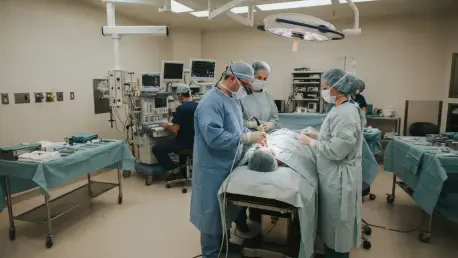

Real-world evidence suggests that the use of advanced ultrasonic energy devices can improve surgical efficiency and reduce hospital readmission rates for adult and pediatric ENT patients. This finding underscores the recent decision by the U.S. Food and Drug Administration to expand the clearance for the HARMONIC 1100 Shears specifically for otorhinolaryngology procedures. By authorizing this technology for both adult and pediatric populations, the regulatory body has recognized the necessity for tools that handle vessel ligation and tissue division with extreme accuracy. This specific expansion is particularly noteworthy because it introduces 7 mm vessel sealing capabilities to the ENT specialty for the first time within this manufacturer’s portfolio. In a field where millimeters often separate successful outcomes from severe nerve damage, the arrival of such high-capacity sealing tools represents a significant shift in how surgeons approach complex vascular structures within the neck and head area.
Precision Design and Thermal Control in Surgery
Navigating Narrow Anatomical Corridors
The mechanical design of these shears addresses the persistent challenge of operating in deep and narrow anatomical spaces common in head and neck surgeries. Featuring a unique curved and tapered blade, the device replicates the functionality of a traditional mechanical dissector, allowing for greater visibility and control during tissue plane access. This geometry is essential for surgeons who must navigate around the carotid artery or internal jugular vein while maintaining a clear operative field. The integration of an ergonomic handle and a specialized handpiece allows for a more intuitive user experience, ensuring that hand fatigue does not compromise the precision required for delicate maneuvers. Furthermore, the inclusion of dual energy-delivery buttons enables a seamless transition between focused dissection and active coagulation. Such versatility reduces the need for frequent instrument exchanges, which often prolong operative time and increase the potential for technical errors in the operating room.
Managing Thermal Spread Near Critical Nerves
Beyond its physical shape, the underlying ultrasonic technology provides a crucial safety margin by minimizing lateral thermal spread during tissue division. As the blade vibrates at high frequencies to create heat for sealing, the energy is strictly controlled to prevent damage to adjacent structures, such as the laryngeal nerves or the parathyroid glands. This protection is especially vital in pediatric cases, where the proximity of vital structures is even more pronounced and the margin for error is significantly smaller than in adults. The advanced hemostasis technology embedded within the system ensures that even larger 7 mm vessels are sealed securely without the excessive heat that could lead to post-operative scarring or functional deficits. By maintaining this thermal boundary, surgeons can operate more confidently near the skull base or within the larynx. This level of control represents a fundamental improvement over older electrosurgical units that often struggled with erratic energy dispersion.
Clinical Validation and Broadened Surgical Utility
Strengthening Results with Real-World Evidence
The clinical justification for expanding the use of these shears into the ENT field relied heavily on comprehensive data sourced from the Premier Healthcare Database. This analysis provided a clear picture of how ultrasonic energy performs across a wide array of procedures, including thyroidectomies, tonsillectomies, and neck dissections. The data revealed consistently low 30-day complication rates and a notable reduction in hospital readmissions when compared to traditional surgical methods. This evidence-based reliability offers a sense of security to hospital administrators and surgical teams who are increasingly scrutinized on patient outcomes and cost-efficiency. By demonstrating that the technology holds up under the pressure of high-volume clinical practice, the manufacturer has bridged the gap between laboratory performance and actual operating room success. These findings suggest that the integration of such advanced tools is a quantifiable benefit to the healthcare system, favoring safer recovery periods.
Establishing Future Benchmarks for Patient Care
From a strategic perspective, this FDA clearance allowed for a more comprehensive approach to a market encompassing roughly 5.5 million annual ENT procedures. By integrating specialized energy technology into this field, the medical device sector addressed the intricate needs of clinicians performing life-altering head and neck surgeries. This move standardized high-performance energy solutions, allowing facilities to streamline inventory while providing surgeons with consistent technology across diverse cases. Moving forward, healthcare institutions prioritized the adoption of these data-driven platforms to handle the rising complexity of pathologies. Surgeons who implemented these tools found that sealing 7 mm vessels reduced reliance on mechanical clips, simplifying reconstructive efforts. Ultimately, the successful deployment of this system served as a benchmark for future innovations, proving that precision engineering must be paired with robust clinical evidence to truly transform the quality of patient care.