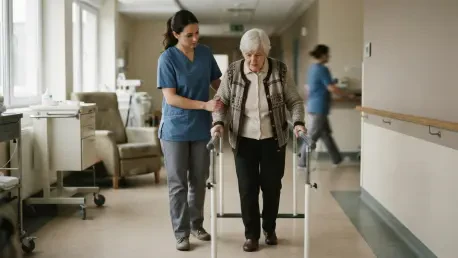

Evaluating non-pharmacological interventions for geriatric care requires a structured approach to overcome the difficulty of operationalizing broad meta-guidelines. As the global population continues to age through 2026 and beyond, the healthcare industry has shifted its focus from purely pharmaceutical solutions to complex lifestyle and behavioral interventions aimed at maintaining functional autonomy. These non-pharmacological interventions, or NPIs, offer a holistic path toward improving the quality of life for older adults, yet they present a unique challenge for researchers and clinicians who struggle to quantify their effectiveness. Traditional clinical trials often fail to capture the subtle, qualitative shifts in a patient’s daily routine or the psychological benefits of social engagement. Consequently, there has been an urgent need for a standardized methodology that can bridge the gap between high-level theoretical guidelines and the reality of clinical practice. The INNOVIDEP framework emerged as a robust response to this demand, providing a structured mechanism for evaluating these health programs.
Part 1: Bridging Theoretical Research and Practical Application
The development of the INNOVIDEP framework was driven by a fundamental recognition that human health in the later stages of life is influenced by a myriad of environmental and social factors. Unlike a pill that has a predictable biochemical interaction, an exercise program or a social interaction initiative depends heavily on the specific context of the care facility and the enthusiasm of the staff. To address this volatility, an interdisciplinary research team synthesized core principles from implementation science and field-based qualitative inquiry. This collaborative approach moved away from top-down academic assessments toward a participatory model that involves stakeholders at every stage of the intervention’s life cycle. By including the voices of those who deliver care as well as those who receive it, the framework ensures that evaluations are grounded in real-world feasibility. This evolution in assessment strategy represents a move toward more democratic and accurate healthcare research.
At the core of this methodology is a highly flexible design composed of six distinct modules that allow evaluators to tailor their focus based on available resources and specific institutional goals. The initial phase of the evaluation focuses heavily on the operational characteristics of the intervention, seeking to understand exactly how a program is deployed within a specific environment. Evaluators examine the professional experiences of healthcare workers, identifying the friction points where theoretical plans encounter practical resistance. This deep dive into institutional engagement helps to uncover whether a program is likely to be sustained over the long term or if it is merely a temporary solution. By documenting the barriers and facilitators that exist within the organizational culture, the framework provides administrators with the data necessary to refine their internal processes. This structured transparency is essential for turning a pilot project into a standard of care.
Part 2: Evaluating Patient Outcomes and Institutional Impact
While operational metrics are crucial for management, the true measure of any geriatric program lies in its direct impact on the individuals involved. The INNOVIDEP framework addresses this by dedicating specific modules to the clinical and emotional outcomes of both patients and their informal caregivers. It moves beyond simple vital signs or mobility scores to capture the lived experience of aging, which includes subjective feelings of independence and social connectivity. For many older adults, the success of an intervention is not measured by a lab result but by the ability to perform daily tasks without assistance or the reduction of social isolation. Furthermore, the framework recognizes the vital role of family members and caregivers, who often bear the brunt of managing chronic conditions. By systematically evaluating the emotional and physical burden on these individuals, the framework creates a more comprehensive picture of how an intervention improves the entire care ecosystem.
The application of the INNOVIDEP framework ultimately proved to be a transformative step in validating the necessity of holistic care models for older adults. Research teams successfully utilized these modules to create a shared language between clinicians, economists, and patients, which facilitated a more nuanced understanding of functional autonomy. Stakeholders recognized that the success of non-pharmacological interventions depended on the ability to measure what truly mattered to the aging individual rather than relying solely on traditional medical metrics. As health systems integrated these findings, the focus shifted toward proactive management of independence, which reduced the overall strain on community resources and improved individual well-being. The final assessment indicated that the primary next step was for policymakers to mandate these evaluation modules as part of the standard certification for geriatric facilities to ensure long-term care sustainability and dignity.