
James Maitland brings a unique perspective to the current crisis, blending his background in health infrastructure with an acute understanding of how federal shifts impact medical readiness. As the U.S. navigates simultaneous outbreaks of hantavirus and Ebola, Maitland examines the fallout from significant administrative cuts and the thinning of leadership at the nation’s most critical health agencies.
With the recent wave of layoffs and vacant leadership positions at the CDC and FDA, how has the atmosphere of federal health response shifted when faced with sudden outbreaks?
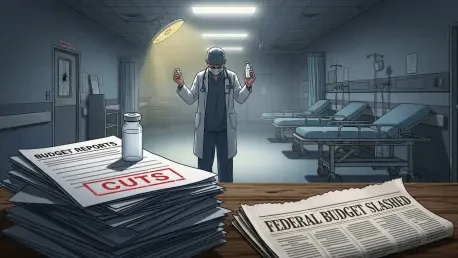
The current climate within our federal health institutions is one of profound strain and visible fragmentation. When you realize that the CDC and FDA are operating without permanent directors and there is currently no Surgeon General, the vacuum in decisive leadership becomes a palpable risk during a crisis. We are seeing the consequences of the Department of Government Efficiency, or DOGE, which has orchestrated massive layoffs and the cancellation of billions of dollars in federal contracts. This hollowed-out infrastructure means that many of the veteran leaders who possessed deep outbreak response management experience have simply walked away or been let go. It creates a situation where the federal government is constantly on the defensive, trying to reassure a pandemic-weary public while the very mechanisms designed to protect them are being dismantled.
The hantavirus cluster on the MV Hondius has raised alarms about person-to-person transmission; what does this specific event reveal about our current international monitoring systems?
The situation aboard the MV Hondius is a chilling reminder of how quickly a localized event can become an international concern, especially when it involves the Andes virus variant. This expedition ship left Argentina on April 1 with nearly 150 people on board, yet the first news conference from the CDC didn’t occur until May 9—well after the WHO had alerted the public. By the time the federal government issued a health advisory, some passengers had already returned to the U.S. on commercial flights, highlighting a dangerous lag in communication. With 11 passengers infected and three deaths already recorded, the delay in response feels like a step backward from our previous standards of vigilance. It suggests that our global outbreak warning network is fraying, leaving us to react to international news rather than leading the charge in containment.
As the Ebola outbreak in Africa grows to over a thousand suspected cases, how do the cuts to USAID specifically compromise the ability to contain the virus at its source?
The dismantling of USAID activities is perhaps one of the most self-destructive moves we have seen in recent public health policy, as it removes the first line of defense in vulnerable regions. In the Democratic Republic of Congo and Uganda, where the Bundibugyo strain of Ebola is spreading without a proven vaccine, the lack of U.S. funded surveillance is creating a massive blind spot. Previously, we funded essential infrastructure like hand-washing stations, waste management, and latrines, but those programs were slashed in March 2025, leaving health facilities without even basic protective equipment. When you have over 1,000 suspected cases and no “boots on the ground” to process blood tests or build medical labs as we did in 2014, the virus is allowed to spread undetected for weeks. This underinvestment doesn’t just hurt Africa; it exposes the entire world to a virus that we know is moving with alarming scale and speed.
Considering the cancellation of nearly half a billion dollars in mRNA vaccine contracts, what are the long-term implications for our ability to pivot during a potential future pandemic?
Canceling roughly $500 million in mRNA development contracts is a move that many epidemiologists, including Michael Osterholm, describe as turning our preparedness into a total mess. This technology is the cornerstone of modern rapid response, allowing for worldwide vaccine production at a speed that traditional methods simply cannot match. By retreating from mRNA technology despite a lack of evidence of health risks, we are essentially throwing away a decade of progress and leaving ourselves vulnerable to the next novel pathogen. This isn’t just a budget cut; it is a fundamental shift in our stance toward scientific innovation that could leave us empty-handed when the next global threat emerges. The ability to pivot quickly is what saves lives, and right now, we are intentionally dulling that competitive edge.
There is a heated debate regarding whether federal cuts are a direct cause of current vulnerabilities; how should the public interpret the conflicting narratives between agency officials and independent health experts?
The public is caught between a White House on the defensive and a chorus of experts who see the writing on the wall. While HHS spokespeople insist that federal cuts have not imperiled our response, the reality on the ground—such as the delayed hantavirus briefings and the evacuation of Americans to Germany rather than the U.S.—paints a much different picture. We are seeing a sharp contrast with the 2014 West Africa response, where the U.S. deployed Army and Navy technicians to build labs and train local workers. Today, the rhetoric about being “prepared” and “working around the clock” feels hollow when contrasted with the actual reduction in disease surveillance systems. It is difficult to believe that we are just as safe as before when the primary agencies responsible for our health are undergoing such radical and chaotic downsizing.
What is your forecast for the future of U.S. pandemic preparedness if these staffing and funding trends continue into the next decade?
If we continue on this trajectory, I forecast a future where the United States is no longer the global leader in outbreak response, but rather a nation that reacts too late to threats it once had the power to stop. We will likely see more situations where the lack of experienced federal staff leads to delayed quarantines and missed opportunities to contain “hot” viruses like the Andes hantavirus before they reach our shores. Without the $500 million in mRNA research and the robust foreign aid infrastructure of USAID, we will be forced to rely on slower, more traditional medical responses that simply cannot keep up with the speed of modern travel. Ultimately, the erosion of our public health teams and the abandonment of cutting-edge technology will result in a domestic health landscape that is more reactive, more fragmented, and significantly more vulnerable to the inevitable emergence of the next major pandemic.