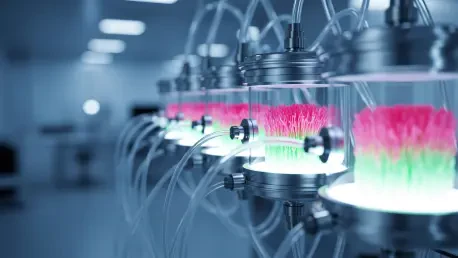

The pharmaceutical industry is currently witnessing a profound transformation as drug discovery moves away from static, two-dimensional cell cultures toward highly sophisticated micro-engineered environments known as organ-on-chip systems. These devices allow scientists to study human health and disease with a level of precision that was once thought impossible within a laboratory setting. By utilizing living human cells housed in carefully controlled, microfluidic environments, researchers can now simulate complex biological processes and predict how the human body will respond to new pharmaceutical compounds with remarkable accuracy. At their core, these systems are microfluidic devices designed to replicate the actual structure and function of human organs. They represent a significant advancement over traditional methods because they allow for continuous fluid flow and the application of essential mechanical forces. This dynamic environment mimics the natural state of the body, providing a much more accurate platform for testing the safety and effectiveness of new medical treatments. This technology serves as a high-resolution window into the molecular activities that drive human health, recreating the interfaces between different types of tissues and monitoring biological responses in real-time. This visibility is essential for identifying the best drug candidates early in the process, ensuring that modern research remains efficient and focused on human-relevant biology rather than antiquated models.
Synergizing Organoids and Microfluidic Platforms: A Dual Approach
A common discussion in modern biotechnology involves the relationship between organoids and organ-chips, and while they might initially seem like competing technologies, they are actually complementary tools that work best when used in tandem. Organoids are self-organizing three-dimensional cell clusters that are excellent for initial screenings and provide a vital source of patient-specific cells. However, they often lack the structural complexity and vascularization needed for late-stage validation and the study of complex systemic interactions. By taking the specialized cells from organoids and placing them into a dynamic, microfluidic organ-chip environment, scientists can introduce the missing elements of physiology. This transition allows for the introduction of fluid movement and mechanical stretching, which are necessary for cells to behave as they would inside a living person. While organoids offer the ability to test many samples at once in a relatively simple setup, organ-chips provide the physiological depth required to understand how a drug truly interacts with organized human tissue under realistic stress.
The integration of these two technologies has created a robust pipeline where organoids serve as the starting material for high-throughput discovery, and organ-chips provide the rigorous environment for definitive testing. In this hybrid model, researchers can generate massive amounts of data from organoids to identify potential genetic targets before narrowing the field to the most promising candidates for chip-based analysis. This ensures that the structural integrity of the tissue is maintained while also exposing the cells to the mechanical cues of the human body, such as the rhythmic pulsing of blood or the movement of air in the lungs. This synergy is particularly useful for personalized medicine, where a patient’s own cells are grown into organoids and then subjected to various drug regimens on a chip to find the most effective treatment. By bridging the gap between these two platforms, the industry is creating a more comprehensive map of human biology that accounts for both genetic diversity and physical complexity. This dual-tool strategy reduces the risk of overlooking critical side effects that only manifest when tissues are subjected to the dynamic flow and pressure found in a living system.
Replicating Pharmacokinetics: The Impact of Clinical Mimicry
One of the most significant advantages of this technology is its ability to replicate human pharmacokinetics, a feat that traditional laboratory settings struggle to achieve. In a standard petri dish, drugs are often applied in a single, static dose that does not reflect the dynamic nature of the human body where substances are constantly being absorbed, distributed, metabolized, and excreted. Organ-chips solve this problem by using constant fluid flow to mirror the way drug levels rise and fall as they are processed and cleared by the body’s various systems. This concept, often referred to as clinical mimicry, allows researchers to benchmark their laboratory results against actual data obtained from human patients during trials. By reproducing the specific therapeutic and toxic responses observed in a clinical setting, scientists can make much more informed decisions during the early stages of drug discovery. This approach helps the industry identify failing compounds long before they lead to expensive setbacks in human clinical trials or, more importantly, before they pose a safety risk to participants.
The ability to control the concentration of a drug over time allows for the creation of precise dosing profiles that match the intended medical application. For instance, if a drug is designed to be taken once a day, the organ-chip can be programmed to increase the concentration of the substance and then slowly wash it away, mimicking the action of the kidneys and liver. This level of control provides insights into the “therapeutic window,” which is the range between a dose that is effective and one that is toxic. Furthermore, these systems can be linked together to create multi-organ platforms that track how a drug is metabolized in the liver before its metabolites travel to the heart or brain. This interconnectedness is vital for understanding secondary effects that might not be visible in a single-organ model. By capturing these dynamic interactions, organ-chip technology provides a level of predictive power that far exceeds the capabilities of static cell cultures. The result is a drug development process that is grounded in the reality of human physiology, leading to safer medications and more successful clinical outcomes in the long run.
Surpassing the Predictive Accuracy: Moving Beyond Animal Models
For many decades, animal models have been the standard for testing new drugs, but they frequently fail to predict human outcomes due to fundamental biological differences between species. These interspecies variations mean that a drug that appears safe in a mouse or a dog might still cause severe reactions in a human being. Organ-on-chip technology offers a superior alternative by providing a more accurate reflection of human metabolism and physiology. This transition is essential for improving the success rate of new medicines and reducing the immense financial risks associated with modern drug development. A landmark study using a human Liver Chip demonstrated that this technology could predict drug-induced liver injury with seven times more accuracy than traditional animal models. This finding has become a major catalyst for the pharmaceutical industry to rethink its reliance on animal data. By using models that are specifically relevant to human biology, researchers can ensure that only the safest and most effective compounds move forward into the later stages of development.
The ethical and economic implications of moving away from animal testing are as significant as the scientific ones. Pharmaceutical companies spend billions of dollars on research that often ends in failure because the animal data did not translate to the human experience. By implementing human-on-a-chip systems earlier in the pipeline, these organizations can identify toxic compounds in the pre-clinical phase, saving both time and money. Moreover, the move toward animal-free testing aligns with growing global regulatory pressures and public sentiment regarding the welfare of laboratory animals. Governments and regulatory bodies are increasingly recognizing the validity of these micro-engineered human models as a replacement for traditional methods. This shift is not merely about replacing one test with another; it is about adopting a more sophisticated and humane approach to science. As the database of successful human-chip correlations grows, the reliance on animal models is expected to continue its decline. This evolution represents a turning point in medical history where human health is finally being studied through the lens of human biology from the very beginning of the research process.
Modeling Mechanobiology: Recreating the Physical Body
The physical environment of a cell is just as important as its chemistry, and organ-chips are uniquely capable of modeling the mechanical forces that define human life. In a living body, cells are never truly at rest; they are constantly subjected to stretching, compression, and the shear stress of flowing blood. Organ-chips replicate these physical factors with high fidelity, such as the rhythmic expansion and contraction of lungs during breathing or the peristaltic movements of the intestines. Recreating these mechanical cues is essential because they actually change how cells function and how they respond to disease or medication. For example, lung cells that are not being stretched do not react to environmental toxins in the same way as cells that are actively moving. By simulating these physical interfaces, scientists can study how diseases like asthma or inflammatory bowel disease progress and pinpoint specific targets for new therapies that would be invisible in a static environment.
This focus on mechanobiology also extends to the study of the blood-brain barrier and other complex tissue interfaces. The blood-brain barrier is famously difficult to study because it relies on the tight physical connections between cells to prevent toxins from entering the brain. On an organ-chip, researchers can create a pressurized flow that mimics the circular system, testing how well a drug can cross this barrier without damaging the delicate neural tissue. This capability is opening new doors for the treatment of neurological disorders such as Alzheimer’s and Parkinson’s disease. Furthermore, the ability to model the physical interaction between immune cells and organ tissues allows for a deeper understanding of how the body fights infections. These chips can show, in real-time, how white blood cells exit the bloodstream and enter an injured organ to begin the healing process. By incorporating these mechanical and physical dimensions into laboratory research, organ-on-chip technology provides a holistic view of human health that considers the body as a dynamic machine rather than just a collection of chemical reactions.
Standardizing the Future of Precision Medicine: Integration and Scalability
The successful integration of organ-on-chip platforms into the standard drug development pipeline necessitated a shift in how the industry approached regulatory frameworks and data sharing. In the recent past, stakeholders prioritized the development of standardized materials and protocols to ensure that results were reproducible across different laboratories and pharmaceutical companies. It was through these collective efforts that the industry established a roadmap for fully automated, high-throughput screening using these microfluidic devices. Regulators, including the FDA, played a pivotal role by providing guidance on how chip-based data could be used to supplement or even replace traditional clinical data in certain contexts. This move toward standardization lowered the barrier to entry for smaller biotech firms, allowing for a broader range of innovations to reach the market. The industry also addressed the initial challenges of cost and manufacturing by adopting advanced 3D printing and mass-production techniques for the chips themselves.
Moving forward, the focus must shift toward the widespread adoption of multi-organ systems and the integration of artificial intelligence to analyze the massive datasets generated by these platforms. Researchers recognized that the next logical step involved linking multiple chips together to create a full “human-on-a-chip” model, which tracks the systemic impact of a drug across the heart, liver, and kidneys simultaneously. Actionable steps for the near future include the creation of a global digital library of chip responses, which would allow scientists to compare new drug data with thousands of previous experiments instantly. This would accelerate the discovery of rare disease treatments and personalized therapies based on a patient’s unique genetic makeup. The focus remained on refining the sensors within these chips to provide even more granular, real-time data on cellular health. By maintaining this momentum, the scientific community ensured that organ-on-chip technology remained at the heart of medical innovation, providing a more ethical, efficient, and human-centric path to discovering the life-saving medicines of tomorrow.