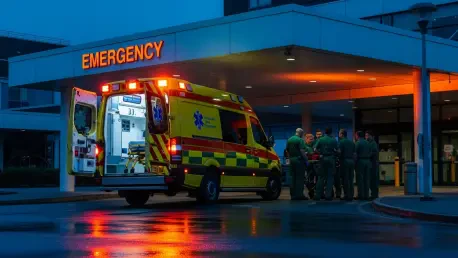

The recent sudden suspension of emergency services at Mission Memorial Hospital has sent shockwaves through the local community, serving as a visceral reminder that modern medical facilities are only as resilient as the specialized human labor force that sustains them. Unlike typical hospital closures that might stem from power failures or severe weather events, this specific operational halt was triggered purely by a critical lack of available physicians to staff the rotation. When the workforce levels drop below the mandatory safety thresholds required for acute care, regional health authorities are forced into a difficult position where they must prioritize patient safety over accessibility. This trend has become increasingly common in smaller municipalities where the margin for error in scheduling is razor-thin. By halting new admissions at 5:00 p.m. on a Sunday, the facility aimed to clear existing cases before the overnight shift left the department without a supervising doctor. To bridge the gap, the hospital maintained a skeletal crew of emergency-trained nurses.
Strategic Management: Navigating Temporary Service Gaps
During the period when no physicians were on-site, the hospital did not simply lock its front doors; instead, it transitioned into a highly specialized triage and stabilization hub to prevent a total vacuum of care. Emergency-trained nurses remained on duty to act as the primary point of contact for walk-in patients, providing essential assessments and stabilizing those with immediate life-threatening conditions until transport could be arranged. This temporary model reflects a sophisticated backup strategy designed to maintain a baseline level of clinical oversight even when full emergency services are unavailable. These nursing teams are skilled in determining which patients can wait for the department to reopen and which require an immediate ambulance transfer to a fully staffed regional trauma center. This critical safety net ensures that a person arriving in cardiac or respiratory distress is not met with silence, but rather with a professional who can initiate the first steps of a life-saving protocol.
The logistical complexity of such a closure extends far beyond the hospital walls, requiring seamless synchronization with regional ambulance services to redirect high-priority cases. Paramedics must be informed well in advance so that they can adjust their routes, often traveling much longer distances to deliver patients to the nearest operational emergency room. This redirection creates a logistical bottleneck for the entire region, as ambulances spend more time in transit and less time being available for new calls in their home districts. While this protocol ensures that critical patients eventually reach a physician, it places an immense burden on the surrounding infrastructure and stretches the resources of the entire emergency response system. This coordinated effort serves as a temporary bridge, allowing the healthcare network to absorb the impact of a localized staffing failure without completely compromising the safety of the broader population, though it highlights the fragility of current models.
Broader Consequences: Regional Strain and Patient Displacement
When a single emergency department closes its doors, the resulting displacement of patients creates a predictable domino effect that puts neighboring facilities under significant pressure. Hospitals in adjacent cities often see an immediate spike in volume, leading to overcrowded waiting rooms and extended wait times for those with non-urgent medical needs. This surge can overwhelm staff at the receiving hospitals, who must suddenly manage a higher ratio of patients per provider than they were originally scheduled to handle. The secondary impact of a doctor shortage is thus felt across the entire geographic area, demonstrating that the stability of one facility is deeply intertwined with the health of the entire network. Healthcare workers in these neighboring units often experience increased burnout and fatigue as they attempt to compensate for the service gaps in the region. This interconnectedness means that a staffing crisis in one town is essentially a crisis for everyone within the nearby area.
To mitigate the total saturation of surrounding trauma centers, health authorities have increasingly leaned on a multi-tiered communication strategy that directs residents toward alternative care pathways. By promoting virtual care platforms and provincial health advice lines, officials hope to resolve minor medical issues without a physical visit to a crowded emergency room. Local Urgent and Primary Care Centres are also being marketed as the appropriate venue for treating minor fractures, infections, or persistent fevers that do not require the intensive resources of an acute care hospital. This shift in patient behavior is essential for preserving the remaining emergency room capacity for those in genuine, life-threatening crises. While these digital and community-based alternatives provide a vital relief valve, they cannot fully replace the comprehensive services of a 24-hour emergency department. The reliance on these tools underscores a transition toward a more decentralized healthcare model.
Systemic Realities: Addressing the Root of Labor Shortages
The persistent struggle to maintain adequate physician coverage at regional hospitals like Mission Memorial points to a deeper, systemic issue regarding the recruitment and retention of specialists. Despite having access to vast administrative resources, many health organizations are finding it difficult to attract doctors to regional settings where the workload can be intense and the lifestyle balance difficult to maintain. This labor shortage is not merely about the number of medical school graduates; it is about the distribution of those professionals across diverse geographic areas and the competitive nature of modern healthcare recruitment. Incentives such as signing bonuses and housing assistance are becoming standard tools for health authorities as they compete for a shrinking pool of talent. Without a sustainable pipeline of doctors willing to work in these settings, the cycle of temporary closures is likely to repeat. The current landscape requires a reevaluation of how medical staff are encouraged.
The service interruption at the hospital demonstrated the urgent need for a more resilient and adaptable healthcare infrastructure that could withstand sudden staffing fluctuations. Health authorities prioritized immediate safety by implementing a controlled closure, ensuring that no patient was left without a clear path to necessary medical intervention. To prevent such incidents from becoming a permanent fixture of the regional landscape, stakeholders began focusing on aggressive investment in hybrid care models and expanded residency programs in rural areas. Future strategies moved beyond reactive measures and instead focused on building a more diverse workforce that included nurse practitioners and physician assistants with expanded scopes of practice. By diversifying the types of providers who could lead an emergency department, the system became less vulnerable to the absence of a single professional group. Ultimately, the lessons learned from this staffing crisis highlighted the necessity of building long-term workforce stability.