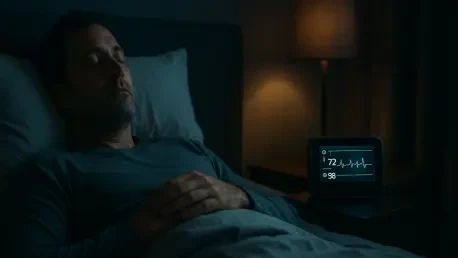

Transvenous phrenic nerve stimulation must prove its worth by demonstrating that it can break the cycle of oxygen desaturation and sympathetic nervous system activation. As the landscape of sleep medicine shifts toward more invasive yet automated solutions, the remedē System has emerged as a cornerstone of treatment for central sleep apnea, a condition where the brain essentially forgets to command the body to breathe. Unlike obstructive sleep apnea, which relies heavily on external pressure-based machines, this implanted neurostimulator acts as a pacemaker for the diaphragm, providing a rhythmic cadence that ensures ventilation remains stable throughout the night. The clinical community currently finds itself at a crossroads, evaluating whether the impressive usage data generated by these devices truly correlates with the physiological benefits that patients require to avoid the long-term cardiac strain associated with respiratory failure. Because this technology is relatively new, the transition from successful technical implementation to a gold-standard clinical outcome requires a rigorous examination of how adherence is defined and valued by regulatory bodies and healthcare providers alike. The discussion is no longer just about whether the device can move a muscle, but whether that movement results in a healthier heart and a longer life for the patient.
The Philosophical Divide: Adherence Versus Tangible Health Outcomes
The fundamental disagreement currently occupying the pages of prominent medical journals involves a conceptual split between adherence and actual health improvement. One school of thought suggests that if a patient is using a therapy for the entirety of their sleep cycle, the therapy is inherently successful because it is being tolerated well enough to provide its intended stimulus. In the context of sleep medicine, where non-compliance is the primary reason for treatment failure, high usage is viewed as a monumental achievement. If a device remains active for seven hours a night, proponents argue that it is successfully providing the necessary intervention to prevent apnea events, which in turn reduces the sympathetic surges that tax the cardiovascular system. This perspective positions adherence not as a secondary metric, but as the foundational pillar upon which all other therapeutic benefits are built. Without consistent usage, even the most physiologically sound treatment becomes irrelevant, making the high nightly activation rates of implanted stimulators a compelling argument for their widespread adoption.
Conversely, critics of this methodology argue that high usage statistics can be misleading if they are used as a surrogate for genuine clinical efficacy. Simply showing that an implanted device is “on” and functioning does not inherently prove that the patient is experiencing a reduction in mortality or a significant improvement in cardiac ejection fraction. There is a concern that manufacturers might be utilizing high adherence rates as a marketing tool to distract from the lack of hard longitudinal data regarding survival. Critics emphasize that while the device may successfully force the diaphragm to contract, the long-term impact of this stimulation on a failing heart remains a complex variable that cannot be solved by adherence data alone. They argue for a stricter definition of success, one that prioritizes patient outcomes such as reduced hospitalizations and improved quality of life over process metrics like the number of hours a device was active. This philosophical divide reflects a broader caution in the medical community regarding the reliance on technological compliance as a proxy for clinical health.
Historical Precedents: The Impact of SERVE-HF on Modern Trials
This cautious approach is largely informed by historical failures in the field, most notably the legacy of the SERVE-HF trial. That landmark study investigated adaptive servo-ventilation, a technology that appeared to perfectly normalize breathing patterns in patients with central sleep apnea and heart failure. Despite the objective improvement shown on respiratory monitors, the trial unexpectedly revealed that the therapy increased the risk of death in the target population. This historical shock taught the medical community that fixing a breathing rhythm does not always equate to fixing the underlying cardiac pathology. As a result, when researchers look at new technologies like transvenous phrenic nerve stimulation, they do so through a lens of profound skepticism. They are no longer satisfied with a lower apnea-hypopnea index or high nightly usage hours; they demand proof that these interventions do not carry hidden risks for vulnerable heart failure patients. This legacy ensures that any new respiratory therapy must survive a rigorous gauntlet of outcome-based testing before it is fully embraced by the wider cardiology community.
To navigate this skepticism, the proponents of phrenic nerve stimulation have turned to more sophisticated statistical frameworks, such as the win ratio analysis. This method allows researchers to rank clinical outcomes in a hierarchy of importance, starting with survival, then heart failure hospitalizations, and finally quality of life improvements. By employing this layered approach, clinical trials can provide a more nuanced picture of how a therapy benefits a patient, even when the data on mortality alone may not reach statistical significance in a smaller cohort. The win ratio has become an essential tool in 2026 for evaluating complex medical devices, as it moves the conversation beyond simple binary metrics like alive or dead or using the device or not. It provides a pathway for innovative technologies to demonstrate their value by showing a net benefit across multiple domains of patient health. This shift toward more comprehensive data analysis represents a significant evolution in how medical devices are evaluated, ensuring that the focus remains on the patient’s holistic experience rather than isolated physiological markers.
Technological Integration: Passive Monitoring and Automatic Activation
The push toward passive medicine represents another major trend in the treatment of sleep disorders, where the burden of therapy is moved from the patient to the device itself. A 2026 study on automatic activation demonstrated that implanted stimulators can accurately detect sleep onset and begin therapy without any manual intervention from the user. This level of seamlessness is a significant departure from traditional therapies like CPAP, which require the patient to proactively apply a mask and manage equipment every night. By eliminating the human element, these devices theoretically remove the most common point of failure in sleep apnea treatment. The high usage rates observed in these automated systems are presented as a breakthrough in therapy delivery, ensuring that the patient receives the necessary respiratory support regardless of their motivation or comfort with external equipment. This trend suggests that the future of chronic disease management lies in technology that operates quietly in the background, minimizing the psychological impact of being a patient while maximizing the consistency of the intervention.
As the clinical evidence continues to accumulate, the role of phrenic nerve stimulation is being formalized within the broader medical framework. The 2025 guidelines from the American Academy of Sleep Medicine have already begun to integrate this technology as a recommended treatment for specific heart failure populations who are unable to tolerate positive airway pressure. Longitudinal tracking scheduled from 2026 to 2030 aims to confirm that the diaphragm does not develop a resistance to the electrical pulses, and early indications show that the reduction in apnea events remains stable over time. This long-term durability is a critical factor for an implanted device, as it justifies the initial surgical risk by providing a decade or more of consistent therapy. The integration of these devices into standard care protocols reflects a growing confidence in the safety profile of the technology, even as the debate over its ultimate impact on survival continues. The consensus is building that for a subset of patients, neurostimulation provides a viable and effective alternative to mechanical ventilation.
Conflict and Convergence: Negotiating the Future of Therapy
Despite the healthy skepticism found in academic discourse, there are several key points of consensus between manufacturers and independent researchers. Both parties agree that central sleep apnea is a high-risk condition that exacerbates the progression of heart failure and leads to a diminished quality of life. There is also a shared understanding that current treatment options are insufficient for a large portion of the patient population, necessitating the development of new interventions. Furthermore, both sides acknowledge that the device is technically successful in its primary task: it reliably stimulates the phrenic nerve and reduces the severity of apnea events without causing significant adverse effects. The friction that exists is not about the technology’s ability to function, but about the weight that should be given to different types of data. This alignment on the basic safety and mechanical effectiveness of the device provides a stable foundation for the ongoing scientific dialogue, ensuring that the focus remains on refining the therapy rather than questioning its basic legitimacy.
An objective analysis of this debate must also account for the influence of professional relationships and commercial interests on scientific advocacy. Many of the leading voices defending the importance of usage metrics are either employees of the device manufacturers or consultants who have received funding for their research. This does not automatically invalidate their findings, but it does explain why they are so invested in framing adherence as a primary measure of success. For a company, high usage is a testament to the design, comfort, and user experience of their product, which are essential factors for commercial viability. For the independent clinician, however, these metrics are only relevant if they translate into improved patient health. This tension between commercial goals and clinical purity is a necessary component of the medical device industry, acting as a system of checks and balances. It ensures that while companies push the boundaries of what is possible, the academic community remains vigilant in demanding proof that these innovations provide a meaningful benefit to the people who use them.
Next Steps: Refining the Standards of Respiratory Intervention
The evolution of transvenous phrenic nerve stimulation into a mainstream clinical option required a rigorous reevaluation of how medical success was measured in the field of sleep medicine. As clinicians and researchers moved through 2026, they established that while high usage rates provided a necessary foundation for therapy, they could not stand alone as the sole indicator of efficacy. The industry adopted a more holistic approach, integrating the win ratio and other patient-centric metrics to ensure that technological adherence translated into real-world physiological stability. Medical professionals determined that the path forward involved a combination of automated, passive treatment delivery and long-term monitoring of cardiac outcomes. This period of intense debate served to strengthen the standards for neurostimulation, resulting in a more disciplined application of the technology for those most in need. By prioritizing a nuanced understanding of patient health over simplified adherence data, the medical community ensured that the next generation of respiratory interventions remained grounded in both safety and measurable benefit.
Experts concluded that the integration of phrenic nerve stimulation into broader cardiovascular care required specific training protocols for multidisciplinary teams. They recommended that electrophysiologists and sleep specialists collaborated more closely from 2026 and into the future to optimize device settings based on individual patient hemodynamics. This shift toward personalized, data-driven medicine ensured that the therapy was not just a one-size-fits-all electrical pulse, but a tailored intervention that adapted to the changing needs of a failing heart. By institutionalizing these collaborative standards, the medical community prepared for a future where implanted neurotechnology became a seamless part of chronic disease management. These actions secured a more robust framework for treating complex apnea, ensuring that every technological advancement was paired with a clear, clinical pathway toward improved patient longevity. This strategic alignment between technological capability and clinical necessity provided the definitive answer to the long-standing debate over how to value patient usage in the context of life-saving therapy.